Villa Bifold
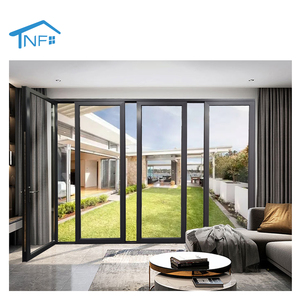
Manufactured under strict ISO9001, AS2047, and CE compliance standards, our integrated flyscreen entry and sliding door systems guarantee extreme corrosion resistance, high tensile strength, and invisible insect barrier performance.
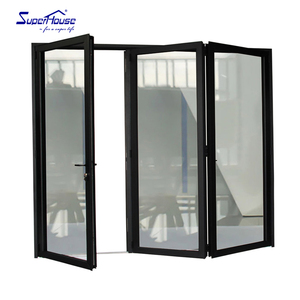
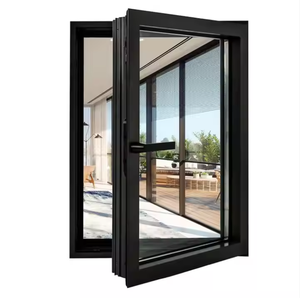
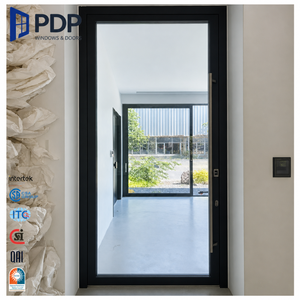
In high-end architectural fenestration, an aluminum mosquito door is no longer a simple perimeter afterthought or temporary insect screen. In luxury tropical villas across Southeast Asia, coastal compounds throughout the Gulf Cooperation Council (GCC), and architectural estates in Australia and North America, these units are critical elements of the building envelope. Modern systems combine heavy-gauge architectural alloy (typically 6063-T5 or 6063-T6 marine-grade aluminum) with high-density austenitic 304 or 316 stainless steel woven mesh (commonly referenced as "diamond mesh" or bulletproof screen with 0.8mm to 1.0mm wire gauge). This creates an impenetrable dual-function structure: preventing disease-carrying vector pests (mosquitoes, midges, and sandflies) while acting as a certified anti-burglary physical barrier.
Advanced engineering focuses on profile depth, thermal break polyurethane barrier strips (such as Technoform polyamide PA66GF25), and co-extruded EPDM foam gaskets. By pairing multi-point locking mortise systems from European manufacturers (e.g., Hoppe, Roto, Siegenia) with China's precision CNC extrusions, current production setups solve the historic engineering trade-off between natural ventilation, thermal bridging, and structural shear security.
| Subsystem Component | Standard Market Specification | China Top-Tier Export Grade | DERCHI Heavy-Duty Industrial Standard |
|---|---|---|---|
| Alloy Composition | Recycled / Mixed Aluminum Scrap | Virgin 6063-T5 Billet | Virgin 6063-T6 / High Structural Wall (2.0mm - 3.0mm) |
| Screen Barrier Mesh | Fiberglass / Nylon 18x16 Mesh | 0.6mm SUS304 Woven Wire | 0.8mm - 1.0mm High-Tensile SUS316 Marine Wire (900MPa) |
| Surface Pre-treatment | Standard Mill / Air Spray | Electrophoresis / Basic Powder | AkzoNobel Interpon D2525 PVDF Fluorocarbon (Qualicoat Class 2) |
| Shear & Impact Rating | Non-rated (<100 Joules) | Basic Anti-Shear (AS 5041) | Dynamic Impact Tested (>500 Joules) & Knife Shear AS 5039 Pass |
| Thermal Core Isolation | Solid Cold-Bridge Metal | 14.8mm Polyamide Strip | Multi-Chamber Technoform PA66GF25 (U-Factor ≤ 1.4 W/m²·K) |
Developers are eliminating secondary surface-mounted frames. The market demands "invisible threshold" slide-away systems where flush frames integrate directly into sub-flooring, concealing the 316 stainless track while preventing tripping hazards.
Next-generation mesh integrates electrostatic nano-coatings that repel microscopic sandstorm dust and pollen while keeping acoustic ventilation open. This addresses indoor air quality (IAQ) demands across the Middle East, Australia, and North America.
Modern insect barrier doors now interface with building automation systems (BMS). Ultra-quiet brushless DC linear motors actuate accordion pleated or stainless steel screens via smart wall pads, humidity sensors, or biometric handles.
As one of China's top 10 premium fenestration enterprises, our Foshan facility integrates architectural extrusion, CNC miter sawing, automated corner-crimping, fluorocarbon powder coating, and wire-mesh tension stretching under one roof.

Key technical, logistic, and engineering considerations for architectural specifiers, contractors, and overseas importers sourcing directly from Chinese manufacturers.
Fiberglass mesh provides light insect exclusion, but lacks structural security. It is prone to tearing by pets, degrades under harsh UV sunlight, and can be punctured easily. In contrast, 0.8mm to 1.0mm austenitic SUS304 or SUS316 security mesh delivers high tensile strength (exceeding 900 MPa), passes the Australian AS 5039 knife shear test, and resists jimmying and accidental impacts. It also functions as a certified anti-fall safety barrier for multi-story residential buildings.
For seaside or high-humidity regions (such as Dubai, Florida, Sydney, and the Caribbean), we apply Qualicoat Class 2 certified PVDF fluorocarbon coatings or marine-grade electrostatic powder finishes (AkzoNobel Interpon D2525). These surfaces endure over 3,000 hours of neutral salt spray testing without blistering. The wire mesh uses marine-grade SUS316 alloy containing 2% molybdenum to prevent pitting corrosion caused by airborne chlorides.
Yes. Our engineering department designs multi-track integrated systems. For oversized bifold entrances (up to 6 meters wide and 3.2 meters high), we implement dual-track configurations with structural glass on one plane and a matching bifold or heavy pleated retractable barrier on the other. For large residential pivot doors, we engineer concealed magnetic perimeter insect seals or motorized screen cassettes that recess into the header lintel when opened.
Please provide structural rough opening dimensions (Width × Height × Wall Depth), preferred opening direction (in-swing, out-swing, sliding, or multi-panel fold), frame profile finish (RAL powder coat, anodized, or wood-grain), glass configuration (clear tempered, Low-E, laminated), mesh selection (invisible fiberglass vs. 0.8mm SUS304/316 security screen), and the delivery destination port. Our design team returns complete DWG/PDF shop drawings and thermal performance calculations within 24 hours.
Every fabricated door panel undergoes a multi-layer packaging protocol: first, a protective polyethylene scratch film on all exposed metal; second, corner protectors made of dense EVA foam; third, thick air-bubble wrap encapsulation; and finally, solid enclosure within ISPM-15 compliant fumigated plywood wooden crates with internal steel banding. Silica desiccant packs are placed in every crate to prevent moisture condensation during sea transits across changing climate zones.
Consult with our structural door engineers to receive free parametric shop drawings, thermal transfer calculations, and factory-direct project proposals.