Engineered Product Portfolio
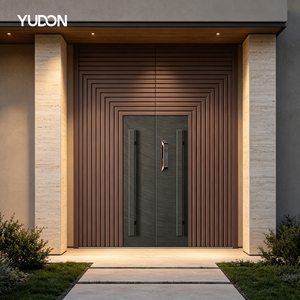
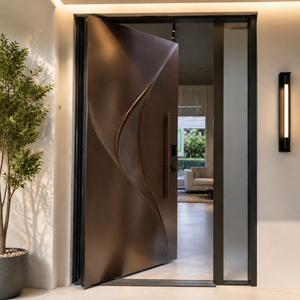
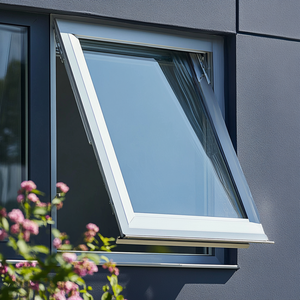
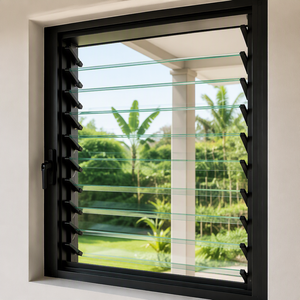
Precision Structural & Glazed Fire Partition Systems
Manufactured under stringent ISO 9001 quality matrices, integrating thermal break acoustic integrity, perimeter intumescent seals, and multi-point security hardware.
Factory Benchmark
Guangdong Dejiyoupin Doors and Windows (DERCHI): Engineering Prowess
Ranked among the Top 10 high-end door and window manufacturers in China, serving Tier-1 commercial developers, luxury hospitality groups, and prestigious residential estates globally.
180,000㎡
Advanced Production Campus
600+
Engineers & Technical Craft
100+
Global Patents & Approvals
25+
Years Operational Expertise
Founded on rigorous engineering discipline in Foshan, Guangdong, Guangdong Dejiyoupin Doors and Windows Co., Ltd. (operating the DERCHI brand) stands at the forefront of China's architectural metalwork industry. Our dedicated internal fire door manufacturing lines bridge the critical gap between passive fire safety mandates and modern minimalist aesthetics. Unlike traditional bulky commercial steel fire doors, our proprietary thermally broken aluminum fire doors achieve EI30, EI60, and EI90 ratings while maintaining slim sightlines and premium architectural finishes.
Exporting across the GCC (UAE, Saudi Arabia, Qatar, Kuwait), North America, Australia, and the UK, DERCHI maintains full vertical integration: from billet casting, precision extrusion, CNC multi-axis milling, to robotic assembly and third-party certified fire laboratory testing. Every door leaf and sub-frame assembly is calibrated with high-grade ceramic core insulation, fire-rated EPDM perimeter systems, intumescent thermal expanding strips, and UL/CE certified mechanical ironmongery.
Certified Compliance Verification
Certified testing against UL 10C, BS 476 Part 22, EN 1634-1, and AS 2047. Backed by factory-issued test reports, complete project CAD drawings, and seamless submittal approval packages.
One-Stop Turnkey Fabrication
From architectural pivot systems, cast aluminum panels, to glazed internal fire partitions and automated sliding doors—all bundled to optimize container loading and installation timelines.
24/7 Global Technical Support
Fluent English-speaking fenestration engineers ready to optimize shop drawings, door schedules, egress hardware integration, and remote site installation support across international time zones.
Procurement Whitepaper
Future Global Procurement Trends for Internal Aluminium Fire Doors
A strategic analysis for real estate developers, MEP contractors, and architectural specifiers managing risk in 2026–2030.
The global specification market for internal fire doors is undergoing a seismic paradigm shift. The historical compromise between strict institutional safety (conventionally dominated by galvanized hollow steel assemblies) and luxury interior design is no longer acceptable to premium developers. Modern multi-family residential towers, commercial headquarters, and five-star hospitality projects demand clear daylighting, acoustic privacy (STC 38–44 dB), thermal boundary management, and robust fire resistance ratings (EI 30 to EI 90). Aluminium-framed internal fire door assemblies have emerged as the premier choice, driving structural changes across global supply chains.
1. Full-Height Monolithic Glazed Enclosures
Developers are pivoting away from small vision panels. Sourcing strategies prioritize 30-to-90-minute fire-rated glass integrated within reinforced, ultra-slim aluminum profiles for floor-to-ceiling interior corridors.
2. Strict EPD & Carbon Lifecycle Audits
International procurement frameworks increasingly mandate Environmental Product Declarations (EPDs). Recycled billet aluminum profiles processed via renewable hydro-power in China provide crucial LEED v4 and BREEAM credits.
3. Smart Access & BMS Integration
Procurement packages now stipulate integrated electromechanical panic devices, fail-safe magnetic locks, and concealment of wiring pathways for direct synchronization with Building Management Systems (BMS).
4. Pre-Hung Modular Cassette Delivery
To reduce onsite labor bottlenecks, institutional buyers prefer factory pre-hung aluminum fire door systems, where frames, intumescent gaskets, hardware prep, and door leaves arrive fully integrated.
| Evaluation Parameter | DERCHI Advanced Aluminium Fire Door | Standard Hollow Metal Door | Fire-Rated Timber Door |
|---|---|---|---|
| Fire Integrity & Insulation (EI) | EI30 to EI90 (Ceramic Composite + Intumescent) | E30 to E120 (Standard Core often lacks insulation) | EI30 to EI60 (Degrades quickly above 60 min) |
| Corrosion & Moisture Resistance | Superior (Passivated & Fluorocarbon Coated) | Prone to internal seam oxidation & rusting | Vulnerable to swelling, delamination & warping |
| Architectural Sightlines & Aesthetics | Ultra-Slim (38mm - 55mm profiles), Minimalist | Bulky, institutional appearance (100mm+ frames) | Traditional, limited glazing capability |
| Acoustic Attenuation (STC) | STC 38 – 45 dB (Multi-Chamber EPDM Gasketing) | STC 30 – 35 dB (Hollow reverberation common) | STC 32 – 38 dB (Dependent on mass core) |
| Lifecycle Maintenance Cost | Near Zero (UV-stable anodized/powder finishes) | High (Requires frequent repainting & rust checks) | Medium-High (Veneer polishing, warp alignment) |
Technology Horizon
Key Evolutionary Trends in Aluminium Fire Door Engineering
How progressive manufacturing R&D is transforming passive fire protection through multi-material composite metallurgy.
Aluminium naturally loses structural rigidity at approximately 400°C to 500°C—substantially lower than flashover fire temperatures which regularly exceed 900°C during an ISO 834 standard fire curve test. How does DERCHI consistently manufacture internal aluminium doors achieving certified 60-to-90-minute fire barriers? The answer lies in sophisticated hybrid internal engineering:
1. Inorganic Ceramic Core Infilling: The internal chambers of DERCHI's proprietary aluminum profiles are filled with high-density, hydrous aluminum silicate and expanded ceramic matrices. When exposed to extreme temperatures, these compounds undergo an endothermic chemical reaction, releasing crystallized moisture that cools the profile and insulates the non-fire side of the partition.
2. Multi-Stage Perimeter Intumescent Expansion: We utilize dual-durometer composite co-extruded EPDM gaskets combined with graphite-based intumescent seals. At 180°C, the intumescent compound expands to over 25 times its original volume, completely sealing gaps between frame and sash to halt poisonous smoke, hot gas penetration, and flash flame transference.
3. Nano-Engineered Gel Glazing Integration: For fully glazed doors, multi-laminate fire glass filled with transparent intumescent polymer gel is employed. Under flame assault, the glass layers facing the fire shatter, while the internal gel crystallizes into an opaque, heat-reflecting insulation shield, limiting radiated heat (I-class performance) according to EN 1363-1 and ASTM E119.
Procurement Knowledge Base
Frequently Asked Questions on Importing & Sourcing from China
Comprehensive technical guidance compiled by our senior fenestration engineers to resolve specification ambiguities.
What international fire certifications do DERCHI internal aluminium fire doors hold? +
Our products undergo full-scale fire testing conducted by accredited laboratories. Depending on the targeted regional project codes, our product lines satisfy UL 10B / UL 10C (Positive Pressure Fire Tests of Door Assemblies - North America), BS 476: Part 22 (Fire tests on building materials and structures - British Standard), EN 1634-1 (Fire resistance and smoke control tests for door assemblies - European Union), and AS 1530.4. Full test reports, engineering evaluations, and factory production control (FPC) audit documents are provided with commercial submittal packages.
How does an aluminium fire door compare in cost to traditional hollow metal doors? +
While initial unit procurement costs for precision-engineered aluminum fire doors are approximately 20% to 35% higher than entry-level painted hollow metal doors, total lifecycle expenditure is drastically lower. Aluminium requires zero repainting, will never rust in high-humidity or coastal settings, provides superior thermal resistance (reducing HVAC operational loads), and offers dramatic aesthetic uplifts that enhance asset valuation in luxury developments.
Can DERCHI supply fully customized door schedules including non-standard dimensions? +
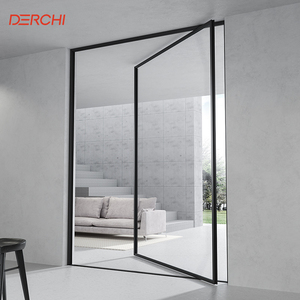
Yes. Custom fabrication is central to our facility. We support oversized pivot doors up to 3.5 meters in height and multi-leaf compartmentation partitions tailored to exact millimetric dimensions. Our engineering department develops free preliminary CAD shop drawings, hardware clearance checks, and structural wind/dead-load calculations prior to manufacturing authorization.
What ironmongery and access control systems can be integrated into the doors? +
We partner with certified hardware manufacturers such as DORMAKABA, GEZE, ASSA ABLOY, and HOPPE, while also offering proprietary certified heavy-duty concealed hinges and panic exit mechanisms. Frames can be factory pre-routed for concealed electromagnetic locks, magnetic door release holders, proximity card readers, and concealed overhead door closers, with wiring conduits embedded internally for immediate job-site plug-and-play installation.
How do you guarantee protection against damage during long-distance ocean shipping? +
Export crating adheres to strict international standards. Every aluminum profile is protected with peelable protective film, wrapped in heavy-duty pearl cotton foam, encased in corner edge-protectors, and secured within custom fumigated solid plywood crates or steel racking cassettes. Desiccant packs are inserted to neutralize container condensation across tropical and ocean transport routes.
Request the Architectural Fire Doors Technical Catalog
Gain access to full profile cross-sections, CAD blocks, certified test summaries, and comprehensive door schedule templates. Direct factory-level consultation within 24 hours.