Featured Heavy-Duty Aluminium & Structural Glass Door Assemblies
Engineered to withstand rigorous cyclonic wind pressures, coastal saline corrosion, and thermal differentials, our factory-direct export configurations provide verified architectural integrity for developers, facade consultants, and general contractors worldwide.
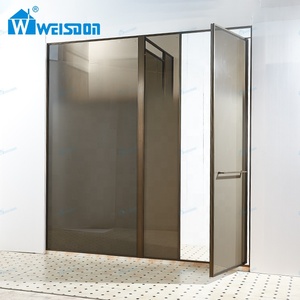
Soft Close SGCC Certified Villa Hotel Aluminum Bronze Pivot Shower Door
- 5mm+5mm Laminated Safety Glass
- Soft-Close Hydraulic Pivot System
- Architectural Bronze Anodizing
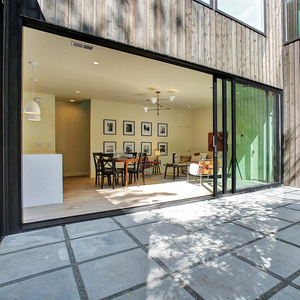
Florida Certification Hurricane Impact Glass Heavy-Duty Sliding Door
- High-Velocity Hurricane Zone (HVHZ)
- SentryGlas® Structural Interlayer
- Multi-Point Stainless Steel Track
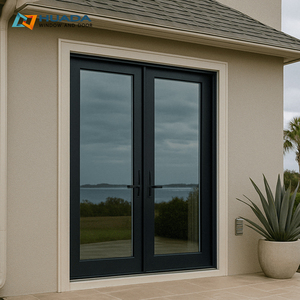
Soundproof Hurricane Impact Double Glazed French Doors for Luxury Villa
- Acoustic Rating Rw ≥ 40 dB
- Polyamide Thermal Break Strut
- Continuous German Weather Seals
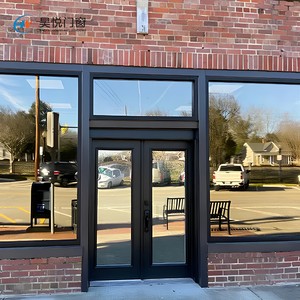
Commercial Heavy-Duty Aluminum Storefront Entry Door with Continuous Hinge
- Full-Length Continuous Geared Hinge
- 12mm Monolithic Tempered Glazing
- 500,000+ Operating Cycle Life
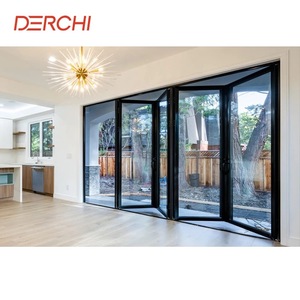
DERCHI NFRC AS2047 High-Performance Exterior Bi-Fold Patio Door System
- Low-E Argon Double Glazed IGU
- Stainless Steel Bottom Rolling Trolley
- Flush Threshold Water Barrier
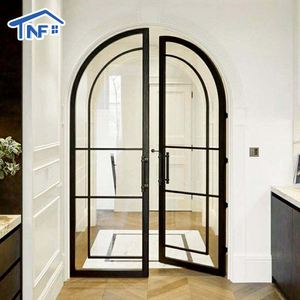
Architectural Slim Profile Arched Crittall Style Swing Patio Door
- Ultra-Narrow 25mm Visible Sightline
- CNC Bending Arched Top Frame
- Dual Tempered High-Clarity Panes
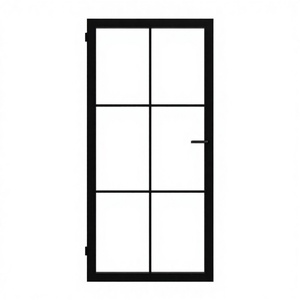
Engineered Fire Prevention Minimalist Frameless Commercial Glass Door
- Intumescent Fire-Resistant Core
- 30/60/90 Min Fire Integrity Options
- Concealed Overhead Concealed Closer
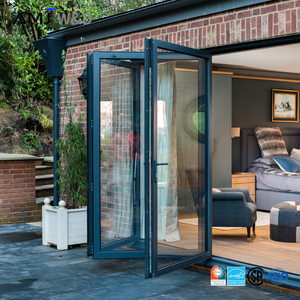
Architectural Vertical Stacking Motorized Bi-Folding Balcony Glass Wall
- Motorized Counter-Balanced Drive
- 100% Unobstructed Opening Space
- EPDM Compression Gasket Matrix
The Metallurgy, Thermal Physics, and Engineering Benchmarks of China's Top Exporter
In contemporary fenestration and facade engineering, the designation of a premier China best aluminium fabrication glass door exporter demands far more than basic fabrication capability. It mandates an exhaustive grasp of physical metallurgy, micro-structural extrusion metallurgy, polymer thermal breaks, elastomeric weathering sealing, and finite-element structural deflection modeling. Originating from China's industrial aluminum epicenter in Foshan, Guangdong, our manufacturing complex sets the international benchmark for structural aluminum and glass fenestration assemblies engineered for harsh, extreme environments ranging from hurricane-prone coastlines to scorching high-UV deserts.
1. Primary Alloy Metallurgy: Extrusion Optimization & Structural Deflection
The core structural stability of an exterior glass door hinges directly on profile wall thickness and alloy temper designation. While commercial-grade fabricators frequently cut raw material expenses through secondary remelt scrap or diluted aluminum billets, our export door systems strictly utilize 100% virgin AA6063-T5 and AA6063-T6 architectural alloys, with select heavy-duty pivot structural spines forged from high-tensile AA6061-T6. By meticulously controlling magnesium (0.45–0.90 wt%) and silicon (0.20–0.60 wt%) ratios during primary homogenization, we achieve balanced precipitates of magnesium silicide (Mg2Si) along the metallurgical grain boundaries.
This yields an ultimate tensile strength exceeding 215 MPa, a yield strength greater than 170 MPa, and profile elongation exceeding 8%. Consequently, our high-span sliding patio systems and monumental 4-meter-tall pivot doors exhibit an elastic deflection parameter well within the stringent L/175 and L/250 criteria under positive and negative wind loads surpassing 4,500 Pa (equivalent to a Category 5 hurricane), eliminating operational binding, glass edge-pinch stress, and envelope pressure degradation.
2. Advanced Thermal Isolation: Technoform Polyamide PA66 GF25 Integration
Thermal bridging in metallic fenestration represents up to 42% of a building's perimeter cooling or heating energy deficit. To conquer the demanding energy performance codes stipulated by the ASHRAE 90.1, Australia NCC Section J, and European EN ISO 10077 standards, our thermally broken exterior doors integrate German-engineered Technoform polyamide PA66 reinforced with 25% longitudinal glass fiber (PA66 GF25).
The coefficients of thermal expansion (α) of these polyamide isolation struts (2.8 × 10⁻⁵ K-1) match that of the flanking aluminum alloy extrusions (2.3 × 10⁻⁵ K-1) with microscopic precision, neutralizing interfacial thermal shear fatigue and delamination throughout severe diurnal temperature fluctuations ranging from -30°C in Scandinavian winters to +55°C in Arabian Gulf summers. When fused with multi-chamber internal web cavities and aero-gel filling, our finished door profiles deliver a profile thermal transmittance (Uf) value as low as 1.15 W/(m²·K).
3. Structural Glazing Dynamics: IGUs, PVB/SGP Interlayers, and Dual Sealants
A door leaf is overwhelmingly comprised of glass by surface area. Therefore, safety, acoustic attenuation, and thermal solar radiation control dictate system performance. Our in-house cleanroom glazing facilities manufacture Insulated Glass Units (IGUs) utilizing state-of-the-art Bystronic robotic lines. Exterior panes incorporate high-performance low-emissivity (Low-E) coatings sputtered via magnetron vacuum deposition (MSVD), attaining Solar Heat Gain Coefficients (SHGC) fine-tuned between 0.22 and 0.38 while sustaining a Visible Light Transmittance (VLT) exceeding 65%.
For hurricane impact and high-security installations, we laminate tempered safety glass using genuine Kuraray SentryGlas® (SGP) ionoplast interlayers. SGP provides five times the tear resistance and up to 100 times the rigidity of conventional polyvinyl butyral (PVB). In the event of catastrophic projectile impact, the ionoplast sheet preserves structural barrier tension without sagging or rupturing under cyclical cyclic wind pressures. Double secondary sealing featuring polyisobutylene (PIB) primary moisture barriers coupled with two-part structural silicone or Dow Corning 983 ensures zero argon gas depletion over a 25-year operational lifecycle.
Future Procurement Shifts & Technological Trajectories in Aluminium Door Systems
Global supply chain disruptions, heightened ESG carbon scrutiny, and aggressive energy building codes are fundamentally reshaping how international developers and MEP contractors procure fenestration packages from China.
Low-Carbon Recycled Billets & EPD Traceability
International tenders across North America, the UK, and the EU increasingly mandate third-party Environmental Product Declarations (EPDs). The modern procurement trend centers on hydro-powered smelted aluminum with embodied carbon suppressed below 4.0 kg CO2e/kg Al. As a forward-thinking exporter, our supply chain incorporates closed-loop remelt traceability, empowering contractors to earn crucial LEED Platinum and BREEAM credits directly at the facade envelope.
Unitized Pre-Engineered Modular Assemblies
Skyrocketing on-site labor overheads in target export destinations like the USA, Australia, and GCC nations have catalyzed massive demand for plug-and-play unitized door frames. Rather than shipping knocked-down (KD) extrusions requiring intricate field glazing and site gasket assembly, our factory pre-calibrates CNC hardware cutouts, installs multi-point panic bolt mechanisms, and ships structurally dry-glazed cassettes ready for rapid rough-opening hoisting.
Concealed Mechatronics & Smart Building Integration
The interface between luxury architectural fenestration and home automation systems has matured rapidly. Next-generation pivot and automatic sliding glass doors feature completely concealed linear magnetic electric drives, optical perimeter safety barriers, and biometric/BLE encrypted access controllers embedded flush within thermally broken stiles. Furthermore, electrochromic smart dynamic glass (PDLC) is seamlessly wired through internal drainage routes for instantaneous privacy switching.
Engineering Performance Benchmark for Overseas Submittals
Direct data comparison illustrating testing criteria, international standards compliance, and performance metrics across our primary door fabrication typologies.
| System Typology | Thermal Transmittance (U-Value) | Acoustic Insulation (STC / Rw) | Wind-Load Resistance (ASTM E330) | Water Tightness (EN 12208) | Compliance Standards |
|---|---|---|---|---|---|
| Thermally Broken Bi-Fold Patio System | 1.32 – 1.65 W/(m²·K) | Rw 38 – 42 dB | Pass (± 3,500 Pa) | Class 9A (600 Pa) | AS 2047 / NFRC / CE |
| Heavy-Duty Architectural Pivot Door | 1.25 – 1.50 W/(m²·K) | Rw 40 – 45 dB | Pass (± 4,200 Pa) | Class E750 (750 Pa) | ASTM / UL / CE |
| Hurricane Impact Sliding Glass Door | 1.40 – 1.70 W/(m²·K) | Rw 39 – 43 dB | Pass (± 5,500 Pa HVHZ) | Class E1050 (1050 Pa) | Miami-Dade NOA / TAS 201-203 |
| Commercial Frameless Glass Fire Door | Non-Insulated / Insulated Core | Rw 35 – 38 dB | Pass (± 2,000 Pa) | Interior / Sheltered | EN 1634 / UL 10C (60-90 Min) |
| Slim Sightline Crittall-Style Casement | 1.55 – 1.85 W/(m²·K) | Rw 36 – 40 dB | Pass (± 3,000 Pa) | Class 8A (450 Pa) | ISO 9001 / CE Mark |
Why Top Global Contractors & Developers Select DERCHI / Dejiyoupin
Backed by a 180,000 m² modern manufacturing base in Foshan, Guangdong, our infrastructure bridges the gap between customized architectural creativity and large-scale industrial throughput.
Complete Turnkey Manufacturing
We operate unified production facilities spanning high-precision aluminum alloy extrusion, cast aluminum artisan relief panels, architectural glass processing, CNC thermal crimping, and automated hardware milling. This vertical supply integration eliminates subcontractor markups and guarantees immaculate dimensional quality control across entire development projects.
Stringent Multi-Standard Testing
Our dedicated fenestration test labs simulate continuous water penetration, structural wind cyclic fatigue, acoustic transmission loss, and salt-fog air degradation. Our full product lines carry legitimate third-party certifications including AS2047 N6, NFRC energy ratings, CE marks (EN 14351-1), ISO 9001, and UL fire performance credentials, ensuring frictionless municipal approval.
Reinforced Protective Export Logistics
Every finished door leaf is wrapped in multi-layer electro-static polyethylene film, perimeter edge corner protectors, and sealed inside fully enclosed, fumigated non-coniferous hardwood crates with moisture-absorbing desiccant matrices. Our global export team orchestrates full-container load (FCL) sea freight with comprehensive DDP/CIF documentation direct to your staging yard or job site.
Frequently Asked Technical & Commercial Questions
Direct, highly specialized answers for procurement heads, architects, and engineering quantity surveyors evaluating Chinese aluminum fabrication glass door exporters.
Partner With China's Leading Architectural Door Exporter
Submit your architectural schedule, tender specifications, or custom door drawings. Our senior bilingual facade engineering desk will analyze your thermal, wind, and acoustic requirements and return itemized factory-direct pricing within 24 hours.