Featured Heavy-Duty Aluminium Coated Windows
Discover high-precision, surface-treated aluminium window systems engineered specifically to withstand coastal salinity, extreme solar exposure, and Category 5 cyclone conditions across commercial and luxury residential builds.
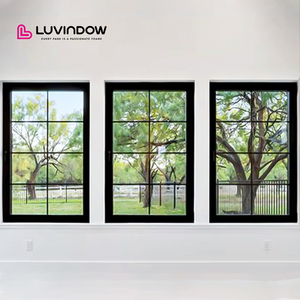
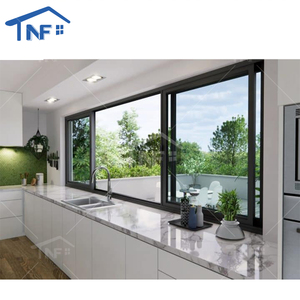
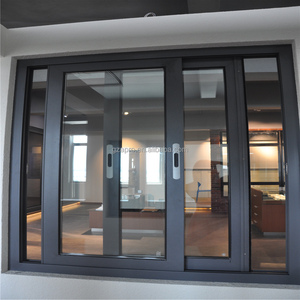
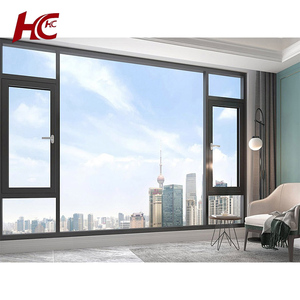
Why International EPC Contractors Choose Our Factory
Guangdong Dejiyoupin Doors and Windows Co., Ltd. represents over 25 years of advanced precision engineering in Foshan, Guangdong. We operate one of China's largest intelligent architectural fenestration hubs.
180,000㎡ Mega Production Base
Equipped with German CNC multi-axis milling hubs, automated fluorocarbon (PVDF) coating lines, and integrated argon gas glass insulating plants. We reliably manage monthly exports topping 50,000 square meters without bottlenecking delivery schedules.
Global Testing Compliance
Our products pass North American NFRC and Miami-Dade NOA hurricane impact protocols, Australian AS2047 N6 standards, CE directives, and ISO9001 quality audits. Detailed testing certificates are directly provided for engineer submittals.
End-to-End Bespoke Customization
Every commercial window schedule is thoroughly vetted by our in-house façade engineering division. We generate comprehensive 2D/3D CAD shop drawings, wind-load deflection calculations, and structural static analyses tailored to local building codes.
Aluminium Coating Technology: Evolution & Engineering Frontiers
Modern building envelopes demand surface treatments and thermal breaks that actively resist severe degradation from ultraviolet radiation, thermal bridging, and salt air corrosion.
PVDF vs. Architectural Powder Coating
While conventional powder coatings achieve 40-60 microns, high-performance architectural projects increasingly demand 3-coat Polyvinylidene Fluoride (PVDF) systems complying with AAMA 2605. Incorporating 70% Kynar 500 resin ensures over 20 years of gloss retention, chalking resistance, and defense against atmospheric sulfur.
Advanced Polyamide Thermal Barriers
Eliminating condensation and heat ingress requires transitioning from standard pour-and-debridge systems to multi-chambered Technoform PA66 GF25 (25% glass fiber-reinforced polyamide) thermal strips. This configuration cuts whole-assembly U-values to under 1.4 W/m²·K (0.25 Btu/h·ft²·°F).
Sealing Integrity: Co-Extruded EPDM Gaskets
Window longevity depends heavily on the vulcanization profile of its perimeter seals. Integrating continuous vulcanized EPDM gaskets with multi-point locking drives water resistance beyond 700 Pa and air infiltration rates below 0.05 L/s·m², easily matching passive house and cyclone requirements.
| Performance Parameter | Standard Commercial Window | High-Spec Thermally Broken Window | Heavy-Duty Hurricane Impact System |
|---|---|---|---|
| Profile Thickness | 1.2 mm - 1.4 mm 6063-T5 | 1.8 mm - 2.0 mm 6063-T6 | 2.2 mm - 3.0 mm 6061/6063-T6 Structural |
| Thermal Transmittance (U-Value) | 3.8 - 4.5 W/m²·K | 1.4 - 1.8 W/m²·K | 1.2 - 1.6 W/m²·K (Warm-edge Tri-pane) |
| Surface Coating Spec | Standard Anodized (10-15μm) | Architectural Powder (AAMA 2604) | Fluorocarbon PVDF 3-Coat (AAMA 2605) |
| Impact Resistance | Non-rated | Wind-borne Debris Zone 1 | Miami-Dade Large Missile Level D/E (9 lb 2x4 @ 50fps) |
| Acoustic Attenuation (STC) | 28 - 30 dB | 36 - 40 dB | 42 - 48 dB (Acoustic PVB Interlayer) |
Future Procurement Trends for Fenestration Importers
International developers and commercial buyers are restructuring their global supply chains. Understanding these key shifts provides commercial teams with a strong competitive advantage.
1. Turnkey Off-Site Modular Glazing
Skyrocketing job-site labor rates in North America, Australia, and the Middle East are shifting preference toward pre-glazed, unitized, factory-assembled window assemblies that arrive on-site fully tested, crated, and ready for immediate anchoring.
2. Embodied Carbon & Circularity
With the rollout of EU CBAM (Carbon Border Adjustment Mechanism) and stringent ESG mandates, global developers favor manufacturers utilizing certified low-carbon recycled aluminum billets smelted with renewable hydroelectric power.
3. Extreme Weather & Climate Hardening
Insurance underwriters in coastal and hurricane-prone belts are driving demand for certified impact ratings. Projects that previously specified standard double glazing now mandate SentryGlas (SGP) ionoplast interlayers to prevent building envelope blowouts.
Frequently Asked Questions for Project Procurement
Key technical and contractual answers designed to streamline cross-border architectural window procurement for commercial estimators, project managers, and lead architects.
Custom fabrication runs typically require 25 to 35 business days from final CAD shop drawing sign-off and color-sample approval. For complex curtain-wall or high-volume sliding systems, staggered containerized shipping plans are established to match site construction progress.
For sea-front projects, we utilize AAMA 2605-compliant PVDF liquid fluorocarbon coatings or high-durability seaside-class powders. These treatments pass 4,000-hour neutral salt spray (ASTM B117) and cyclical corrosion testing without blistering, pitting, or peeling.
Yes. We supply comprehensive testing documentation accredited by Intertek, NATA-approved laboratories, and third-party inspection bodies covering air infiltration, water penetration resistance, structural ultimate wind load, and thermal conductivity.
Finished units are sealed with peelable protective film, cushioned with dense EPE corner guards, and secured inside fully enclosed, fumigated A-frame steel racks or heavy-duty plywood crates. Moisture-absorbing desiccant packs prevent transit moisture damage.
Yes. We work closely with leading global hardware suppliers including Siegenia, Roto, Hoppe, and CMECH, as well as proprietary heavy-duty multi-point locking systems capable of operating sashes up to 450 kg smoothly.
To deliver an accurate, value-engineered proposal within 24 hours, please share your window schedule, elevation drawings, structural wind load or project location requirements, preferred glass configuration, and targeted delivery port.
Connect Directly With Our Senior Façade Engineers
Whether you require complete shop drawings for an upcoming hospitality resort, structural calculations for a coastal high-rise, or competitive direct-from-factory pricing, our team is ready to assist your project.