Global B2B Architectural Engineering Report

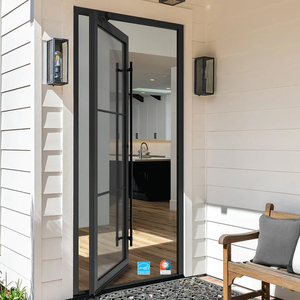
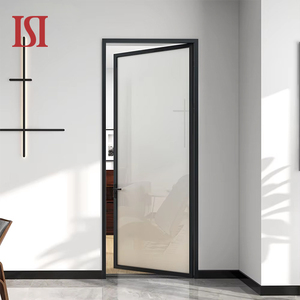
China Best Aluminium Coated Doors Exporter & Exporters

Industrial-grade precision, AAMA 2605 compliant coatings, and certified high-velocity impact resilience. Delivering bespoke architectural fenestration solutions across the Middle East, North America, and Australasia.

Precision-Engineered Aluminium Coated & Clad Door Systems

Constructed from primary 6063-T5/6061-T6 architectural aluminium alloys with multi-layer fluoropolymer (PVDF) and electrostatic powder coatings. Built to withstand extreme solar UV index, marine salt-fog corrosion, and structural wind loads.
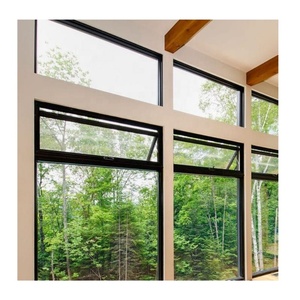
Double Glazed Waterproof Aluminum Casement Door
Soundproof • Slim Profile

Modern Narrow Double Glazed Aluminum Casement Door

PA66GF25 Thermal Break STC 38dB Dual EPDM Gaskets
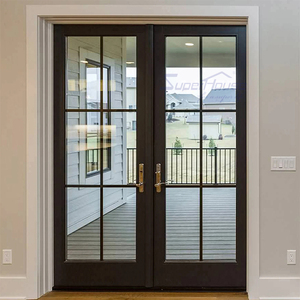
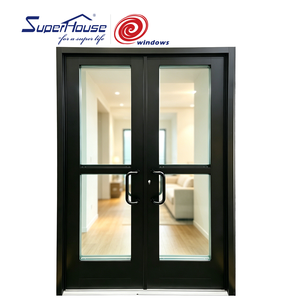
Commercial Double Glass French Entry Door
NFRC Certified • Heavy Duty

Superhouse NFRC Commercial Double Glass French Entry Door

AAMA 2604 Coating U-Factor 0.29 Multipoint Hardware
Insulated Aluminum Front Entry French Doors
Thermal Insulation • Bespoke

Customized Insulated Aluminum French Front Entry Doors

Polyurethane Core Qualicoat Class 2 Anti-Thermal Bow
American Style Black Frame Bedroom Casement Door
Anodized Black • Energy Star

American Style NFRC Black Frame Insulated Casement Door

25μm Anodized Finish Argon Filled IGU Air Tight Class 4
Florida Hurricane Proof Impact Resistant Door
HVHZ Certified • Anti-Corrosion

Hurricane Impact Exterior French Doors Laminated Safety Glass

TAS 201/202/203 PVB/SGP Interlayer DP +/-70 PSF
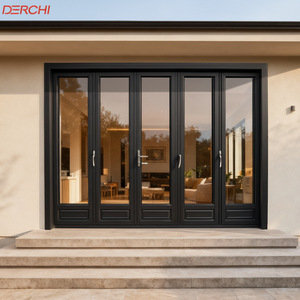
Custom Bi-fold Aluminum Patio Doors
Seamless Panoramic • Heavy Duty

DERCHI Custom Security Bi-fold Aluminum Double Glazed Patio Doors

Stainless Steel Rollers Flush Threshold AAMA 2605 PVDF
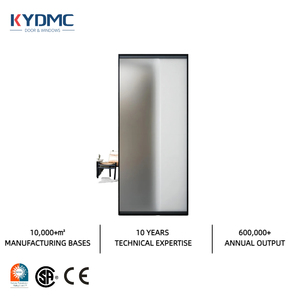
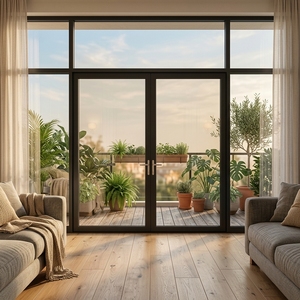
Wholesale Waterproof Sliding Doors
Heat Insulation • Minimalist

Wholesale Thermal Break Sliding Doors & Casement Systems

Multi-Cavity Frame Anti-Rattle Guide Water Tight 600Pa
Luxury Aluminum Pivot Entry Doors
Oversized Pivot • Architectural

AMJ American NFRC Standard Luxury Aluminum Pivot Entry Doors

1000kg Pivot Capacity Concealed Hydraulic Sandstorm Sealed
180,000㎡
Foshan Smart Factory Base
600+
Specialized Technicians
100+
Patents & Global Certifications
25+
Years Engineering Export

Metallurgical Integrity & Advanced Surface Chemistry in Modern Fenestration

As commercial developers, façade consultants, and general contractors scale luxury developments across harsh microclimates—ranging from the arid, high-salinity coasts of the GCC to cyclone-prone coastlines of North America and Australasia—the technical requirements for architectural exterior doors have transitioned from basic fenestration to high-performance structural barrier systems.

AAMA 2605 & PVDF Fluoropolymer Systems

China's premier manufacturing ecosystem utilizes 70% Kynar 500 / Hylar 5000 based resin formulations. Applied via multi-stage electrostatic liquid deposition with automated curing cycles, these coatings withstand 4,000+ hours of continuous salt spray (ASTM B117) and resist chalking, color fading, and chemical degradation under intense 50°C+ summer ambient conditions.

Polyamide PA66GF25 Multi-Cavity Insulation

Thermal dissipation across door leaves is controlled through multi-cavity, 25% fiberglass-reinforced polyamide (PA66GF25) structural insulation strips. This mechanical decoupling mitigates the "thermal bow" effect, preventing sash deflection when exterior surface temperatures reach 80°C while interior chilled air is maintained at 22°C.

Engineered Heavy-Duty Architectural Pivots

Oversized villa entrances demand high load-carrying engineering. Our bespoke pivot units integrate oil-damped self-closing lower floor boxes and upper concealed anti-shear assemblies, supporting door panel spans up to 4,000mm in height and single leaf loads exceeding 1,000kg with effortless, vibration-free opening dynamics.

Technological Trends Reshaping Aluminium Clad & Coated Fenestration

From smart automation integration to sustainable primary metallurgy, the next phase of architectural door systems blends advanced robotics with rigorous environmental testing protocols.

1. Ceramic & Nano-Hybrid Topcoats

Introduction of ultra-hydrophobic silica-matrix nano-coatings that yield self-cleaning, dust-repellent surfaces. Essential for desert environments where windborne microscopic sand acts as an abrasive polishing agent against exterior finishes.

2. Aerogel-Enhanced Thermal Chambers

Integration of vacuum insulation panels (VIP) and silica aerogels directly into the profile's structural chambers, dropping overall assembly U-factors below 0.18 BTU/hr·ft²·°F to comply with evolving net-zero building regulations.

3. Concealed Biometric & IoT Access

Seamless integration of motorized German multipoint locking systems, 3D facial recognition cameras, and IP66 sand-sealed optical fingerprint scanners wired through thermal breaks with discrete inductive power transfers.

4. Low-Carbon Hydro-Aluminium

Progressive deployment of certified low-carbon aluminium billets smelted using renewable hydroelectric energy, reducing embedded carbon from 16.5kg CO2e/kg aluminium down to under 4.0kg CO2e/kg, fully compliant with LEED v4.1 and BREEAM.

Architectural Coating & Surface Treatment Benchmark

Compare core coating formulations across critical durability indicators to identify the optimal configuration for your project's environmental exposure level.

Coating / Surface Technology Resin / Chemical Base Film Thickness (μm) Salt Spray Durability (ASTM B117) Florida UV Exposure (ASTM D2244) Target Architecture Application
Super-Durable Powder (AAMA 2604) Thermosetting Polyester 60 – 80 μm 3,000 Hours 5 Years Direct South Florida Inland Commercial / Residential
PVDF Fluoropolymer (AAMA 2605) 70% Kynar 500 / Hylar 5000 35 – 45 μm 4,000+ Hours 10+ Years Extreme Exposure Coastal Villas, Luxury Palaces
Hardcoat Anodizing (Class I / AA25) Electrolytic Oxide Layer 20 – 25 μm 3,500 Hours Inorganic / Never Fades High-Traffic Corporate & Minimalist
Cast Solid Aluminium (Relief Panel) A356 Aerospace Foundry Alloy 10 – 25 mm Plate 5,000+ Hours (Sealed) Decades Without Degradation Royal Residences, Monumental Entrances

Future Procurement Trends in Global Aluminium Architectural Sourcing

Procurement directors and commercial EPCs face tighter timelines, stricter sustainability scorecards, and higher technical submittal barriers. Sourcing strategies are actively evolving across four key vectors:

BIM & Parametric Digital Twins

Global buyers increasingly mandate full Autodesk Revit / IFC BIM models during the RFQ phase. Chinese manufacturing leaders now deliver LOD 350-400 models containing parametric hardware cutouts, thermal performance values, and anchoring tolerances for clash-free coordination.

Unitized Pre-Crated Sub-Assemblies

High overseas on-site labor rates make knock-down (KD) doors economically unviable. Modern procurement favors fully factory-glazed, pre-hung cassette sub-assemblies inside custom fumigated steel-reinforced maritime crates, cutting field installation time by 65%.

Dual-Standard Certification Alignment

Direct procurement requires manufacturers capable of dual or triple certification: holding Australian AS 2047 (N6 wind load), US NFRC thermal standards, Florida HVHZ TAS 201/202/203 hurricane impact, and UL 10C fire ratings under one roof.

Supply Chain Transparency & ESG Traceability

General contractors are mandating complete traceability back to the alumina refining stage. ESG declarations covering Environmental Product Declarations (EPD) and recycled scrap utilization percentages are now prerequisites for tier-1 tenders.

Why Global Specifiers Partner with Our Foshan Production Complex

Headquartered in Shishan Town, Nanhai District, Foshan—the world's capital for precision aluminium extrusion—Guangdong Dejiyoupin Doors and Windows Co., Ltd. (DERCHI) represents the vanguard of China's high-end fenestration export industry.

180,000㎡ Vertically Integrated Facility

Our facility houses 5-axis German CNC profile machining centers, automated robotic powder and PVDF spraying lines, continuous tempering furnaces, and specialized cleanrooms for insulated glass assembly. We eliminate subcontractor markup and maintain total control over production tolerances (±0.5mm).

Proven Global Compliance (CE, AS2047, NFRC, UL)

Our door systems have completed full accredited testing: passing the rigorous Australian AS 2047 N6 cyclonic rating, European CE EN 14351-1 weather tightness, American NFRC thermal performance certification, and UL 10C 90-minute positive-pressure fire tests.

Dedicated Engineering Support

A dedicated team of senior bilingual façade engineers provides project-tailored submittal packages—including custom shop drawings, wind load deflection calculations, glass thermal stress analyses, and anchor detail shop tickets—within 48 hours of project receipt.

Frequently Asked Questions: Global Sourcing & Engineering

Critical engineering, logistics, and quality assurance answers compiled for architects, façade consultants, and general contractors sourcing from China.

Q How do DERCHI aluminium coated doors eliminate the risk of thermal bow in extreme deserts?
Thermal bow occurs when the exterior face of an entrance door heats up to 70°C–80°C while the interior climate-controlled face remains at 22°C, causing asymmetric expansion that leads to sash deflection and perimeter air leakage. We eliminate this through split-profile thermal break technology utilizing dual sliding polyamide strips (PA66GF25). These allow mechanical shear relaxation between the exterior and interior aluminium sections, ensuring the door remains completely flat and maintains perimeter gasket compression year-round.
Q What coating standard is specified for oceanfront projects in Dubai, Miami, or Sydney?
For marine-front installations within 500 meters of the coastline, we mandate AAMA 2605 compliant liquid fluoropolymer (PVDF) finishes or Class I Hardcoat Anodizing (minimum 25μm thickness). Our PVDF formulations utilize 70% Kynar 500 resin subjected to multi-stage pre-treatments (including zirconium phosphate conversion). This process passes 4,000-hour ASTM B117 neutral salt spray testing and 4,000-hour ASTM G154 accelerated weathering cycles without blistering, peeling, or gloss loss.
Q Can oversized pivot doors meet stringent air and water infiltration standards?
Yes. While oversized pivot doors (e.g., 2000mm × 3800mm) are traditionally prone to perimeter leakage, DERCHI pivot systems integrate continuous double-perimeter co-extruded EPDM bulb gaskets paired with German concealed drop-down automatic floor drop-seals. When closed, hydraulic multipoint locking mechanisms apply progressive perimeter pull-in pressure, achieving certified air tightness ratings below 0.1 CFM/sq.ft and water penetration resistance exceeding 450 Pa under ASTM E331 test standards.
Q What structural and impact certifications are supplied with Florida or hurricane-zone orders?
Doors engineered for High-Velocity Hurricane Zones (HVHZ) are manufactured with heavy-wall 3.0mm primary extrusions, reinforced steel internal corner blocks, and laminated glass layups utilizing Kuraray SentryGlas (SGP) or high-tensile 0.090" PVB interlayers. We provide test documentation validating compliance with TAS 201 (Large Missile Impact Level D), TAS 202 (Uniform Static Air Pressure up to ±70 PSF), and TAS 203 (Cyclic Wind Pressure Loading), suitable for coastal building department approvals.
Q How does DERCHI protect high-end architectural finishes during multi-week sea transit?
All finished profiles receive protective low-tack UV-resistant co-extruded polyethylene films immediately after powder or PVDF curing. Entire door assemblies are enveloped in moisture-barrier wrapping with desiccant packs, fitted with high-density EPE foam corner protectors, and suspended inside bespoke non-fumigation plywood crates lined with waterproof plastic sheeting. Steel framing supports prevent panel-on-panel rubbing during ocean freight transit.
Q What is the standard turnaround schedule from architectural design freeze to port delivery?
Upon receipt of architectural door schedules and opening dimensions, our CAD engineering division releases full production shop drawings within 48 to 72 hours. Following signed client approval, custom extrusion and coating fabrication takes 25 to 30 calendar days. Quality sign-off (including 100% pre-assembly inspection, coating adhesion cross-hatch tests, and water chamber trials) requires 3 days prior to containerization and dispatch to major global ports.

Accelerate Your Fenestration Project with Engineering Precision

Access our complete 2025–2026 Architectural Technical Catalog, comprehensive CAD shop drawing libraries, and certified third-party testing dossiers. Connect directly with our Foshan façade engineering team for tailored project quotations.

Get Catalog