High-Performance Aluminium Bathroom & Wet-Area Fenestration Systems
Engineered specifically to resist constant 95%+ relative humidity, vapor penetration, and coastal atmospheric salinity, our precision-machined aluminium fenestration units integrate thermal break insulation, obscuration glazing, and multi-point sealing perimeter gaskets.
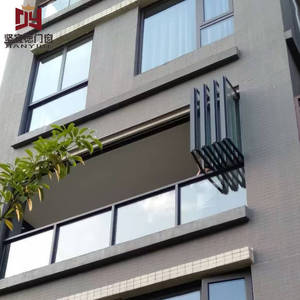 Horizontal Bifold
JIANYIDE Modern Aluminum Alloy Sliding Horizontal Folding Window Sound Insulation Folding Screen 5-Year Warranty Bathroom
- Heavy-duty 6063-T6 alloy folding track
- Concealed acoustic damper gasket
- Integrated retractable folding mesh screen
- Full 5-Year structural & finish warranty
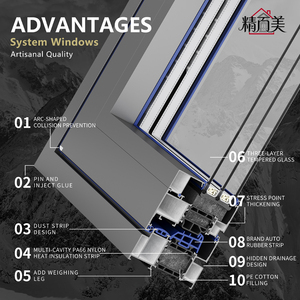 Architectural Casement
Powder Coated Customized Factory Direct Precision Cut Weatherproof Durable Corrosion Resistant Aluminum Villa Window
- AAMA 2604/2605 fluoropolymer finish
- Precision CNC mitered & sealed corners
- Anti-corrosion hardware for wet spaces
- Continuous EPDM triple-fin air seals
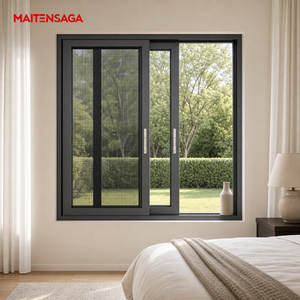 Dual-Track Slider
New Design Aluminum Sliding Window With Insect Screen Energy Saving Custom Size Available For Apartment Kitchen Bathroom
- Precision stainless steel roller tracks
- Integrated micro-pore insect screening
- Thermal break frame barrier (PA66 GF25)
- Low-E double insulated glazing (IGU)
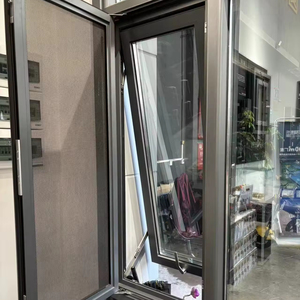 Top-Hung Awning
Beigeman Factory Wholesales Modern House Office Small Metal windows Mosquito Net Custom Aluminum Toilet Bathroom Awning Window
- Heavy-duty friction hinges for high wind
- Multi-point perimeter compression latch
- Effective rainout awning angle design
- Fine 304 stainless mesh anti-bug screen
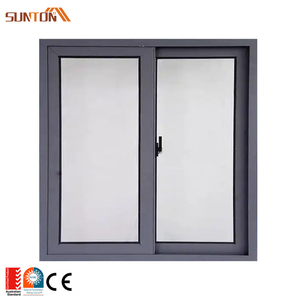 Frosted Privacy
Custom Aluminum Frame Window Interior Small Aluminium Frosted Glass Sliding Bathroom Window Designs For House Hotel Villa Home
- Acid-etched frosted tempered safety glass
- Zero light blockage with 100% privacy
- Moisture-resistant nylon silent rollers
- Slim profile sightlines for compact spaces
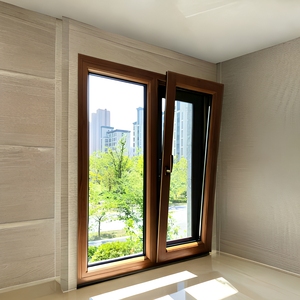 Alu-Clad Tilt & Turn
Manufactures Latest Design Aluminum Wood Triple Glazed Stainless Steel Custom Waterproof Tilt Turn Windows for Bathroom Houses
- Triple-pane laminated acoustic glass unit
- Dual-action top tilt ventilation mode
- Exterior structural aluminium / interior wood
- Concealed weep drainage anti-vapor slot
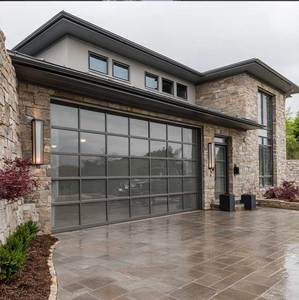 Structural Sectional
Sunnysky Heavy Duty Garage Door Aluminum Sectional Panel Hurricane Proof Multi Lock System Villa Property Access
- Impact-tested hurricane reinforced structure
- High-density polyurethane core insulation
- Multi-point anti-lift automated latching
- Heavy anodized corrosion-proof panels
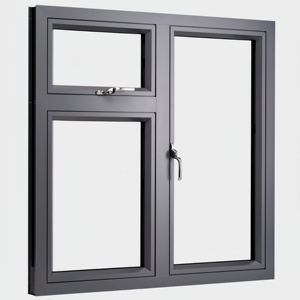 Louver + Casement Combo
Customized Modern Louver Casement Window Large Aluminum Fixed Double Tempered Insulation Glass Soundproof Windproof Heat 5 Year
- Integrated fixed ventilation louver slats
- Double-tempered soundproof insulated glass
- Complete draft and driving-rain barrier
- Full 5-Year commercial warranty
Engineering Principles of Aluminium Bathroom Windows: Overcoming the Microclimate Dilemma
Bathroom fenestration presents one of the most demanding engineering challenges in building envelope design. Unlike perimeter windows in standard residential living zones or commercial office floors, a bathroom window must concurrently withstand two violently divergent microclimates. Internally, ambient relative humidity spikes rapidly past 95% during hot showers, generating heavy steam pressure, condensation runoff, airborne aerosolized soaps, and elevated biological mold risks. Externally, the window frame is subject to wind-driven rain, ultraviolet radiation, and extreme seasonal temperature differentials ranging from -30°C in continental winters to +50°C in Middle Eastern and desert climates.
Core Technical Directive: A standard aluminium window will quickly fail in a wet-room environment. Without precision-designed thermal breaks, galvanic corrosion protection, and pressure-equalized weep channels, moisture migration leads to internal drywall rot, profile corrosion, seal delamination, and rapid loss of airtightness.
China's premier manufacturing ecosystem, spearheaded by advanced industrial clusters in Foshan, Guangdong, has revolutionized bathroom fenestration through targeted metallurgy, composite polymer thermal barriers, and specialized surface passivation techniques. Leading exporters no longer provide generic residential window profiles for humid bathroom spaces. Instead, modern architectural bathroom windows are custom-machined fenestration assemblies engineered with the following critical architectural features:
Polyamide PA66 GF25 Thermal Barriers
By extruding structural 6063-T5/T6 alloy profiles with 24mm to 34mm glass-fiber reinforced polyamide (PA66 GF25) thermal break strips, inner and outer aluminium frames are completely mechanically de-coupled. This eliminates the thermal bridge, preventing moisture from condensing on the interior aluminium surfaces even when exterior winter temperatures plummet.
Pressure-Equalized Sub-Frame Drainage
Condensation and driving rain are managed via tiered, hidden weep drainage ports equipped with anti-backdraft gravity flaps. Moisture falling inside the glazing pocket drains outward along an engineered slope rather than pooling against gaskets, preventing stagnant water buildup and mildew deterioration.
AAMA 2605 & Marine-Grade Anodizing
High moisture levels combined with chemical cleaning agents require resilient surface treatments. Premium exporters utilize electrostatic fluoropolymer PVDF coatings certified to AAMA 2605 or Qualanod Class 1 marine anodizing (minimum 20μm oxide film), resisting pitting, salt air, and peeling over decades.
Future Procurement Trends in Aluminium Bathroom Windows
Global commercial builders, multi-family developers, and hospitality project directors are shifting their sourcing methodologies. Below are the transformative trends reshaping international procurement contracts from Chinese factories.
1. Rise of Prefabricated Bathroom POD Sourcing
Modular construction is booming across the UK, North America, Australia, and the Middle East. General contractors increasingly procure window units directly bundled for off-site bathroom POD manufacturers. This demands millimeter-precise tolerance control (within ±0.5mm), standardized sub-frames, and unified clip-on flashings designed for factory-controlled rapid dry-assembly.
2. Decarbonized & Low-Carbon Recycled Billets
With the European Union’s Carbon Border Adjustment Mechanism (CBAM) and strict LEED/BREEAM scoring in North America, tier-1 Chinese exporters are shifting to hydro-powered aluminium smelting billets with certified recycled scrap content (>75%). Procuring low-embodied carbon aluminium windows has become a decisive prerequisite for winning corporate development tenders.
3. Smart Building Automation (BMS Micro-Ventilation)
Manual window operation is being replaced by integrated 24V DC concealed chain actuators linked to building automation systems (BMS) and smart humidity sensors. Windows automatically tilt open by 10 degrees whenever internal relative humidity surpasses 70% RH, purging moisture without human intervention, and automatically seal shut upon sensing external rainfall.
4. Electrochromic PDLC Dynamic Privacy Glazing
Blinds and curtains harbor moisture, accumulate mold, and fail quickly in shower zones. Procurement contracts are shifting rapidly toward double-glazed units integrated with Polymer Dispersed Liquid Crystal (PDLC) switchable privacy films. With the flick of a wall switch or door sensor, the glass transforms from crystal clear to complete opaque obscuration within milliseconds.
5. Extreme Wind-Load & Water-Tightness Ratings
Coastal resorts, high-rise luxury condominiums, and island villas demand extreme water tightness standards. Global developers are rejecting residential grade windows in favor of systems tested under ASTM E331 at pressure differentials exceeding 700 Pa, ensuring that driving coastal storms cannot force water droplets through the window seals into luxury finishes.
6. Factory-Assembled Integrated Sub-Frame Flanges
To eliminate on-site installation labor costs and errors, overseas buyers now mandate nail fins, continuous perimeter brickmoulds, and factory-applied EPDM expansion flashings. Chinese factories that supply pre-shimmed, turn-key assemblies with pre-drilled anchors are capturing a dominant share of the export market over traditional knockdown shippers.
Key Manufacturing Innovations Dominating Chinese Fenestration Plants
The manufacturing prowess of Foshan and surrounding Guangdong industrial zones has progressed far beyond rudimentary extrusion and manual assembly. Today's premier fenestration facilities represent world-class Industry 4.0 production environments, deploying computerized robotic machining centers, automated sealant robots, and laser alignment measurement systems.
5-Axis CNC Profile Milling
Profiles are machined via German and Italian 5-axis CNC machining centers in a single clamped pass. Hardware pockets, drainage slots, and hinge recesses achieve positioning accuracy within 0.05mm, ensuring smooth operation and zero gasket misalignment.
Corner Crimping with Chem-Glazing
Traditional mechanical corner cleats have been upgraded to hydraulic four-point simultaneous corner-crimping accompanied by high-strength bicomponent polyurethane injected corner sealants, rendering profile miters hermetically watertight.
Robotized Continuous Dual-Seal IGU
Automated insulated glass manufacturing lines apply primary polyisobutylene (PIB) inner seals and high-modulus secondary structural silicone seals with robotic precision, preventing argon gas loss and desiccant saturation within damp environments.
Electromagnetic Levitation Sliders
For ultra-luxury master bathrooms, next-generation sliding windows integrate frictionless magnetic levitation tracks that eliminate traditional mechanical ball-bearing wheels, ensuring lifetime silent gliding unaffected by shower debris or hard water scaling.
Aluminium Bathroom Window Configuration Benchmark
Consultants and architects can cross-reference physical performance metrics, structural capabilities, and recommended fenestration profiles tailored to wet spaces:
| Window Typology | Water Tightness (EN 12208 / ASTM E331) | Air Infiltration (ASTM E283) | Thermal Transmittance (U-Value) | Acoustic Insulation (Rw / STC) | Ideal Architectural Application |
|---|---|---|---|---|---|
| Tilt & Turn Dual-Action | Class 9A (> 600 Pa) | Class 4 (< 0.1 m³/h·m) | 1.2 - 1.5 W/m²K | 38 - 42 dB | Luxury Villas & Cold Climates |
| Top-Hung Awning | Class E750 (> 750 Pa) | Class 4 (< 0.1 m³/h·m) | 1.4 - 1.8 W/m²K | 34 - 38 dB | High-Rise Towers & Rain Zones |
| Heavy-Duty Horizontal Slider | Class 7A (300 - 450 Pa) | Class 3 (< 0.5 m³/h·m) | 1.8 - 2.2 W/m²K | 30 - 35 dB | Apartments & Space-Constrained Rooms |
| Louvered Ventilation Combo | Class 6A (250 Pa continuous) | Controlled passive exchange | N/A (Passive airflow) | 28 - 32 dB | Tropical & Coastal Humidity Zones |
| Horizontal Folding (Bi-Fold) | Class 8A (450 Pa) | Class 3 (< 0.5 m³/h·m) | 1.5 - 1.9 W/m²K | 32 - 36 dB | Resort Spa & Master En-Suites |
Enterprise Production Strengths: The Foshan Industrial Benchmark
Sourcing directly from Guangdong Dejiyoupin Doors and Windows Co., Ltd. (DERCHI) gives project developers, contractors, and international trade partners the confidence of a Tier-1 manufacturing infrastructure built over 25+ years of engineering leadership.
Certified International Compliance
Every window line is rigorously third-party tested and certified to international building codes, including CE (EN 14351-1), AS 2047 (Australian Cyclonic N6 certified), ISO 9001 quality management, and UL fire-rated window specifications, guaranteeing rapid building authority and consultant submittal approvals.
Comprehensive Project CAD Shop Drawings
Our dedicated team of 45+ bilingual fenestration design engineers converts client architectural elevations and window schedules into meticulous structural shop drawings, anchor calculations, thermal simulations, and drainage schematics within 24–48 hours at no additional drafting cost.
Reinforced Heavy-Duty Sea-Freight Packaging
Bathroom windows frequently integrate fragile frosted, fluted, or smart PDLC glass. Every crating unit uses fumigated multi-layer plywood cases, corner edge-protectors, desiccated moisture-barrier shrink wrapping, and steel-band reinforcement, guaranteeing zero damage across multi-thousand-mile sea freight routes.
Frequently Asked Questions for B2B Aluminium Window Buyers
Straightforward technical answers to the most frequent inquiries from project developers, architects, and procurement teams sourcing bathroom fenestration from China.
Request Engineering Review, BIM Models & Direct Quotation
Send your project schedule, architectural elevations, or window specifications directly to our engineering desk in Foshan. Our senior fenestration specialists evaluate wind-load calculations, water penetration criteria, obscuration glass options, and provide full CAD shop drawings within 24 hours.