Engineered Architectural Window & Door Solutions
Pre-tested fenestration systems verified under European Construction Products Regulation (CPR 305/2011), offering structural rigidity, weather tightness, and acoustic isolation for global projects.
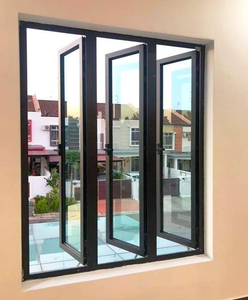
Custom Aluminum Windows and Doors Energy-Efficient Casement Window Wholesale
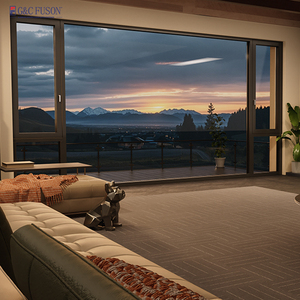
Fuson High Quality Durable Thermal Break Triple Glazing Inward Opening Tilt and Turn Aluminum Windows Bulletproof Windows
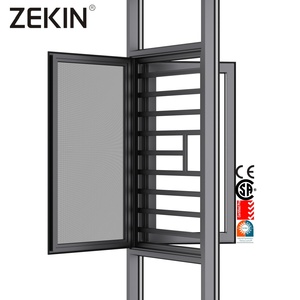
ZEKIN Customized Double Glazed Tempered Aluminium Glass Casement Windows Modern Swing Louver for Living Room Thermal Break
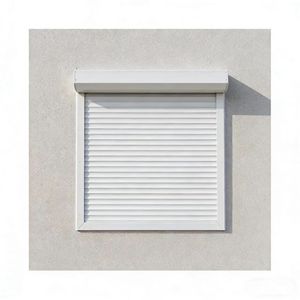
High Quality Aluminum Alloy Waterproof Sun Shading Security Roller Shutter Shop Front Aluminum Roller Shutter Window
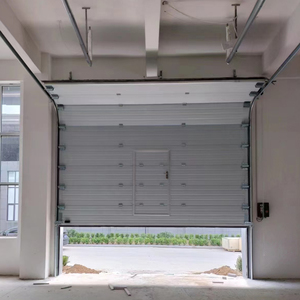
Wholesale Price Modern Design Residential Automatic Sectional Overhead Garage Door Anti-Theft Industrial Sectional Door
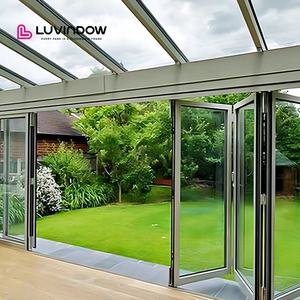
German Standard Aluminium Bifold Accordion windows And Doors Exterior Entry Door
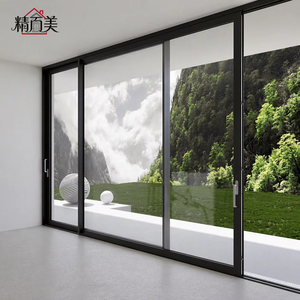
Modern Minimalist Weather Proof Corrosion Resistant Slim Frame Double Tempered Glass Aluminium Lift And Slide Door
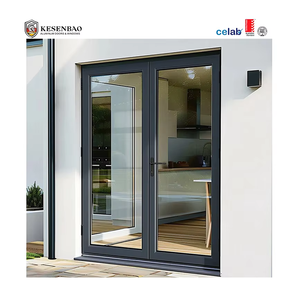
Soundproof Double Glass Aluminum Casement Door Aluminium Swing Door for Hospital House Use
In the contemporary architectural and building envelope engineering landscape, obtaining CE marking for aluminum fenestration products is far more than a customs clearance badge. Regulated under the mandatory European Construction Products Regulation (CPR 305/2011) and evaluated strictly against the harmonized standard EN 14351-1:2006+A2:2016 (Windows and Doors — Product standard, performance characteristics), the CE mark represents an uncompromised verification of structural safety, mechanical integrity, thermal insulation, acoustic comfort, and environmental durability.
As a premier direct-manufacturing facility operating out of Foshan, Guangdong, Guangdong Dejiyoupin Doors and Windows Co., Ltd. (DERCHI) engineers every architectural system to satisfy Assessment and Verification of Constancy of Performance (AVCP) System 3 protocols. Under this mandate, initial type testing (ITT) is executed by accredited European Notified Bodies (NB), validating that whole-window assemblies meet quantified thresholds across watertightness, wind resistance, air permeability, and load-bearing capacity of safety devices before issuing a legally binding Declaration of Performance (DoP).
Mandatory EN 14351-1 Technical Characteristics & Standard Thresholds
| Performance Characteristic | Test Standard | Classification Standard | Factory Baseline Specification |
|---|---|---|---|
| Resistance to Wind Load | EN 12211 | EN 12210 | Class C5 / B5 (Design Pressure P1 up to 2000 Pa; Relative Deflection < 1/300) |
| Watertightness | EN 1027 | EN 12208 | Class E900 to E1200 (Unshielded spray testing up to 1200 Pa dynamic head) |
| Air Permeability | EN 1026 | EN 12207 | Class 4 (Reference air infiltration rate ≤ 3 m³/(h·m²) at 100 Pa) |
| Thermal Transmittance (Uw) | EN ISO 10077-1 / -2 | EN ISO 10077-1 | Uw = 0.82 to 1.35 W/(m²·K) via multi-chamber polyamide thermal breaks |
| Acoustic Performance (Rw) | EN ISO 10140-2 | EN ISO 717-1 | Rw (C; Ctr) = 36 (-1; -4) dB up to 45 (-2; -6) dB with acoustic PVB interlayers |
| Load-bearing capacity of safety devices | EN 14608 / EN 14609 | EN 14351-1 Cl. 4.8 | Threshold Passed: 350 N sustained tensile retention without detachment |
To maintain constancy of performance across thousands of custom-sized units, our 180,000㎡ industrial park enforces automated Factory Production Control (FPC) audited against ISO 9001 and European standards. Continuous batch inspections govern profile wall thickness tolerances (EN 12020-2), corner crimping mechanical shear resistance, and structural silicone adhesion parameters (ETAG 002).
The fenestration sector is experiencing an unprecedented structural transition driven by stringent European zero-emission building mandates (EPBD recast), extreme climatic weather cycles, and modern architectural aesthetics demanding oversized glazing spans with minimal sightlines.
Transitioning from traditional 14.8mm strips to 34mm–54mm multi-cavity, low-lambda polyamide (PA66 GF25) struts with integrated thermal foam inserts (aerogel/polyolefin) to eliminate thermal bridges.
Replacing conductive aluminum spacers with stainless steel-polypropylene composite or structural thermoplastic warm-edge spacers (PSI values ≤ 0.038 W/mK), mitigating condensation along perimeter glass sightlines.
Concealed sash profiles engineered with deep structural bonding, reducing visible frame sightlines down to 21mm–35mm while accommodating triple-glazed units up to 600 kg on heavy-duty stainless steel carriages.
Furthermore, surface finish technologies have shifted toward architectural grade durability. Conventional powder coatings degrade under high-UV solar radiation and humid seaside atmospheres. Our production facility deploys Qualicoat Class 2 super-durable fluoropolymer (PVDF) electrostatic coatings and marine-grade Qualanod anodization (25µm). These treatments ensure our export window systems withstand 3,000 hours of accelerated acetic acid salt spray (AASS) testing without micro-cracking or chalking, fulfilling demands across Mediterranean coastal villas and Gulf desert resorts.
For commercial general contractors, facade consultants, and master developers across Europe, North America, and the Middle East, fenestration procurement has migrated from price-per-square-meter transactions to holistic risk mitigation, lifecycle carbon accounting, and digital integration.
1. Embedded Low-Carbon Aluminum & Circularity Mandates: Global tenders increasingly mandate Environmental Product Declarations (EPD) with verified cradle-to-gate Global Warming Potential (GWP) metrics. By introducing low-carbon primary billets smelted using hydroelectric power alongside closed-loop clean industrial scrap recycling, our extrusion processing restricts embodied carbon below 4.0 kg CO₂e per kg of aluminum, aligning with LEED v4.1 and BREEAM sustainability standards.
2. High-Precision Digital Shop Drawings & BIM LOD 400 Deliverables: Discrepancies between structural concrete openings and factory fenestration assemblies generate catastrophic on-site delays. Modern international procurement requires suppliers to provide parametric BIM objects (Revit, IFC) at Level of Development (LOD) 400, complete with flashing details, expansion joint calculations, thermal isotherm simulations (using LBNL THERM algorithms), and anchor reaction load schedules.
3. One-Stop Whole-Envelope Consolidation: Developers are reducing administrative vendor overhead by partnering with single-source fenestration manufacturers capable of supplying exterior casements, inward tilt-and-turns, oversized motorized pivot entries, insulated overhead sectional doors, and acoustic interior partitions under unified warranty frameworks.
Recognized consistently among China's elite top-tier door and window enterprises, Guangdong Dejiyoupin Doors and Windows Co., Ltd. (DERCHI) combines massive industrial scale with meticulous precision engineering. Our 180,000 square meter intelligent manufacturing facility in Shishan Town, Nanhai District, Foshan represents the cutting edge of modern fenestration fabrication.
Equipped with German and Italian multi-axis machining centers delivering 0.05mm tolerance milling on hardware slots, drainage weep holes, and corner miters for perfect structural corner crimping.
Corner joints utilize reinforced extruded aluminum corner cleats injected under high pressure with specialized two-component polyurethane adhesives, ensuring 100% airtight and waterproof corner seals.
Standard packaging uses multi-layer protective film, custom corner guards, desiccants, and fumigated steel-reinforced wooden crates engineered to survive extreme marine transit without surface abrasion.
Our multi-national engineering desk liaises directly with architects, general contractors, and developers across the European Union, Australia, the United States, Canada, and the GCC. With over 100 global patents, CE declarations, Australian AS 2047 N6 certifications, and UL fire-rated credentials, DERCHI is systematically structured to streamline municipal building inspection approvals and eliminate post-handover operational liabilities.
Critical technical, regulatory, and commercial inquiries clarified by our senior fenestration facade engineers.
1. How does your factory verify compliance with European EN 14351-1 and CPR 305/2011? +
2. What is the typical thermal transmittance (Uw) achievable for cold-climate projects? +
3. How do you handle extreme coastal marine corrosion and desert sandstorms? +
4. Can your engineering team generate CAD shop drawings, wind load calculations, and BIM models? +
5. What acoustic isolation performance can your window and door assemblies deliver? +
6. What are your lead times, minimum order quantities (MOQ), and packaging protocols? +
Request Technical Submittals, Test Reports & Full Catalog
Connect directly with our senior fenestration engineers in Foshan. Submit your door and window schedule, architectural elevations, or structural specifications for certified quotations and free CAD shop drawings.