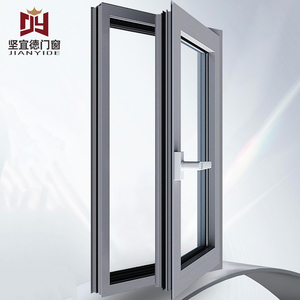
Engineered Fenestration Portfolios
High-Performance Aluminum & Glazing Solutions
Engineered to satisfy demanding European CE standards, Australian AS 2047 benchmarks, and NFRC hurricane ratings for institutional, commercial, and luxury residential envelopes.
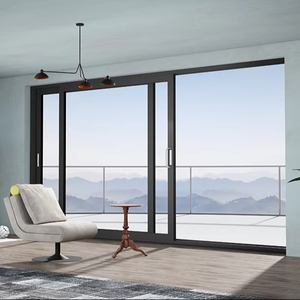
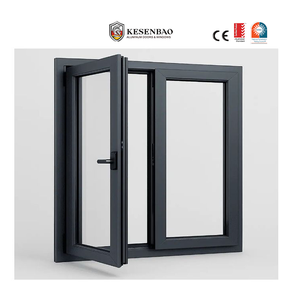
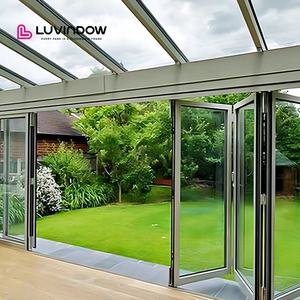
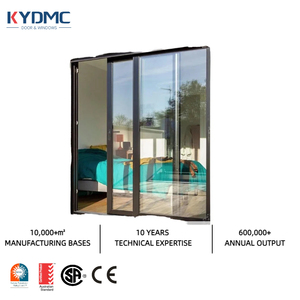
Impact & Sound Resistance
USA Hurricane Proof Aluminum Frame Accordion Doors NFRC Soundproof Bi Folding
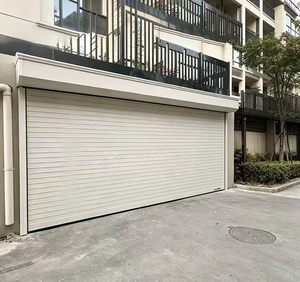
Thermal Security Closures
Aluminum Alloy Automatic Roll Up Insulated Anti-Theft Garage Tambour Door
Technical Whitepaper • CE Directives Execution
Structural Physics and Regulatory Mandates for CE Certified Aluminum Glazing
In global facade engineering and international commercial construction, securing verified CE certification under EN 14351-1:2006+A2:2016 is not merely a label requirement—it represents a comprehensive physical validation covering air permeability, watertightness, wind load resistance, and overall thermal transmittance (U-value). As an established aluminum glazed windows exporter, DERCHI manufactures structural systems capable of withstanding severe atmospheric shifts while optimizing building life-cycle energy consumption.
A true commercial-grade fenestration envelope integrates high-precision structural alloys—principally 6063-T5 and 6063-T6 aluminum—reinforced with multi-chambered polyamide (PA66 GF25) thermal isolators. These thermal breaks interrupt conductive heat bridges across interior and exterior interfaces, dropping the frame thermal bridge values to levels compatible with Passive House benchmarks (Uf ≤ 1.0 W/m²·K). When combined with double or triple insulated glass units (IGU) featuring dual-seal warm-edge polysulfide and polyisobutylene barriers filled with 90% Argon gas, total fenestration performance (Uw) routinely exceeds the strictest mandates enforced by the European Union Energy Performance of Buildings Directive (EPBD).
| Test Parameter | Standard Harmonization | DERCHI Certified Benchmark | Operational Engineering Impact |
|---|---|---|---|
| Air Permeability | EN 1026 / EN 12207 | Class 4 (≤ 3 m³/h·m) | Eliminates involuntary convective air loss under severe 600 Pa exterior air pressure differential. |
| Watertightness | EN 1027 / EN 12208 | Class E1050 (1050 Pa) | Guarantees zero uncontrolled water ingress during hurricane-velocity squalls and severe monsoonal storms. |
| Resistance to Wind Load | EN 12211 / EN 12210 | Class C5 / B5 (±3000 Pa) | Structural frame deflection held under 1/300 with zero frame dislocation, glass failure, or hardware degradation. |
| Acoustic Insulation | EN ISO 10140-2 / EN ISO 717-1 | Rw (C; Ctr) = 44 (-1; -4) dB | Dampens heavy arterial traffic noise, low-frequency subways, and airport ambient disturbance. |
| Thermal Transmittance | EN ISO 10077-1 / EN ISO 10077-2 | Uw = 0.85 - 1.2 W/m²·K | Lowers peak HVAC chiller loads by upwards of 35% across tropical, desert, and alpine thermal climates. |
Procurement Strategy 2026-2030
Emerging Procurement Trends in Glazed Architectural Envelopes
Architects, facade sub-contractors, and institutional developers are overhauling procurement criteria, prioritizing verified environmental declarations, ultra-low embodied carbon, and structural smart integration.
Embodied Carbon & Circular Billets
Global specifications increasingly penalize virgin carbon-intensive aluminum. Tier-1 buyers demand hydro-powered, recycled content billets (exceeding 60% post-industrial aluminum scrap) backed by verified Environmental Product Declarations (EPD) to comply with LEED v4.1 and BREEAM certifications.
BIM Integration & Digital Twin Schedules
Procurement departments have migrated from generic 2D schedules to LOD 350+ and LOD 400 Building Information Modeling (BIM) objects. These files encapsulate precise physical attributes, fastener locations, structural dead-load anchor tolerances, and certified lifecycle values for simulation.
Severe Climate Performance Envelopes
Extreme climate occurrences (coastal typhoons, sandstorm shamals, and +50°C heat domes) dictate an escalation in mandatory factory-applied testing. Exporters must demonstrate verified dual-compliance, bridging CE metrics simultaneously with North American NFRC/AAMA and Australian AS 2047 frameworks.
Technological Innovations
Future Development Trends in Aluminum Window Systems
The convergence of material physics, optoelectronics, and micro-machining is driving significant advancements in the fenestration export industry.
Vacuum Insulated Glass (VIG)
Next-generation fenestration combines 0.15mm high-vacuum central gaps with warm-edge spacers, achieving center-of-glass thermal resistance equivalent to 300mm of solid masonry (Ug ≤ 0.4 W/m²·K) without the extreme mass of standard triple glazing.
Electrochromic Dynamic Tints
Automated solar-control coatings seamlessly adjust tint based on direct pyranometer readings or building management systems (BMS), actively slashing interior solar heat gain coefficients (SHGC) while maintaining optimal daylight factor metrics.
Automated Actuation Hardware
Concealed drive motors integrated into the euro-groove perimeter framework enable autonomous natural smoke ventilation, night purge cooling cycles, and structural air balancing controlled via Zigbee, KNX, or BACnet protocols.
Fluoropolymer Hyper-Durable PVDF
Transition from standard architectural powder coatings to 70% Kynar 500/Hylar 5000 PVDF and Class 3 anodizing finishes guarantees color fastness and chalk resistance exceeding 30 years under severe UV exposure and marine salt atmospheric ratings (C5-M).
Enterprise Strength • DERCHI Engineering
Precision Manufacturing Engineered at Global Scale
Operating as Guangdong Dejiyoupin Doors and Windows Co., Ltd. (DERCHI), our engineering complex represents one of China's Top 10 fenestration and entrance system manufacturers. For over 25 years, we have supplied complex architectural projects across the United States, Europe, Australia, Canada, the Philippines, and the Middle East GCC territory.
Our infrastructure eliminates intermediary distributor markups, providing direct engineering oversight from initial CAD/BIM shop drawings to precision CNC extrusion, assembly, thermal chamber testing, and ocean-going structural container dispatch.
180,000㎡
Integrated Factory Base
600+
Skilled Specialists
100+
Patents & Credentials
Our manufactured configurations satisfy multi-jurisdictional criteria: including CE EN 14351-1, ISO 9001 quality management, AS 2047 N6 cyclonic testing, NFRC thermal rating, and UL fire performance standards.
Contact Us
Clarity & Verification
Frequently Asked Questions on CE Certified Glazing Systems
Comprehensive engineering clarifications addressing the logistical, structural, and contractual concerns of international facade engineers and procurement officers.
What documentation accompanies an export shipment to verify CE EN 14351-1 compliance?
Every export shipment includes a formal Declaration of Performance (DoP), documented Factory Production Control (FPC) records, third-party Notified Body Initial Type Testing (ITT) reports, and individual product CE labels indicating verified Air Permeability, Watertightness, Wind Load Resistance, and Acoustic/Thermal performance indices.
How do thermal break profiles prevent condensation in high-humidity coastal zones?
By embedding low-conductivity fiberglass-reinforced Polyamide (PA66 GF25) strips between inner and outer extruded aluminum walls, our systems maintain interior surface temperatures above the critical atmospheric dew point. Coupled with warm-edge glass spacers and Argon gas cavities, this prevents interior condensation, mold growth, and water-induced drywall staining even during humid subtropical coastal conditions.
Can DERCHI systems achieve simultaneous compliance for both CE and North American AAMA/NFRC standards?
Yes. Our structural profiles feature universal Euro-groove hardware configurations and engineered wall thicknesses exceeding 2.0mm. We regularly engineer framing systems that satisfy European harmonized norms (EN 14351-1) while passing NFRC 100/200/500 thermal testing and ASTM E1886/E1996 hurricane missile impact performance criteria for coastal project deployments.
What are the minimum packaging protocols used to eliminate transit vibration and sea-salt corrosion?
Finished units are protected with non-residue surface adhesive films, corner-block protectors, multi-layer pearl cotton foam, and then sealed in vacuum-wrapped moisture barrier poly-sheeting. They are packed in ISPM-15 compliant, heat-treated plywood crates reinforced with internal steel dunnage to withstand heavy maritime ocean vibration and high-humidity salt spray during long journeys.
What is the standard engineering production timeline for custom architectural schedules?
Following final architectural shop drawing sign-off and color chip verification, fabrication cycles run 25 to 35 calendar days across our 180,000㎡ manufacturing base. For complex projects requiring specialized extrusion dies, high-performance low-iron coatings, or custom European hardware mechanisms, fabrication times range between 40 and 45 days prior to container loading.
Does DERCHI provide complete custom engineering support for oversized corner and pivot openings?
Yes. Our in-house facade engineering department supplies complimentary CAD elevation drawings, wind load deflection calculations, glass stress analysis, and structural connection details for oversized corner casements, large-span bifold assemblies, and heavy commercial pivot systems before production begins.
Ready to Engineer Your Project's Fenestration Envelope?
Collaborate directly with our certified technical engineers. Send your door/window schedules, architectural CAD sections, or project tender requirements for a comprehensive specification review and formal quotation within 24 hours.