High-Performance Fenestration Systems Engineered for Critical Envelopes
In high-density commercial construction and extreme-climate residential design, sourcing certified architectural envelope solutions dictates long-term thermal efficiency, structural integrity, and life-safety performance. Guangdong Dejiyoupin Doors and Windows Co., Ltd. (DERCHI) leads international fenestration manufacturing from Foshan, China, delivering verified CE-compliant (EN 14351-1), AS2047, and ISO-tested systems designed to resist hurricane-force windloads, coastal saline oxidation, and solar heat gain.
Intelligent CNC machining, robotic extrusion processing, and automated corner crimping lines.
Top 10 Chinese premium fenestration brand with cross-continental delivery to over 60 nations.
Proprietary multi-cavity thermal break designs, acoustic dampening chambers, and concealed pivot hinges.
In-house façade engineers, BIM/CAD draftsmen, and stringent pre-shipment QC testing inspectors.
Precision-Engineered Architectural Systems & Hardware
Explore our core product line manufactured under CE, ISO9001, and AS2047 quality control standards. Each unit undergoes multi-stage structural tolerance validation prior to marine export packaging.
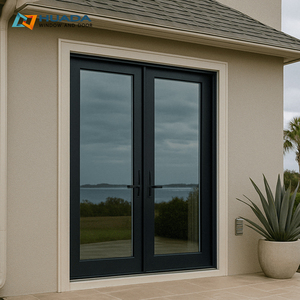
Soundproof Hurricane Impact Double Glazed French Doors
Structural Compliance & Fenestration Performance Standards
A comprehensive breakdown of structural, acoustic, and thermal thresholds required for CE marking (EN 14351-1), Australian AS2047 certification, and North American NFRC verification.
| Evaluation Parameter | Testing Standard | DERCHI Engineering Specification | Architectural Impact | Certification |
|---|---|---|---|---|
| Thermal Transmittance (Uw) | EN ISO 10077-1 / NFRC 100 | 1.1 – 1.6 W/(m²·K) with PA66 GF25 thermal breaks | Exceeds ASHRAE 90.1 energy baselines, minimizing cooling loads in Gulf/Tropical zones | CE Certified |
| Air Permeability | EN 12207 / AS 4420.4 | Class 4 (600 Pa maximum pressure rating) | Zero desert sand infiltration and minimal HVAC conditioned air loss | AS2047 Passed |
| Watertightness | EN 12208 / ASTM E331 | Class 9A / E1050 (Static testing up to 1050 Pa) | Hermetic barrier preventing building envelope moisture intrusion during storm surges | CE Certified |
| Wind Load Resistance | EN 12210 / AS 4420.2 | Class C5 / N6 Rating (> 4500 Pa ultimate limit state) | Allows floor-to-ceiling panoramic glass panes without structural mullion flutter | AS2047 N6 |
| Acoustic Attenuation (Rw) | EN ISO 717-1 / ASTM E90 | Rw = 38 dB to 46 dB (Laminated acoustic PVB configurations) | Crucial for urban hotel guestrooms, perimeter office towers, and airport vicinities | ISO 9001 Tested |
Extrusion Chemistry: 6063-T5 vs 6063-T6
We mandate aerospace-grade primary aluminum billet, strictly avoiding recycled scrap metal which introduces micro-porosity and brittle fracture under high cyclic wind loads. Profiles feature wall thicknesses from 1.8mm to 3.0mm, calibrated via finite element analysis (FEA) to exceed global deflection standards (L/175 and L/250).
Technoform PA66 GF25 Multi-Cavity Insulation
Cheaper windows utilize low-density PVC thermal breaks which distort and crack under direct solar ultraviolet exposure exceeding 60°C. DERCHI integrates German-engineered Technoform polyamide strips (PA66 reinforced with 25% glass fiber) matching aluminum's thermal expansion coefficient to prevent delamination.
Glazing Sputtering & Warm-Edge Spacers
Our Insulated Glass Units (IGUs) incorporate high-performance double or triple silver Magnetron Sputtered Vacuum Deposition (MSVD) Low-E coatings. Coupled with Swisspex warm-edge composite spacers and 95% pure Argon gas fill, our window assemblies curb radiative heat gain while maintaining superior daylight transmittance.
Emerging Technology Trends in High-Performance Glazing
The architectural envelope industry is undergoing radical shifts driven by stringent net-zero mandates, dynamic facade automation, and supply chain digitalization. Contractors must anticipate these procurement movements to future-proof their building assets.
Low-Carbon Circular Aluminum
Tier-1 commercial developers now stipulate Environmental Product Declarations (EPDs). Sourcing low-carbon primary aluminum smelted with renewable hydroelectric energy drops profile carbon footprints from 18kg CO2/kg to below 4kg CO2/kg, securing LEED and BREEAM credits.
Vacuum Insulated Glass (VIG)
Hybrid VIG assemblies achieve center-of-glass thermal performance of Ug = 0.4 W/(m²·K) within an ultra-thin 8.3mm profile, eliminating cumbersome triple-glazing deadweight and allowing expansive panoramic spans in heritage retrofit and ultra-modern curtainwall settings.
Electrochromic Smart Tinting
Solid-state dynamic glazing transitions between transparent and tinted states via low-voltage electrical signals. Integrated with Building Management Systems (BMS), these windows regulate solar heat gain coefficient (SHGC) dynamically, slashing peak air-conditioning loads by up to 28%.
Narrow-Sightline Concealed Frames
Architects demand frameless aesthetics. Structural silicone glazing (SSG) combined with concealed perimeter frames and flush sills merges indoor and outdoor spaces while preserving multi-point locking security, acoustic dampening, and water ingress prevention.
Factory Moats & Global Project Fulfillment Architecture
Guangdong Dejiyoupin Doors and Windows Co., Ltd. serves as an end-to-end manufacturing partner, taking projects from initial architectural sketches to verified sea-freight container deliveries without third-party middleman markup.
Complimentary CAD & BIM Engineering
Our dedicated engineering department reviews door schedules, elevation drawings, wind load calculations, and structural anchors. We generate precise shop drawings and 3D mockups for architectural submittals, verifying zero on-site installation variance prior to extrusion cutting.
One-Stop Architectural Envelope Sourcing
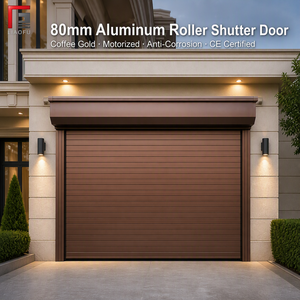
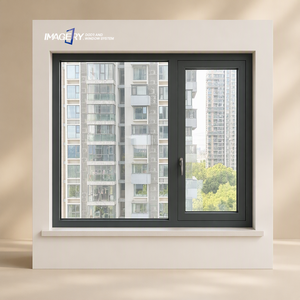
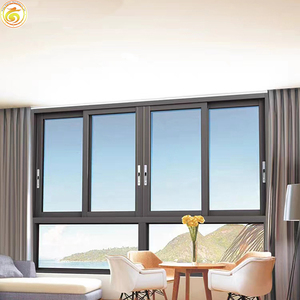
Eliminate multi-vendor coordination headaches. DERCHI delivers integrated packages encompassing casement windows, oversized pivot doors, soundproof sliding systems, rolling shutters, and cast aluminum perimeter gates, ensuring cohesive hardware anodization and uniform glazing tint across your entire development.
Heavy-Duty Marine Export Crating
Long sea transits expose cargo to saline moisture, turbulence, and mechanical abrasion. Every DERCHI assembly is sealed in moisture-barrier film, safeguarded with corner protective caps, and bolted into reinforced, fumigated plywood crates engineered for seamless crane and forklift site handling.
Frequently Asked Questions by Commercial Buyers & Importers
Direct answers addressing certification submittals, factory testing procedures, custom extrusion lead times, and on-site contractor installation protocols.
Q How does DERCHI verify CE compliance according to EN 14351-1?
Our production strictly adheres to the Factory Production Control (FPC) system stipulated under CE marking protocols for windows and external pedestrian doorsets. Each system is tested by accredited notified bodies for wind load resistance (EN 12210), watertightness (EN 12208), air permeability (EN 12207), and thermal transmittance (EN ISO 10077-1). Declarations of Performance (DoP) and full test laboratory reports are provided directly to consulting engineers for council and municipal permits.
Q What are the standard production lead times for custom commercial orders?
For standard profile extrusions in stocked finishes (e.g., anodized black, architectural bronze, fluorocarbon RAL coatings), production spans 25 to 35 business days following final sign-off of shop drawings. Bespoke dies requiring proprietary custom profile tooling require an additional 12–15 days for die matrix fabrication and sample billet extrusion approval. Sea freight transit times range between 18–25 days depending on the port of destination.
Q Can DERCHI windows perform in extreme 50°C desert heat and high-saline coastal settings?
Yes. For Gulf (UAE, KSA, Qatar) and coastal locations, we specify electrostatically applied Qualicoat-certified fluoropolymer powder coatings or minimum 25-micron deep anodizing, impervious to salt spray corrosion and relentless UV degradation. Coupled with multi-cavity Technoform PA66 GF25 thermal breaks and EPDM co-extruded perimeter gaskets, our fenestration prevents thermal conduction and eliminates seal embrittlement.
Q How is the risk of insulated glass spontaneous breakage mitigated?
All fully tempered glass panels pass through rigorous Heat Soak Testing (HST) according to EN 14179-1 standards within our factory. This thermal cycle converts residual Nickel Sulfide (NiS) inclusions into their expanded beta phase, inducing early controlled fracture inside our chambers rather than catastrophic on-site failure after building handover. For safety-critical overhead and balustrade installations, SentryGlas (SGP) ionoplast interlayers are incorporated.
Q What hardware systems and multi-point locks are configured into DERCHI assemblies?
To guarantee longevity and smooth mechanical action under heavy double- and triple-glazed leaf weights (up to 400kg per sash), we partner with world-renowned fenestration hardware manufacturers including German Siegenia, Hoppe, Roto, and Italian Giesse. Heavy-duty multipoint perimeter locking pins and anti-lift cams ensure bur-glary resistance up to European RC2/RC3 standards.
Q How does DERCHI support remote contractor installation and jobsite assembly?
Each shipment includes detailed 3D step-by-step installation manuals, localized wiring schematics for motorized units, and component tagging matching the project master door schedule. Furthermore, our English-speaking project engineers conduct live video technical support with site foremen and fenestration subcontractors to guarantee proper shim placement, perimeter expanding foam insulation, and EPDM flashing membrane sealing.
Elevate Your Next Project With Certified Fenestration Excellence
Direct direct-factory supply chains give you maximum cost advantage without compromising on EN 14351-1 or AS2047 compliance. Click below to initiate instant live consultation with our senior architectural fenestration engineers.
Inquire Now