Watertight / Marine
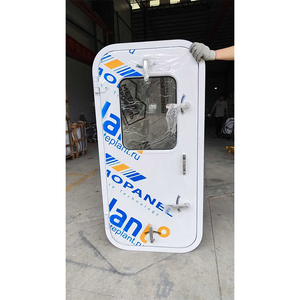
Explore our factory-direct catalog of pressure-tight, weathertight, impact-resistant, and EMI-shielding bulkhead doors configured for offshore platforms, commercial naval vessels, transit tunnels, and architectural sub-structures.
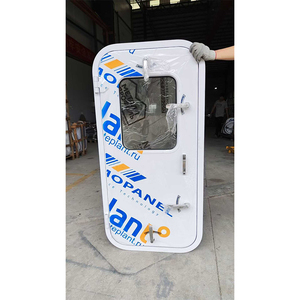
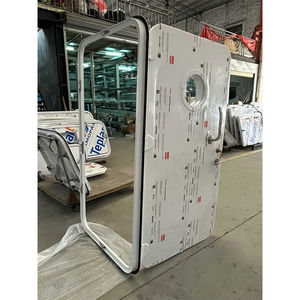
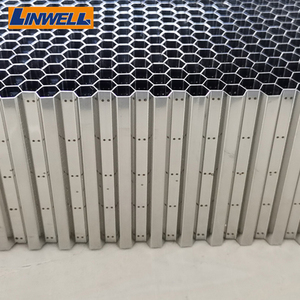
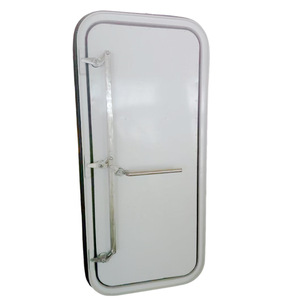
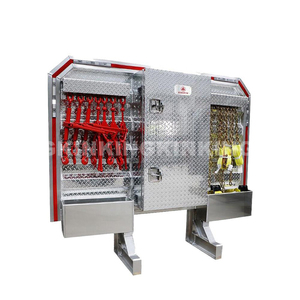
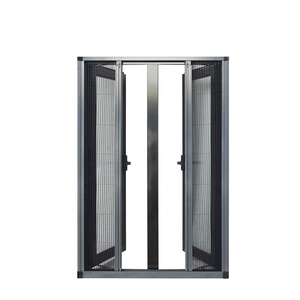
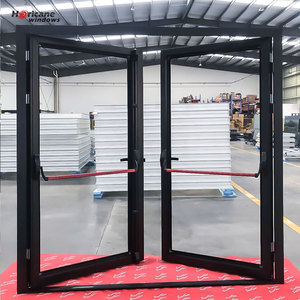
Specifying aluminum bulkhead doors demands an exhaustive analysis of yield strengths, deflection coefficients under dynamic hydrodynamic loading, galvanic corrosion barriers, and regulatory compliance under EN 14351-1 and the Marine Equipment Directive (MED).
Aluminum bulkhead door systems represent the apex of specialized structural closure engineering. Deployed across marine vessels, coastal flood defenses, deep basement access vaults, and high-speed rail cabins, these systems serve as critical containment barriers against catastrophic environmental encroachment. Unlike generic commercial architectural doors, bulkhead systems are engineered to withstand differential static head pressures ranging from 0.05 MPa to over 0.25 MPa (equivalent to 25 meters of static water column) while preserving absolute gasket contact pressure across the coaming circumference.
The selection of aluminum alloys determines lifecycle success in aggressively corrosive maritime and subterranean environments. Our production lines deploy primary-melt AlMg4.5Mn0.7 (EN AW-5083 / H116) for marine bulkhead skins and structural stiffeners, delivering exceptional intergranular and exfoliation corrosion resistance in salt-spray atmospheres without requiring volatile cladding layers. For complex structural extruded frames, 6082-T6 and 6061-T6 are treated through proprietary homogenization and artificial aging ovens to provide a minimum yield strength ($R_{p0.2}$) of 260 MPa, balancing high toughness with ductile energy dissipation under impulsive wave impact.
Compliance with the European Conformity (CE) standard under EN 14351-1 (Windows and External Pedestrian Doorsets) and EN 1634-1 / IMO FTP Code Part 3 (Fire Resistance and Smoke Control) forms the contractual baseline for tier-one EPC contractors. Our automated multi-axis milling centers construct deep coamings featuring CNC-radiused corners to distribute mechanical stresses, mitigating the fatigue cracking notorious in sharply welded rectangular bulkheads. Hinge lugs and dogging pivot shafts are precision machined from marine grade 316L stainless steel or nickel-aluminum bronze, insulated from aluminum profiles using glass-filled PTFE or polyacetal sleeves to permanently eliminate galvanic electrolysis.
Gasket topology determines the barrier's ultimate hermetic and watertight seal performance. We utilize dual-durometer EPDM and fluorosilicone extrusion profiles formulated for compression set resistance under continuous cyclic pressure. During factory qualification testing, each CE-certified door leaf is clamped against a calibrated hydrostatic test bench where water pressure is stepped at 10-minute intervals up to 1.5 times the operational design load. Deflection gauges monitor leaf face displacement, guaranteeing elastic recovery without permanent plastic deformation or dog spindle misalignment.
| Performance Characteristic | 5083-H116 Marine Aluminum | 316L Marine Stainless Steel | Structural Carbon Steel (Q235/Q355) | Fiberglass Reinforced Polymer (FRP) |
|---|---|---|---|---|
| Density & Dead-Weight Ratio | 2.66 g/cm³ (Lowest Weight) | 7.98 g/cm³ (300% Heavier) | 7.85 g/cm³ (295% Heavier) | 1.80 g/cm³ (Lightest, Low Rigidity) |
| Marine Corrosion Resistance | Passive Al₂O₃ oxide layer; self-healing | High; prone to crevice attack in low oxygen | Poor; requires continuous epoxy coating | Immune to chemical corrosion |
| Static Hydrostatic Deflection Limit | High elastic modulus with internal ribbing | Extremely rigid, difficult field rework | High rigidity, heavy ballast penalty | Prone to creep deflection over time |
| Blast / Kinetic Impact Absorption | High elongation & shock absorption | Superior impact resistance | High impact resistance; brittle cold snap | Delamination & brittle catastrophic fail |
| Maintenance & Service Cycle | Zero routine painting; 25+ yr life | Periodic pickling/passivation checks | Frequent recoating & sandblasting needed | Gelcoat degradation under UV exposure |
The global procurement landscape for industrial and marine access infrastructure is shifting rapidly toward carbon-efficient lightweighting, intelligent monitoring telemetry, and pre-commissioned modularity.
Naval architects and offshore EPCs are actively replacing cumbersome carbon-steel coamings with structural aluminum bulkhead assemblies to strip above-waterline superstructure weight. Shaving up to 60% of top-side door mass directly lowers vessel center of gravity ($KG$), enhancing dynamic stability, increasing payload capacities, and curbing fuel consumption to align with strict IMO EEDI (Energy Efficiency Design Index) benchmarks.
Next-generation commercial and defense bulkhead doors are integrating fiber-optic and piezoelectric tactile sensor matrices directly into elastomeric seal grooves. These integrated smart coamings transmit real-time compressive force analytics to central SCADA and bridge management systems, warning maintenance crews of localized gasket relaxation, debris clogs, or dogging misalignments before compartment flooding can take place.
Modern shipyards and civil infrastructure developers are shifting away from on-site, piece-by-piece hardware fitting. Sourcing mandates now demand fully pre-hung, factory-squared aluminum bulkhead door sets with pre-drilled bolt flanges or weld-ready backing bars. This modular approach reduces yard labor hours by over 45% and eliminates human error during dog latch timing and coaming perimeter alignment.
Guangdong Dejiyoupin Doors and Windows Co., Ltd. (DERCHI) operates China's foremost automated doors and structural entrance manufacturing campus, blending heavy industrial engineering with precision architectural metallurgy.
By eliminating third-party sub-contracting for core manufacturing, DERCHI maintains rigorous traceability from raw billet extrusion to final container packing. Our heavy industrial campus features specialized CNC gantry milling machines capable of continuous 12-meter profile machining with positioning accuracy down to ±0.03mm. Robotic MIG and TIG pulsed welding lines ensure total weld penetration on marine alloy coamings, preventing micro-porosity defects that cause air or pressure leaks in demanding bulkhead installations.
Our in-house surface treatment complex utilizes 16-stage chemical pre-treatment baths and vertical automated fluoropolymer (PVDF) electrostatic powder coating lines. Bulkhead door skins and frame structures undergo qualicoat-approved finishing to withstand accelerated salt spray exposure exceeding 3,500 hours (ASTM B117), ensuring high cosmetic and structural stability even when exposed to severe maritime brine, UV radiation, and offshore chemical washdowns.
Before leaving the factory floor, every safety-critical bulkhead door undergoes rigorous non-destructive testing (NDT), including dye penetrant inspection (DPI) and ultrasonic testing (UT) across all structural welds. Our internal hydrostatic testing facility subjects sample configurations to custom pressure cycles, validating compliance against rigorous class society guidelines, including DNV-GL, Lloyd’s Register, ABS, and CE industrial barrier rules.
Additionally, our engineering documentation team provides comprehensive submittal packages including 3D SolidWorks and Autodesk Revit BIM models, finite element analysis (FEA) deflection diagrams, mill test certificates (MTC 3.1), and complete weld inspection reports. Global EPC contractors, naval shipbuilders, and civil authorities receive third-party audited documentation that expedites consultant sign-offs and prevents commissioning delays at job sites worldwide.
Clear, definitive technical answers addressing regulatory compliance, mechanical linkage sizing, corrosion prevention, and custom shipyard procurement.
Bulkhead doors are engineered as structural load-bearing closures capable of maintaining watertight, gastight, or fire-barrier compartmental integrity under severe hydrostatic or aerodynamic pressure differentials. Standard industrial doors are only rated for air infiltration and light wind loads. In contrast, an aluminum bulkhead door includes heavy extruded coamings, high-tensile stiffened internal ribs, multi-point mechanical dogging linkages (or center handwheels), and high-durometer compression gaskets designed to prevent water ingress under deep immersion or dynamic wave action.
CE marking for external structural doors is governed by EN 14351-1:2006+A2:2016, evaluating watertightness (EN 1027/12208), air permeability (EN 1026/12207), and resistance to wind loads (EN 12211/12210). For marine vessel applications, doors conform to the European Marine Equipment Directive (MED 2014/90/EU - Module B & D) and IMO FTP Code requirements for fire, gas, and smoke containment. DERCHI maintains third-party notified body audit reports, factory production control (FPC) certificates, and full Declarations of Performance (DoP).
Direct contact between aluminum and dissimilar metals (such as carbon steel or stainless fasteners) creates a galvanic cell that accelerates aluminum corrosion. We eliminate this vulnerability through engineered isolation kits. Coaming interfaces use non-hygroscopic dielectric neoprene or high-density polyoxymethylene (POM) gaskets, while bolting points incorporate fiberglass-reinforced insulating bushings and non-conductive washers. Where aluminum coamings must be welded to a carbon steel bulkhead, we supply bi-metallic explosive transition strips (e.g., Al-Steel structural transition joints) to ensure atomic-level bonding without electrolytic exposure.
Watertight (WT) bulkhead doors are engineered to prevent the passage of water in either direction under continuous static water head pressure (immersion). They are located below the freeboard deck, in watertight internal bulkheads, or in flood retention basements. Weathertight (WET) doors are designed to prevent water ingress under heavy, short-term sea spray, driving torrential rain, or hose-down tests (e.g., ISO 12216 Area I/II), typically positioned in deckhouses and above-deck superstructures.
We are a true engineering factory: 100% of our production can be customized to match your project's clear opening schedules, coaming heights, sill depths, and corner radius requirements. Our internal engineering department provides free CAD shop drawings, finite element deflection simulations, and fastener layout schematics for consulting engineers to review before casting or extrusion fabrication begins.
We configure three primary dogging systems: (1) Individual Dogs, requiring manual rotation of 4 to 8 perimeter dogs for simple utility chambers; (2) Central Handwheel Quick-Acting Linkage, utilizing internal heavy-duty stainless steel pushrods that engage all perimeter dogs with a single 90° to 180° rotation from either side; and (3) Panic Crash-Bar Quick Escape Mechanisms, built with spring-loaded emergency egress bars for public safety, escape tunnels, and engine rooms.
Standard custom orders require 3 to 4 weeks for precision manufacturing, welding, coating, and pressure-bench QA sign-off following approved shop drawings. Urgent shipyard dry-dock repairs or fast-track construction projects can be expedited through dedicated fast-lane machining cells. Finished orders are securely packed in heavy-duty export plywood cases with internal vapor-barrier wraps and desiccants, then shipped worldwide via maritime container or priority air-freight.
Connect directly with our senior marine and structural door engineers. Send us your door schedules, opening drawings, required water head ratings, or class society requirements for a comprehensive review within 24 hours.