High-Performance Certified Architectural Safety Doors
Manufactured under ISO 9001 and rigorously validated against EN 1627–1630 burglary resistance and UL/EN 16034 fire certification standards for global developers, commercial facilities, and luxury estates.
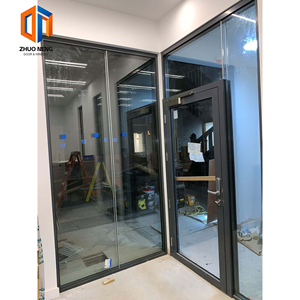
Custom Safety Entry Glass Fire Security Door Aluminum Modern Design Interior Use Fire Prevention Sound Insulation for Hotels
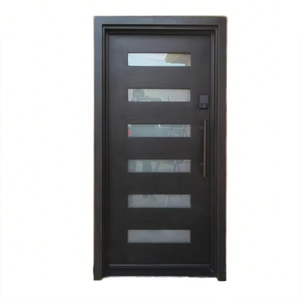
Houses Exterior Modern Casement Door Aluminum Entry Doors Exterior Security Doors
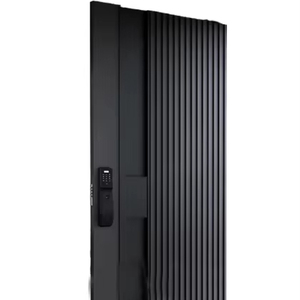
BST Ex-01 Modern Aluminium Anti-Theft Security Exterior Entry Door With 5 Year Warranty For Residential & Hotel Use
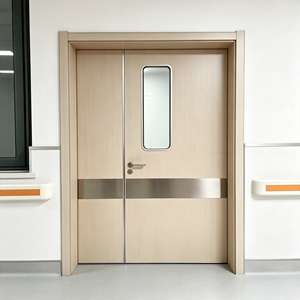
Aluminium Interior Screen Door Australia Crimsafe 304 Stainless Steel Security Door Anti-theft Casement Modern Design
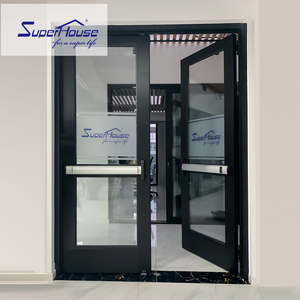
Modern Fire Rated 30/60/90/120 Minutes Steel Aluminum Glass Safety Escape Door For Interior Commercial Buildings Emergency Exit
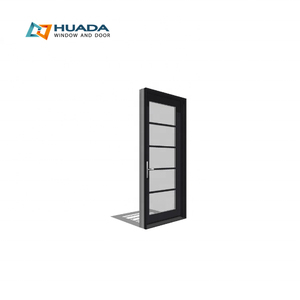
HuaDa CSA Approved Customized Casement Aluminium Alloy Glass Door Exterior Security Entrance Steel Main Doors
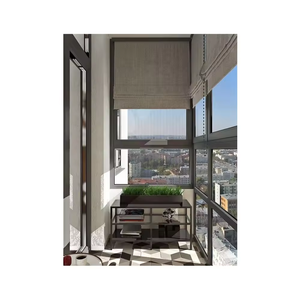
Fuson Wholesale Private Label Products Wholesale Price Latest Design Windows and Doors China Supplier Aluminium Sliding Window
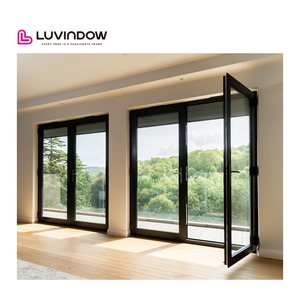
Luvindow Aluminum French Design Mother and Son Double Open Door Modern Front Hinged Main Entrance Door with Grille Design
Engineering Excellence: Structural Integrity & European CE Conformity
In modern building envelope engineering, specifying an external safety door demands a rigorous equilibrium between physical perimeter security, thermodynamics, acoustic attenuation, and architectural aesthetics. As an industry-leading manufacturer with over 25 years of specialized craftsmanship, Guangdong Dejiyoupin Doors and Windows Co., Ltd. (DERCHI) operates one of the world's most sophisticated door and window manufacturing bases. Occupying 180,000 square meters in Shishan Town, Foshan, Guangdong, our enterprise coordinates precision extrusion, robotic CNC milling, automated powder coating, and specialized assembly lines staffed by more than 600 skilled technicians.
Our comprehensive testing protocols simulate real-world physical intrusion, coastal salinity exposure, cyclic structural fatigue, and fire propagation. Holding over 8 international institutional certifications (CE, ISO 9001, AS 2047, CSA, UL) and more than 30 national invention and utility design patents, DERCHI delivers custom engineered perimeter security solutions trusted across the Middle East, North America, the European Union, Australia, and Southeast Asia.
CE Certification Matrix: Decoding EN 1627 Resistance Classes (RC)
Procurement committees and lead architectural specifiers often encounter ambiguity between marketing claims of "high-security doors" and true third-party verified mechanical resistance. European Standard EN 1627 categorizes intrusion resistance based on verified static load pressure, dynamic pendulum impact, and standardized manual attack attempts using specific tool kits:
| Resistance Class | Static Pressure (kN) | Dynamic Impact (J) | Manual Attack Time | Tool Kit Class & Attack Methodology | Typical Target Application |
|---|---|---|---|---|---|
| RC 2 | 3.0 kN | 300 J | 3 Minutes | Screwdrivers, pliers, wedges, mechanical hand tools | Residential compounds, suburban apartments |
| RC 3 | 6.0 kN | 600 J | 5 Minutes | Crowbars (710mm), mechanical drill bits, claw hammer | Luxury villas, diplomatic residences, executive suites |
| RC 4 | 10.0 kN | 1000 J | 10 Minutes | Heavy sledgehammers, chisels, cordless drills, axe | Banks, data centers, embassies, VIP estates |
| RC 5 / RC 6 | 15.0+ kN | Special Test | 15 - 20 Minutes | High-power angle grinders, sabre saws, thermal lances | Military bases, bullion vaults, strategic infrastructure |
DERCHI's flagship aluminum entry lines feature multi-chambered internal profiles embedded with 2.5mm–3.5mm structural steel inserts around the lock body and hinge anchor points. This configuration consistently achieves certified EN 1627 RC3 and RC4 performance thresholds without subjecting the door leaf to unwieldy deadweight.
Integrated Direct-from-Factory Advantage
Bypassing trading intermediaries, DERCHI provides project developers and general contractors with end-to-end manufacturing governance directly from our Foshan facility. Our internal engineering department generates customized 2D/3D CAD shop drawings, finite element stress simulations, and thermal conductance models for consultant submittal and municipal authority approvals.
- Aviation-Grade Raw Materials: Virgin 6063-T6 & 6061-T6 aluminum alloys yielding tensile strengths exceeding 240 MPa.
- German Surface Treatments: AkzoNobel powder coatings and 25-micron Qualicoat Class II anodizing resilient against 3,000 hours of accelerated salt spray testing.
- Hardware Versatility: Seamless compatibility with European multi-point automatic deadbolts, Italian heavy-duty concealed pivots, and motorized biometric access controls.

Technological & Engineering Development Trends in Safety Doors
The global aluminum fenestration and entrance door sector is undergoing an unprecedented technological transition driven by stricter energy conservation mandates, the proliferation of Internet-of-Things (IoT) ecosystems, and aggressive extreme-weather mitigation benchmarks.
Polyamide Thermal Barriers
Adoption of 34mm–54mm continuous glass-fiber reinforced polyamide (PA66 GF25) thermal insulation struts reducing door profile thermal transmittance (Uf) to under 1.1 W/(m²·K), aligning with Passive House criteria.
Mechatronic Smart Locks
Direct integration of low-draw mechatronic multi-point motorized mortise systems. Door leaves interface with building management systems (BMS) via encrypted Zigbee, Matter, or RS485 communication protocols.
Monolithic Oversized Pivot Systems
Architectural demand for soaring main entrances has catalyzed pivot hinges engineered for panels up to 3.0 meters wide and 6.0 meters tall, sustaining weights up to 1,000 kg with micro-hydraulic closing dampers.
Dual-Shield Fire & Ballistic Hybrids
Integrating intumescent core matrices and multi-layered ceramic-infused aluminum alloy panels to simultaneously provide 30-to-120-minute EN 1634 fire endurance alongside EN 1063 ballistic defense (BR2 to BR6).
Sub-Zero & Desert Sealing Tech
Transition from standard neoprene to co-extruded cellular EPDM and vulcanized silicone multi-barrier perimeter gaskets, retaining mechanical recovery and elasticity from -40°C arctic freezes up to +85°C desert surface heat.
Closed-Loop Circular Metallurgy
Global procurement directives now reward low embodied-carbon aluminum. Manufacturers utilize hydro-powered and recycled billet sourcing, providing certified Environmental Product Declarations (EPDs) for LEED and BREEAM credits.
Future B2B Procurement Trends: Strategic Sourcing for Developers
Procuring architectural aluminum safety doors across international boundaries is no longer merely a transactional exercise based on bill-of-quantities (BOQ) unit costs. Institutional developers, international general contractors, and tier-1 facade consultants are restructuring their supply chain strategies based on four macro procurement transformations:
1. Verification of Factory-Direct Testing Documentation
Due to stringent building code oversight in North America, Western Europe, and the GCC region, project sign-offs require verifiable test submittals. Future-focused procurement directors require full-scale test reports from accredited bodies (such as ift Rosenheim, Intertek, or SGS) specifying exact leaf dimensions, extrusion profiles, and locking hardware configurations identical to the specified project schedule.
2. Consolidation of Whole-Envelope Systems
Contractors are actively phasing out fragmented multi-vendor sourcing. Sourcing entrance safety doors, exterior curtain wall fenestration, automated garage doors, and fire egress escape systems from a single integrated enterprise drastically reduces interface risks, warranty disputes, and freight overhead. Single-source delivery through DERCHI ensures unified anodizing and powder-coating batch color matching across all facade elements.
3. Pre-Engineered Modular Installation Ready Assemblies
With escalating on-site jobsite labor costs in destination markets, commercial buyers demand doors shipped as pre-hung, factory-calibrated assemblies. DERCHI's proprietary export crating encompasses fully pre-assembled sub-frames, pre-installed perimeter gaskets, factory-mortised hardware cutouts, and color-coded plug-and-play wiring looms for electric strikes and biometric sensors, decreasing on-site labor overhead by up to 65%.
| Evaluation Parameter | Standard Market Commodity Door | DERCHI CE Certified Safety System | Direct Project Benefit |
|---|---|---|---|
| Alloy Composition | Recycled mixed scrap aluminum; inconsistent temper | 100% Primary 6063-T6 / 6061-T6 certified billet | Zero structural brittle failure; superior surface finish |
| Thermal Core Break | Poured resin or non-reinforced PVC bridge (<14mm) | Continuous PA66 GF25 techno-polymer strip (34mm-54mm) | Eliminates interior surface condensation & HVAC loss |
| Locking Mechanism | Single deadbolt or manual 3-point latch system | Automatic multi-point hook bolt system with anti-drill manganese plates | EN 1627 RC3/RC4 certified anti-pry intrusion defense |
| Hardware Anchorage | Self-tapping screws directly into thin aluminum walls | Reinforced 4.0mm stainless steel tapped backing plates | Zero hinge sag after 500,000+ continuous operating cycles |
| Submittal Support | Generic brochures; no custom structural engineering | Full project-specific 2D CAD, 3D BIM, and FEA calculations | Rapid approvals by municipal inspectors & lead consultants |
Comprehensive Procurement & Engineering FAQ
Technical and commercial answers addressing common engineering queries from developers, lead specifiers, and procurement directors.
What specific European norms define a legitimate CE marking on an aluminium safety door?
Under EU Regulation (EU) No 305/2011 (Construction Products Regulation), an external pedestrian doorset must comply with harmonized standard EN 14351-1:2006+A2:2016. This covers air permeability (EN 1026), water tightness (EN 1027), wind load resistance (EN 12211), thermal transmittance (EN ISO 10077), and acoustic performance (EN ISO 10140). Furthermore, when safety and anti-burglary characteristics are declared, compliance is evaluated via EN 1627 through EN 1630. For fire-rated escape installations, the door must additionally satisfy EN 16034 with third-party Factory Production Control (FPC) audit documentation and a legitimate Declaration of Performance (DoP).
How do thermally broken aluminum safety doors maintain structural rigidity under extreme temperature variations?
Extreme thermal differentials (such as desert climates where outer skins exceed +75°C while interior air-conditioned spaces remain at +22°C) induce the "bimetallic effect," causing un-engineered doors to bow or bind. DERCHI engineers mitigate this through multi-part mechanically interlocked split-profile extrusions equipped with sliding insulating strips (anti-bi-metal polyamide barriers). This design permits differential expansion between the inner and outer aluminum skins while maintaining airtight sealing and effortless latching engagement.
Can your manufacturing facility accommodate custom architectural dimensions and oversized pivot formats?
Yes. Approximately 85% of our production consists of fully customized structural assemblies. We manufacture single-leaf pivot doors exceeding 3,000mm in width and 6,000mm in height. Our in-house engineering team provides complete 2D/3D shop drawings, dynamic pivot offset balancing calculations, and floor spring hydraulic sizing based on local wind loading simulations prior to CNC metal cutting.
What surface finishes are recommended for harsh coastal or marine project locations?
For installations situated within 5 km of an ocean shoreline, standard architectural powder coatings are vulnerable to filiform corrosion. We recommend either our 25-micron Qualanod architectural anodized finish or Qualicoat Seaside-grade fluoropolymer (PVDF) powder coatings utilizing AkzoNobel or PPG resin systems. These finishes survive continuous ASTM B117 neutral salt spray testing exceeding 3,000 hours without bubbling, chalking, or delamination.
What is the standard production lead time and international export packaging protocol?
Standard bespoke production timelines range from 25 to 35 working days following CAD drawing sign-off and color chip verification. Export products are packed for container sea freight: each leaf is wrapped in peelable PE protective film, sealed with closed-cell corner foam guards, enclosed in vacuum moisture-barrier bags, and crated inside fumigated ISPM-15 plywood cases reinforced with internal steel perimeter bands.
How does DERCHI assist international clients with on-site installation and hardware commissioning?
Every shipment is accompanied by comprehensive step-by-step installation manuals in English, accompanied by 4K high-definition video guides detailing frame assembly, anchor expansion bolt spacing, perimeter sealant flashing, and multi-point lock adjustment. Furthermore, our fluent English-speaking senior facade engineers provide 24/7 remote video technical supervision aligned with clients' local working hours.
Request Complete Architectural Whitepaper & Technical Catalog
Connect directly with our Foshan engineering headquarters to receive full CAD profile sections, test certificates (EN 1627 / UL / AS 2047), and a project-specific estimate within 24 hours.