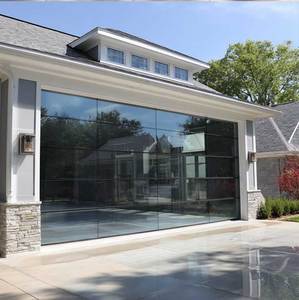
Engineered Portfolio
Commercial & Architectural Door Systems
Explore our export-grade aluminium and architectural fenestration solutions tested to European CE, North American NFRC, and Australian AS 2047 benchmark certifications.
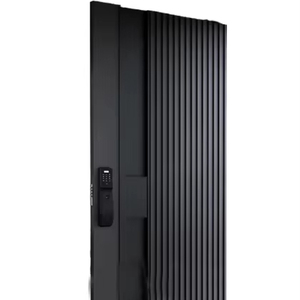
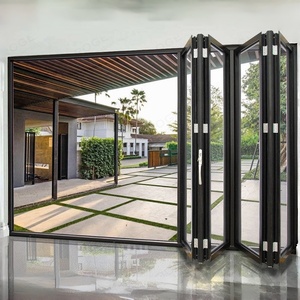
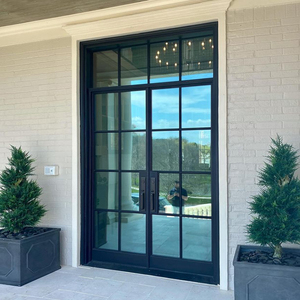
Operational Scale
Guangdong Dejiyoupin Doors and Windows Co., Ltd. (DERCHI)
Ranked among the Top 10 fenestration and door manufacturers in China, operating an integrated 180,000㎡ industrial park in Foshan, Guangdong to fulfill global project tenders.
180,000㎡
Production Footprint
600+
Certified Technicians
100+
Patents & CE/AS Tests
25+
Years Manufacturing
CE & EN 14351-1 Validated
Full conformance to European Construction Products Regulation (CPR 305/2011) standards.
Extrusion Metallurgy Control
Utilizing virgin 6063-T5/T6 architectural alloys with strict wall thickness control (1.4mm to 2.2mm).
Moisture & Salt-Spray Resistance
PVDF and Qualicoat-certified powder coatings exceeding 1,000-hour continuous salt-spray tests.
Shop Drawings & BIM Precision
Full CAD detailing, structural wind loading verification, and BIM coordination prior to production.
Technical Whitepaper
Engineering Specifications for CE Certified Aluminium Laundry Doors
A comprehensive technical overview analyzing hydrothermal loads, airtightness grading, structural deflection, and multi-point locking in architectural utility doors.
1. The Demands on Modern Laundry & Wet Room Joinery
In architectural and multi-family residential construction, laundry and utility egress doors face severe operational stress. Unlike standard exterior fenestration or interior passageway joinery, an aluminium laundry door must bridge disparate environmental zones: an interior micro-climate marked by high relative humidity (often exceeding 80% RH during wash-and-dry cycles), elevated airborne detergent surfactant vapors, and high-frequency usage, against exterior conditions that can swing from freezing temperatures to scorching 50°C solar radiation.
Traditional timber cores or low-gauge vinyl units undergo rapid structural compromise under these conditions—manifesting as warping, perimeter delamination, fungal propagation, and seal failures. As a leading manufacturer and exporter, DERCHI addresses these critical failure modes through aerospace-grade 6063-T5 and 6063-T6 extruded aluminium profiles, coupled with mechanical thermal breaks crafted from polyamide PA66 reinforced with 25% glass fiber. This guarantees complete dimensional stability under intense hygrothermal cycling.
2. CE Certification Parameters (EN 14351-1:2006+A2:2016 Conformance)
For European project procurement, specifiers, developers, and facade consultants require verified performance documentation under the European Construction Products Regulation (CPR 305/2011). CE marking for aluminium exterior utility and laundry entrance assemblies verifies rigorous test metrics across key engineering disciplines:
| Performance Criterion | Harmonized European Test Standard | DERCHI Engineering Benchmark |
|---|---|---|
| Airtightness (Air Permeability) | EN 1026 / EN 12207 | Class 4 (Achieving ≤ 3 m³/(h·m²) at 100 Pa, with zero leakage along corners) |
| Watertightness Under Pressure | EN 1027 / EN 12208 | Class 9A / E900 (Guaranteed zero moisture ingress under 900 Pa dynamic water test) |
| Resistance to Wind Load | EN 12211 / EN 12210 | Class C5 (Deflection parameter < 1/300 under 2000 Pa structural design pressure) |
| Thermal Transmittance (U-Value) | EN ISO 10077-1 / EN ISO 10077-2 | Uw down to 1.1 W/(m²·K) with Argon-filled triple low-E insulated glass units |
| Mechanical Durability / Operating Forces | EN 1191 / EN 12046-2 | Class 8 (Over 100,000 continuous opening and closing cycles without hinge drop) |
3. Acoustic Isolation & Micro-Ventilation Architecture
High-performance laundry room design requires careful noise management. Commercial and high-speed residential washing extractors generate low-frequency vibration and acoustic pressure levels up to 78 dBA. When laundry rooms sit next to kitchens, living spaces, or bedrooms, uninsulated single-panel doors allow structure-borne noise to escape.
DERCHI’s laundry doors integrate multi-cavity extrusion profiles lined with acoustic insulation and paired with high-performance sound-dampening glass (such as 6mm + 12A + 6mm acoustic PVB laminated compositions), achieving Rw acoustic attenuation ratings of 38 dB to 42 dB. To prevent mold from stagnant humidity without compromising security, we integrate concealed labyrinth micro-ventilation louvers or motorized trickler vents with moisture sensors. These extract damp air while preventing pest intrusion and water ingress.
4. Powder Coating & Anodizing Resilience Against Aggressive Chemistry
Laundry environments expose interior frames to alkaline and acid-based detergents, bleaches, and cleaning chemicals. Standard commercial decorative paint finishes bubble and peel within 24 months. Our factory utilizes vertical automated electrostatic powder spraying lines applying AkzoNobel or PPG resins to meet Qualicoat Class 2 architectural specifications.
For projects within 3 kilometers of open sea, our marine-grade anodized profiles undergo a 25-micron anodic oxidation process, forming an impenetrable barrier against coastal salt fog and internal moisture. All hardware—including multi-point shootbolts, internal levers, and adjustable 3D barrel hinges—is forged from Grade 304 or 316 stainless steel with an electro-passivated finish to prevent galvanic corrosion.
Future Procurement Vectors
Emerging Design & Technology Trends in Aluminium Doors
How international building codes, sustainability mandates, and luxury residential design are reshaping specifications through 2030.
Ultra-Narrow Sightlines & Daylight Maximization
Developers are moving away from heavy 80mm face profiles toward ultra-slim 25mm to 38mm sightlines. By utilizing high-yield 6063-T6 alloy sections, doors maintain wind-load resistance while letting in maximum natural light, visually expanding smaller service entries.
Smart Building & IoT Access Integration
Service areas increasingly require secure, logged access for housekeeping and property maintenance. Next-generation utility doors integrate concealed 12V DC power transfers, biometric fingerprint handles, magnetic reed sensors, and remote monitoring that interfaces with Crestron, Control4, and KNX automation protocols.
Low-Carbon Aluminum & Circular LCA Mandates
Global environmental mandates now demand strict Life Cycle Assessments (LCA) and Environmental Product Declarations (EPD). Procuring systems made with recycled billet and certified low-carbon aluminium helps projects earn points toward LEED Platinum, BREEAM, and Estidama Pearl ratings.
Procurement Clarity
Frequently Asked Questions for Project Procurement
Clear, technical answers to common queries raised by general contractors, quantity surveyors, and architectural procurement teams.
Why choose thermal-break aluminium over PVC or timber for laundry doors?
Timber doors expand, contract, and bow under repeated laundry humidity and temperature swings, while uPVC expands significantly and has low structural rigidity under high wind loads. Thermally broken aluminium (with PA66 polyamide insulation) eliminates condensation and rot while maintaining absolute structural stability and clean, modern sightlines.
How does CE certification protect project developers and importers?
CE certification is a legal prerequisite for construction products within the European Economic Area under EN 14351-1. It provides official third-party validation that the doors have passed rigorous lab testing for air permeability, water tightness, structural wind resistance, and thermal efficiency—protecting developers against site rejection and regulatory non-compliance.
Can DERCHI engineer custom sizes and integrate louvers or pet entrances?
Yes. As an OEM/ODM manufacturer, all DERCHI door profiles are cut and assembled to millimeter-exact dimensions. We can integrate fixed or operable rain-proof acoustic louvers, patterned privacy glass, integrated motorized blinds, and customized hardware cutouts directly from approved shop drawings.
What packaging safeguards are implemented for long-distance container freight?
All doors are wrapped in anti-scratch protective film, sealed in closed-cell PE foam envelopes, fitted with reinforced corner guards, and secured inside fumigated non-coniferous hardwood crates with moisture-absorbing desiccants. This keeps panels free from scuffing, frame torsion, and moisture during ocean transport.
What is the typical production lead time for full-container export orders?
Standard architectural anodized or powder-coated orders are completed within 25 to 35 calendar days following CAD shop drawing approval and deposit receipt. We can run expedited production for phased commercial deliveries or urgent construction schedules.
What hardware grades are standard on DERCHI high-humidity doors?
We configure systems with German-engineered Siegenia, Hoppe, or premium custom DERCHI Grade 304/316 stainless-steel mechanisms. These include multi-point perimeter compression gearboxes, anti-corrosion roller bearings, and heavy-duty EPDM co-extruded gaskets to ensure smooth, reliable long-term operation.
Initiate Your Engineering Specification & Tendering Process
Send us your door schedules, elevation drawings, and thermal requirements. Our technical sales engineers in Foshan will prepare detailed shop drawings, structural wind-load checks, and export pricing within 24 hours.
Get a Quote