Verified Engineering Portfolio
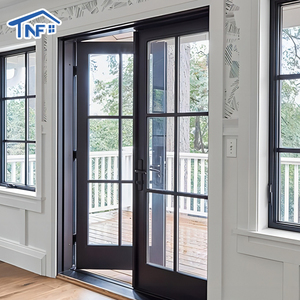
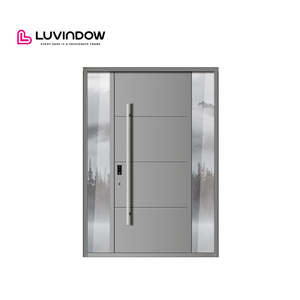
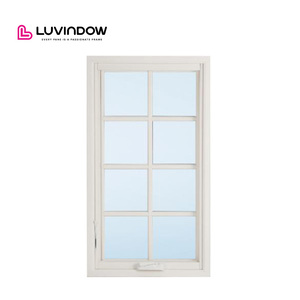
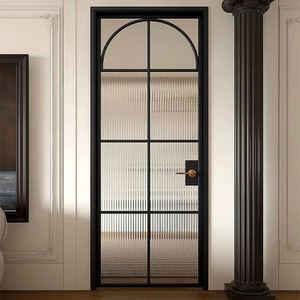
Featured European-Spec Aluminium & Glass Architectural Systems
Precision-machined structural aluminium assemblies fitted with certified obscured, acid-etched, and multi-laminate tempered safety glass units manufactured for heavy-traffic global projects.
Engineering Whitepaper & Metallurgical Science
Architectural Mechanics: Why CE Certification Dictates Frosted Glass Performance
In contemporary architectural glazing, specifying commercial-grade aluminium frosted glass doors requires a rigorous synthesis of profile extrusion metallurgy, surface etching topography, and compliant thermal boundary engineering.
Under the European Union Construction Products Regulation (CPR 305/2011) and the harmonized standard EN 14351-1:2006+A2:2016, external and internal architectural entrance sets must carry verified Declarations of Performance (DoP). Sourcing from vetted CE certified manufacturers guarantees structural resilience against uniform dynamic wind loads, eliminates structural deflection of ultra-slim profiles, and mitigates safety risks associated with thermal shock or improper glass tempering.
Aluminium frosted glass doors serve a dual imperative across healthcare hospitality, luxury corporate headquarters, and high-density residential developments: calibrated optical privacy without the sacrifice of natural daylight transmittance ($V_{LT}$). Achieving precise levels of obscurity (obscuration index grades from G1 to G4) demands standardized surface processing—either through hydrofluoric chemical acid-etching (producing a velvety, non-porous finish resistant to lipid fingerprint marking) or multi-grit industrial sandblasting hermetically sealed with UV-cured hydrophobic coatings.
| Performance Vector | Commercial Frosted Glass Spec | Testing & Compliance Protocol | Architectural Impact Gain |
|---|---|---|---|
| Thermal Transmittance ($U_d$) | 1.1 – 1.6 W/(m²·K) with Polyamide Thermal Break | EN ISO 10077-1 / EN ISO 10077-2 | Eliminates internal condensation; minimizes HVAC energy dissipation by up to 34%. |
| Acoustic Attenuation ($R_w$) | 32 dB – 44 dB (Acoustic PVB Laminated Frosted IGU) | EN ISO 717-1 / EN ISO 10140-2 | Crucial for executive boardrooms, healthcare consulting rooms, and hotel en-suites. |
| Impact Safety & Fracture | Class 1B1 / Class 1C1 Toughened & Laminated | EN 12600 / EN 12150-1 | Prevents injury upon high-velocity bodily impact; fragments crumble into blunt granules. |
| Wind Load Resistance | Class C5 / B5 (Pressure test up to 3000 Pa) | EN 12210 / EN 12211 | Profiles resist severe cyclonic crosswinds without structural deflection exceeding L/300. |
| Air Permeability & Water Seal | Class 4 (600 Pa) / Class 9A (600 Pa Watertight) | EN 1026 / EN 12207 & EN 1027 / EN 12208 | Three-tier co-extruded EPDM continuous perimeter gaskets stop drafts and driving rain. |
Future Sourcing Intelligence
Key Sourcing & Procurement Trends Shaping Global Fenestration (2025–2030)
Procurement directors, general contractors, and facade consultants are adjusting supply chain frameworks to prioritize sustainable circularity, smart glazing integration, and pre-engineered modular delivery.
Decarbonized Circular Aluminium (Low Embodied Carbon)
Global architectural tenders increasingly penalize high-carbon aluminium extrusions. Sourcing mandates now demand billets refined using renewable hydropower or certified secondary scrap (post-consumer recycled content > 65%), allowing Tier-1 builders to satisfy rigorous LEED v4.1 and BREEAM decarbonization criteria while mitigating EU Carbon Border Adjustment Mechanism (CBAM) fiscal penalties.
Dynamic Switchable PDLC Smart-Frosted Glazing
The boundary between static frosted glass and electronic smart glass is dissolving. Commercial project specifications are rapidly moving toward hybrid polymer dispersed liquid crystal (PDLC) double-glazed units integrated into concealed low-voltage aluminium door profiles. This technology allows glass to transition from fully transparent to total frosted opacity in under 100 milliseconds via building automation triggers.
Ultra-Narrow Sightline Structural Systems (Minimalism)
Architectural demand has shifted decisively away from chunky 80mm face profiles toward ultra-slim 20mm–28mm visible stile profiles engineered from 6063-T6 virgin architectural alloys. These micro-sightline frosted doors utilize structural silicone glazing (SSG) technology where the frosted glass panel acts as a primary load-bearing shear member, enabling floor-to-ceiling heights exceeding 3500mm.
Prefabricated "Plug-and-Play" Pre-Hung Modular Assemblies
Skyrocketing job-site labor rates in Europe, North America, and Australasia make on-site door glazing economically prohibitive. Exporters who provide fully pre-hung door systems—complete with factory-calibrated hidden 3D adjustable hinges, pre-routed Euro-groove multi-point locking mechanisms, and pre-glazed frosted panels—reduce job-site installation timelines by up to 70%.
Qualicoat Class 3 & Marine-Grade Fluoropolymer Finishes
Coastal and high-salinity marine environments (such as luxury coastal villas and island resorts) are leading to premature delamination of conventional powder coatings. Leading procurement schedules now insist on Qualicoat Seaside Class 2 or AAMA 2605-compliant PVDF coatings capable of withstanding 4,000+ hours of continuous neutral salt spray testing without micro-blistering or fading.
Acoustic Interlayer Integration with Frosted Privacy
Modern acoustic optimization no longer treats privacy and sound attenuation as separate specifications. The latest manufacturing process combines chemical acid-etched glass with multi-layer acoustic PVB (polyvinyl butyral) interlayers within a single composite laminate ($10.76mm$ to $12.76mm$), effectively addressing speech privacy compliance (ASTM E1130) in open-concept environments.
Factory-Direct Manufacturing Edge
Why DERCHI (Guangdong Dejiyoupin) Stands as an Industry Pillar
Ranked among China's Top 10 High-End Fenestration Brands, Guangdong Dejiyoupin Doors and Windows Co., Ltd. (DERCHI) operates from a world-class 180,000㎡ industrial manufacturing complex located in Foshan, Guangdong. Backed by 25+ years of metallurgical expertise, we solve the engineering complexities of global Tier-1 developers and contractors.
Full-Spectrum Certifications
Our complete product portfolio holds CE (EN 14351-1), ISO 9001, AS 2047 N6 (Australia's highest cyclonic testing tier), NFRC, and UL fire-rated credentials, ensuring effortless authority submittals across the EU, GCC, and North America.
In-House CNC Fabrication
Equipped with multi-axis automated German CNC routing centres, our Foshan factory maintains microscopic mechanical tolerances (±0.5mm), guaranteeing structural squareness, flawless miter joints, and airtight perimeter seal integration.
Extreme Climate Engineering
Our bespoke assemblies are engineered to withstand the harshest regional environments: resisting 50°C hyper-arid desert summers in the Gulf, high-salinity humidity in the South Pacific, and sub-zero freeze-thaw cycles in North America.
B2B Procurement & Engineering FAQ
Frequently Asked Technical Questions by Architects, General Contractors & Importers
Detailed answers addressing certification parameters, shipping protection, custom fabrication, and international building code compliance.
What specific test documentation constitutes a genuine CE certified aluminium frosted glass door under EN 14351-1? +
A legally binding CE mark under EN 14351-1:2006+A2:2016 requires more than a simple factory self-declaration. It demands an official Initial Type Testing (ITT) report executed by an accredited European Notified Body (NB). Key verified characteristics must include Air Permeability (EN 1026/EN 12207), Watertightness (EN 1027/EN 12208), Resistance to Wind Load (EN 12211/EN 12210), Acoustic Performance (EN ISO 140-3 / EN ISO 717-1), and Thermal Transmittance ($U_w$ / $U_d$ via calculation according to EN ISO 10077-1/-2). Additionally, the glass component must separately carry CE certification under EN 12150-1 (for thermally toughened safety glass) or EN 14449 (for laminated safety glass). We provide complete Declarations of Performance (DoP) with clear batch trace codes for every container shipped.
How does acid-etched frosted glass compare to sandblasted glass in terms of durability and maintenance? +
While both achieve visual obscurity, their microscopic surface characteristics are fundamentally distinct:
- Acid-Etched Glass: Produced via a controlled hydrofluoric acid bath that chemically re-polishes the glass surface on a molecular scale. This creates an ultra-smooth, uniform satin texture. It is naturally impervious to grease, sweat, and fingerprint absorption, making it extraordinarily easy to clean with standard neutral detergents. It never wears off, peel, or discolors over decades.
- Sandblasted Glass: Created by physically abrading the surface with high-velocity sand or mineral particles. This leaves microscopic fractures, pits, and pores that readily trap airborne dust, humidity, and skin lipids unless treated with a secondary sealer. For high-traffic commercial projects, hotels, and luxury bathrooms, we strongly specify acid-etched frosted glass for superior lifecycle ROI.
What are the exact thermal break specifications utilized to achieve low U-values in hot or freezing climates? +
Our high-efficiency exterior doors utilize multi-cavity, thermally broken 6063-T6 architectural aluminium extrusions separated by structural, glass-fiber-reinforced polyamide insulating bars (PA66 GF25) measuring 24mm to 34mm in depth. This breaks the conductive thermal bridge between the exterior and interior aluminium profiles. Combined with double- or triple-glazed argon-gas-filled insulated glass units (IGUs) incorporating low-emissivity (Low-E) soft coatings and warm-edge composite spacers (such as Technoform or Swisspacer), our systems consistently hit overall system $U_d$ values between 1.1 and 1.4 W/(m²·K), meeting strict European Passivhaus-level and GCC Estidama / Sa'fat thermal envelope codes.
How does the factory prevent scratching and transport damage during transoceanic shipping? +
Export logistics require robust packaging engineering. Every DERCHI aluminium frame receives a surface-protective PE anti-scratch film before entering the crating bay. Corners are capped with high-density EVA shock-absorbing foam bumpers. The glass panels (especially the etched surfaces) are isolated using peelable electrostatic films and separated with vulcanized cork distance pads to prevent friction-induced hazing. The complete door assembly is wrapped in waterproof bubble-barrier laminate, secured within fully-enclosed, heat-treated plywood crates (ISPM 15 compliant for pest control), and palletized with steel strapping for seamless forklift maneuvering into 20GP or 40HQ maritime containers.
Can DERCHI supply complete custom-engineered door schedules matching specific architect CAD/BIM specifications? +
Yes. We regularly execute fully customized door and fenestration packages for complex developments. Our engineering technical office utilizes SolidWorks, AutoCAD, and Revit to evaluate your structural openings, wall junctions, wind load conditions, and hardware schedules. We supply free comprehensive shop drawings within 24 to 48 hours for consultant approval—including structural deflection calculations, threshold drainage details, frame anchor placement schemes, and precise glass build-up cross sections.
What hardware configurations and lifecycle cycles are tested on your aluminium swing and pivot frosted doors? +
Our door systems integrate European hardware mechanisms from internationally recognized leaders such as Siegenia, GU, Roto, and Dormakaba, as well as our proprietary precision-machined heavy-duty stainless steel fittings. Systems undergo rigorous lifecycle bench testing exceeding 100,000 to 200,000 continuous opening and closing cycles in compliance with EN 1191 and EN 12400 (Class 8). Multi-point perimeter deadbolt latching ensures high security (RC2 / RC3 burglary resistance standards), while concealed overhead hydraulic door closers offer adjustable closing speed and latching action.
Partner with a World-Class Aluminium Glazing Manufacturer
Whether you require a project takeoff for 500+ luxury hotel guestroom doors, structural pivot entryways for private estates, or high-performance commercial storefront systems, our senior facade engineers provide complete technical, commercial, and logistical submittals.