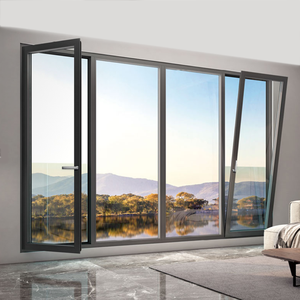
Precision Product Portfolio
Engineered Architectural Solutions & Fenestration Systems
Explore our primary structural configurations certified under European Norms (EN 14351-1), featuring heavy-duty 6063-T6 thermal extrusions, acoustic glazing, and multi-point security hardware.
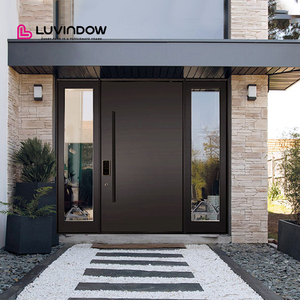
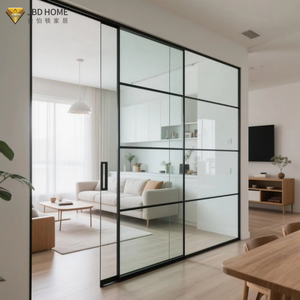
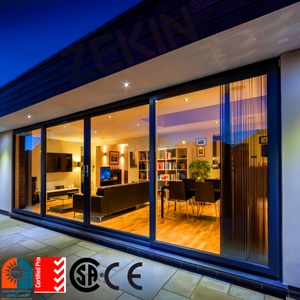
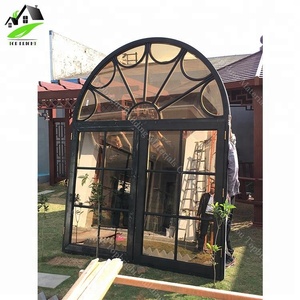
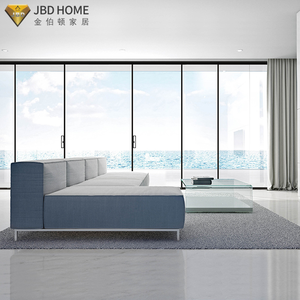
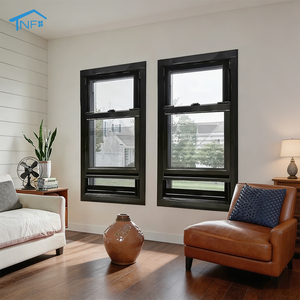
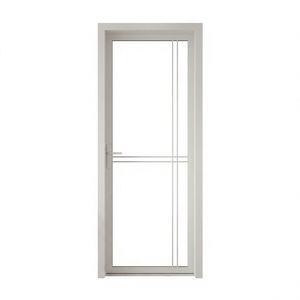
CE Certification Standards for Aluminium Entrance Systems: EN 14351-1 Technical Blueprint
In modern commercial architecture and residential building development, sourcing exterior door assemblies demands rigorous compliance with the European Construction Products Regulation (CPR 305/2011). A valid CE mark is not merely a commercial passport; it represents validated empirical testing under harmonized standard EN 14351-1:2006+A2:2016. This standard governs external pedestrian doorsets without resistance to fire and/or smoke leakage characteristics, verifying operational integrity across crucial performance vectors: air permeability, watertightness, wind load resistance, and thermal transmittance.
Engineering Directive: Sourcing high-performance aluminium front doors requires looking beyond cosmetic finishes. Procurement teams must scrutinize the Declaration of Performance (DoP), thermal break barrier materials (specifically PA66 GF25 polyamide), multi-point mechanical locking tolerances under EN 1627-1630 (RC2 to RC4 burglar resistance), and cyclic operating durability tested to EN 1191 (Grade 8: 1,000,000 test cycles).
Mechanical Rigidity & Thermal Decoupling Analysis
Aluminium is inherently an exceptional conductor of thermal energy. Achieving low Overall Heat Transfer Coefficients (Ud ≤ 0.95 W/m²K) required by strict energy codes (such as German EnEV and Swiss Minergie standards) mandates precision-engineered thermal breaks. Our certified assemblies deploy 34mm to 54mm continuous glass-fiber reinforced polyamide bars (PA66 GF25) mechanically crimped between inner and outer extruded 6063-T6 architectural aluminum profiles.
This thermal decoupling eliminates interior condensation during harsh winters and drastically reduces cooling energy loads under extreme hyper-arid or subtropical ambient conditions exceeding 50°C. Furthermore, structural door leaf infills incorporate aerogel-enhanced polyisocyanurate (PIR) cores, providing high acoustic dampening (Rw values reaching 42 dB to 45 dB) while retaining dimensional stability against severe internal-external thermal differentials.
Industry Forecasting
Strategic Procurement Trends Shaping Global Door Sourcing
Forward-looking architectural firms and commercial procurement managers are shifting away from generic catalog sourcing toward deeply integrated, carbon-accountable fenestration engineering.
Low-Carbon & Circular Aluminium
Global developers mandate Environmental Product Declarations (EPDs). Sourcing now prioritizes hydro-powered smelting and >75% post-consumer recycled billets (e.g., DIN EN 573-3 alloys) to achieve net-zero building credits in LEED v4.1 and BREEAM certifications.
BIM & IFC Data Deliverables
Procurement contracts now require direct integration of OpenBIM IFC entities and Revit families containing precise parametric structural nodes, thermal break geometry, and automated schedules directly from the manufacturing pipeline.
Smart Access Integration
Specifiers demand factory-recessed motorized locking systems (e.g., GU Secury Automatic, Winkhaus blueMatic) integrated with flush capacitive touchpads, sub-dermal biometrics, and BACnet/KNX commercial building management protocols.
Monumental Pivot Engineering
Luxury residential estates require oversized architectural statements. Standard butt hinges are replaced by concealed heavy-duty hydraulic floor pivots capable of operating leaves up to 2.5m wide and 4.5m tall weighing up to 800kg with effortless pneumatic closure.
Technological Innovations in Aluminium Entrance Engineering
The manufacturing landscape for premium entrance doors has evolved rapidly over the past five years. Traditional mechanical assembly methods have transitioned into automated robotic CNC machining centers that guarantee micrometer tolerances across profile cutting, lock mortising, and multi-point corner crimping. Below are the three dominant engineering breakthroughs driving modern architectural specifications:
Qualicoat Class 2/3 Surface Coatings
Adoption of superdurable thermosetting architectural powder coatings (meeting Qualicoat Class 2/3 and AAMA 2605 specifications) ensuring 30-year resistance against aggressive UV radiation, Florida weathering tests, and coastal marine salinity.
Dynamic Flush Coplanar Geometry
Seamless coplanar profile engineering aligns frame and leaf surfaces on the exterior and interior faces with zero stepped offsets, supported by concealed 3D-adjustable pivot bearings for razor-sharp 3mm expansion joints.
Multi-Chamber EPDM Sealing Cascades
Continuous vulcanized corner gaskets engineered from cellular EPDM with co-extruded slip-coat treatments eliminate cold bridging and provide air tightness ratings up to EN 12207 Class 4 (600 Pa test pressure).
Acoustic & Security Testing Protocols
Security in public buildings and private estates cannot be treated as an afterthought. CE-certified aluminium front doors exported for high-threat or high-privacy developments must undergo rigorous pendulum impact tests and static loading trials specified by EN 1627:2021. By utilizing hardened manganese anti-drill lock casings, laminated burglar-resistant P6B glazing, and hooked deadbolts driven by central gearboxes, these systems successfully delay physical intrusion attempts by professional attackers equipped with heavy hand and power tools.
Performance Benchmarks
Engineering Verification Matrix & Harmonized Standards
Direct comparative test data validating our aluminium door export configurations against international structural standards.
| Performance Parameter | Test Standard | Export Specification Target | Achieved Testing Level | Compliance State |
|---|---|---|---|---|
| Thermal Transmittance (Ud) | EN ISO 10077-1 / EN ISO 10077-2 | ≤ 1.1 W/(m²·K) | 0.82 – 0.95 W/(m²·K) (Passive House Grade) | Verified Compliant |
| Air Permeability | EN 1026 / EN 12207 | Class 3 (600 Pa) | Class 4 (< 3 m³/[h·m²] at 600 Pa) | Verified Compliant |
| Watertightness | EN 1027 / EN 12208 | Class 7A (300 Pa) | Class 9A / E900 (Continuous spray at 900 Pa) | Verified Compliant |
| Resistance to Wind Load | EN 12211 / EN 12210 | Class C3 (1200 Pa) | Class C5 / B5 (2000 Pa test, ±3000 Pa safety) | Verified Compliant |
| Acoustic Attenuation (Rw) | EN ISO 10140-2 / EN ISO 717-1 | Rw ≥ 36 dB | Rw (C; Ctr) = 43 (-1; -4) dB | Verified Compliant |
| Burglar Resistance | EN 1627 – EN 1630 | RC2 Minimum | RC3 / RC4 Available (Multi-point hook bolts) | Verified Compliant |
| Durability & Operating Cycles | EN 1191 / EN 12400 | 500,000 Cycles | 1,000,000 Cycles (Class 8 Extreme Longevity) | Verified Compliant |
Manufacturing Excellence
Guangdong Dejiyoupin (DERCHI) Industrial Strength
Recognized as one of the Top 10 premium door and window manufacturers in China, backing global developers with unmatched fabrication capacity and multi-national technical authority.
180,000㎡
Intelligent Production Base
Fully integrated fabrication facility in Foshan, Guangdong equipped with German Elumatec CNC profile centers, automated assembly tracks, and robotic electrostatic powder lines.
25+Years
Engineering Craftsmanship
Quarter of a century specializing in architectural aluminum, cast aluminum, pivot portals, structural glass, and high-security entrance systems for luxury residences and hotels.
100+Patents
Global Certifications & IP
Holders of over 30 appearance and technology patents alongside 8 international certifications including CE (Europe), AS 2047 N6 (Australia), UL Fire-Rated, FCC, and ISO 9001.
600+Staff
Dedicated Technicians & CAD
In-house bilingual structural engineers and sales consultants providing rapid 24-hour turnaround on customized CAD shop drawings, static wind load calculations, and BIM data.
Procurement Intelligence
Frequently Asked Questions for Project Specifiers & Buyers
Technical, logistical, and compliance answers addressing the primary pain points of contractors, commercial builders, and foreign importers.
What documents are provided to verify full CE compliance under EN 14351-1?
Every export shipment includes a certified Declaration of Performance (DoP) explicitly referencing standard EN 14351-1:2006+A2:2016, full CE labeling affixed to the door leaf frame, and third-party laboratory test reports issued by notified bodies (NB). These documents delineate exact U-values, air infiltration ratings, structural wind deflection parameters, and watertightness classes required by municipal building inspectors and engineering consultants across the European Union and international jurisdictions recognizing CE criteria.
How does your engineering counter thermal expansion in oversized dark-finished pivot doors?
Dark architectural finishes (such as RAL 9005 black or DB 703 anthracite) can absorb massive solar radiation, reaching surface temperatures of 80°C while interior conditions remain at 21°C. This delta can cause the "bimetallic effect," leading to leaf bowing. We engineer our oversized entrance portals with anti-bi-metal split insulating bars (castellated polyamide assemblies that allow differential axial sliding) and internal reinforcing steel torsion boxes, ensuring effortless latching and zero dimensional warping under extreme heat exposure.
Can doors be configured to meet both CE (Europe) and AS 2047 (Australia) requirements?
Yes. Our fenestration systems have passed rigorous multi-jurisdiction testing, including Australia's AS 2047 N6 standard (the highest cyclonic and structural wind test category) alongside European CE protocols. For dual-specification projects, we engineer customized glazing beads, heavy-gauge 6063-T6 wall extrusions (minimum 2.0mm to 3.0mm thickness), and specialized drainage paths compliant with both national standards simultaneously.
What hardware mechanisms are utilized for heavy pivot doors weighing over 400kg?
For monumental pivot doors, we integrate world-class hardware systems including German Dormakaba, Geze, or FritsJurgens System M+ pivot architectures. These hidden pivot hinges feature adjustable closing damping, 360-degree hold-open options, and hydraulic latch speed controls. The entire load is borne by an engineered sub-floor bearing anchor requiring minimal foundation penetration while ensuring featherlight fingertip operation for door leaves up to 800kg.
What surface treatments are applied to resist coastal salt spray and high humidity?
For coastal deployments in the Gulf (Dubai, Doha, Jeddah), Mediterranean shores, or oceanic islands, all profiles undergo pre-anodization pretreatment before receiving Qualicoat Seaside Class 2 or Class 3 fluorocarbon (PVDF) powder coating. This multi-stage process creates a robust, chemically inert shield tested against 3,000+ hours of continuous neutral salt spray (NSS per ISO 9227) without filiform corrosion or gloss degradation.
What is your typical production lead time and sea freight protection protocol?
Standard fabrication for custom-dimensioned entrance doors is completed in 25 to 35 business days following client sign-off on shop CAD drawings. For maritime export, each door unit is individually wrapped in protective PE film, cushioned with high-density EVA edge protectors, sealed in moisture-barrier bags with silica desiccant, and bolted inside fully enclosed IPPC-certified fumigated plywood crates to prevent racking, impact, or seawater vapor damage during transit.
Accelerate Your Architectural Spec with Verified Technical Data
Download our complete 2026/2027 Engineering Fenestration Catalog featuring detailed CAD cross-sections, thermal performance tables, hardware options, and project case studies from our 180,000㎡ manufacturing facility.