Choosing the right window system can shape a project’s comfort, appearance, and long-term cost. For many international developments, an Aluminum Window offers a practical balance of strength, design flexibility, and manageable maintenance. Its slim frames can support wide glass areas, helping daylight reach deep into offices, hotels, and residential rooms. The material also handles humid coastal air, dry climates, and large temperature changes when properly specified and finished.
Performance depends on details. Thermal breaks can reduce heat transfer through the frame. Durable powder coatings or anodized finishes can protect surfaces from weather exposure. Reliable suppliers should provide test data for air leakage, water penetration, wind resistance, and thermal performance. Regional requirements still matter. A system suitable for a mild European city may need different glass, seals, or drainage in a tropical environment. Site inspections and mock-up testing often reveal problems before installation begins.
No material is perfect. Aluminum can conduct heat without thermal separation, and poor installation may damage even a well-designed product. That limitation deserves attention. Experienced project teams review climate data, building orientation, maintenance plans, and local construction practices before approving specifications. They also verify batch quality, hardware compatibility, and replacement support. These steps make the decision more dependable.
An Aluminum Window is not merely a frame choice. It is part of the building envelope. When engineering, fabrication, and installation work together, it can deliver lasting value across global projects. Careful judgment remains essential.
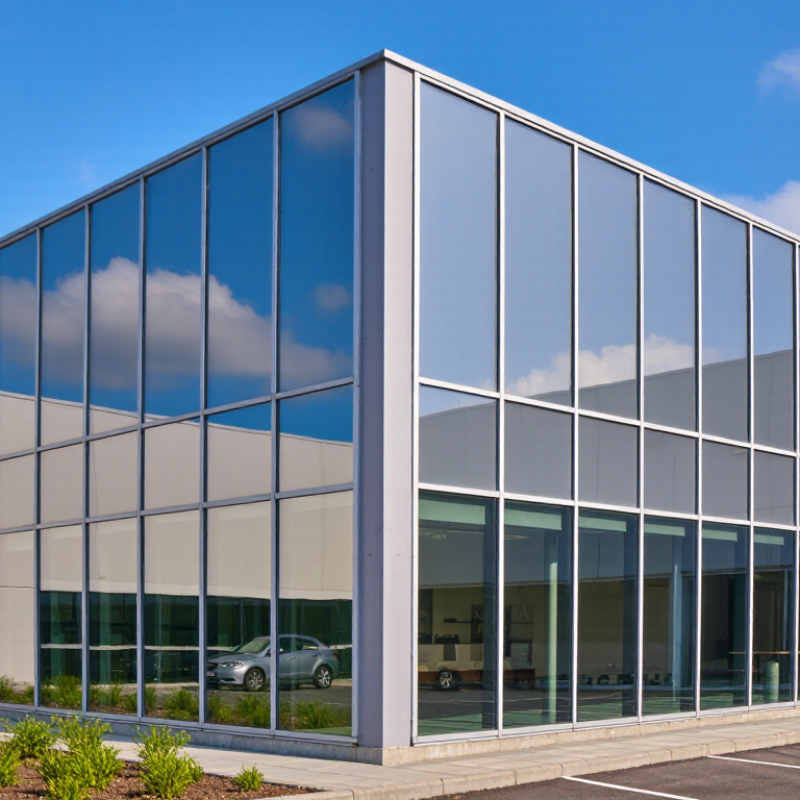
Aluminum Windows Defined: Strength, Weight, and Design Flexibility
Aluminum windows combine structural strength with low material weight. Aluminum has a density of about 2.7 g/cm³, nearly one-third of steel’s density, according to the European Aluminium industry report, Aluminium in Building. This helps project teams handle large frames on upper floors, where manual lifting and installation access become difficult. Strength matters too. Properly designed profiles resist wind pressure while keeping sightlines narrow around wide glass panels.
The material also supports flexible design. It can be extruded into slim, deep, curved, or thermally separated sections. That flexibility suits airports, schools, apartments, and coastal buildings with different performance requirements. However, aluminum conducts heat efficiently. Thermal breaks, insulated glass, warm-edge spacers, and careful installation are not optional details. The International Energy Agency reported in Buildings 2023 that buildings consumed about 30% of global final energy in 2022. Poorly designed window frames can increase heating and cooling demand, even when the glass performs well.
Site experience often reveals the difficult part. A strong frame still fails when drainage paths are blocked or tolerances are ignored. Powder coating can improve surface durability, but coastal salt, scratches, and incompatible fasteners require inspection. The International Aluminium Institute states that aluminum can be recycled repeatedly without losing its core properties. That sounds reassuring, yet project teams should verify collection routes and recycled content claims. Design flexibility is valuable, but it can invite overcomplicated details. Simpler assemblies are often easier to install, inspect, and repair.
Why Choose Aluminum Windows for Global Projects? - Aluminum Windows Defined: Strength, Weight, and Design Flexibility
Key material properties, performance considerations, and project advantages for international window applications.
| Data Dimension | Typical Value or Range | What the Data Means | Global Project Relevance |
|---|---|---|---|
| Material density | Approximately 2,700 kg/m³ | Aluminum is about one-third the density of ordinary structural steel, helping reduce frame weight. | Lower frame weight can simplify handling, transportation, installation, and structural coordination, particularly in high-rise and renovation projects. |
| Typical frame alloy | Heat-treatable 6000-series aluminum alloys are commonly used for architectural extrusions. | These alloys provide a practical balance of corrosion resistance, strength, extrudability, and surface-finish compatibility. | Extrusion-based production supports consistent profiles and project-specific sections for different regional construction requirements. |
| Ultimate tensile strength | Approximately 150–310 MPa for common architectural 6000-series tempers | Strength varies with alloy, temper, profile geometry, fabrication, and connection design. | Engineering calculations should use certified material properties and the applicable regional design standard rather than a generic material value. |
| Elastic modulus | Approximately 69 GPa | Aluminum is less stiff than steel, so deflection control depends strongly on profile depth, reinforcement, span, and support conditions. | Large openings and high-wind façades may require deeper mullions, reinforced profiles, or carefully designed structural supports. |
| Thermal conductivity | Approximately 160–235 W/m·K for common architectural aluminum alloys | Aluminum conducts heat efficiently, which can create thermal bridges when the frame is not thermally separated. | Thermal-break systems, insulated glazing, warm-edge spacers, and correct installation details are important in both cold and hot climates. |
| Frame thermal transmittance | Thermally broken frames commonly achieve approximately 1.5–3.0 W/m²·K; non-thermally broken frames are typically higher. | Actual performance depends on profile design, glazing, hardware, seals, dimensions, and test method. | Project specifications should identify the required whole-window U-value and the applicable calculation or testing standard for the target market. |
| Coefficient of thermal expansion | Approximately 23.1 µm/m·K | Aluminum expands and contracts with temperature changes more than many building materials. | Movement joints, correct anchoring, tolerances, and allowance for thermal movement are essential for long façades and regions with large temperature variation. |
| Corrosion resistance | Good naturally; improved with anodizing or powder coating | A protective oxide layer forms naturally. Surface treatments provide additional protection and color options. | Coating selection should consider humidity, coastal salt exposure, industrial pollutants, ultraviolet radiation, and local maintenance practices. |
| Design flexibility | High; profiles can be extruded into complex, repeatable cross-sections | Extrusion allows integrated channels for glazing, gaskets, drainage, fasteners, thermal breaks, and hardware. | Supports fixed windows, sliding systems, casements, curtain walls, large glazed openings, curved elements, and customized architectural detailing. |
| Glazing compatibility | Single, double, and triple insulating glass units can be accommodated when the system is designed for them. | Glass thickness, weight, edge clearances, seal design, and hardware capacity must match the selected window system. | Allows performance to be tailored to climate, acoustic requirements, solar control, security, and local energy codes. |
| Weather performance | Air, water, and wind performance are system-specific and must be tested. | Performance depends on frame geometry, gaskets, drainage paths, corners, glazing, hardware, and installation quality. | Use project-specific test classifications or ratings under the required local or international standard; material choice alone does not determine weather performance. |
| Fire behavior | Aluminum is non-combustible, but it loses strength at elevated temperatures. | The frame itself does not function as a fire-rated assembly unless the complete tested construction is specifically rated. | Fire-stop details, spandrel zones, façade cavities, and the complete assembly must comply with the authority having jurisdiction. |
| Recyclability | Aluminum can be recycled repeatedly without changing its basic material properties. | Recycling can recover valuable material, although collection, separation, coatings, and local processing affect actual recovery rates. | Supports circular-material strategies and can contribute to project sustainability goals when documented through a suitable supply chain. |
| Service-life potential | Often several decades when correctly designed, finished, installed, and maintained | Durability depends on exposure, coating quality, drainage, hardware, seals, movement design, and maintenance. | Routine cleaning, drainage inspection, seal replacement, and hardware maintenance are important for long-term performance in diverse climates. |
| Key design limitation | Thermal bridging and deflection must be actively controlled | Aluminum offers low weight and high design flexibility, but it requires appropriate thermal separation and structural engineering. | A complete specification should address thermal, structural, acoustic, air, water, wind, fire, corrosion, and installation requirements together. |
Technical note: Values shown are representative engineering ranges for commonly used architectural aluminum systems. Final performance depends on the selected alloy, temper, profile, glazing, hardware, dimensions, fabrication, installation, exposure, and applicable local or international standards. Window ratings should be verified through project-specific calculations and testing.
FAQS
Aluminum supports large glass areas, slim frames, and long service life. It also resists moisture, wind, and daily wear.
Aluminum conducts heat quickly. Polyamide separators and insulated chambers reduce heat transfer through the frame.
The U-factor measures heat flow through the complete window. Lower values generally indicate better insulation. Details matter.
No. Different regions use different units and testing methods. Always check the unit, test method, and window configuration.
SHGC measures solar energy entering through the glass. Lower values may reduce cooling loads in hot, sunny areas.
A west-facing façade may receive intense afternoon sun. A shaded south-facing façade can behave very differently.
State the frame, glass, spacer, opening type, and test method. Certified results still need comparison with local site conditions.
Condensation can appear near frame edges and thermal bridges. Early simulations may miss blinds, nearby buildings, or unusual weather.
Recycled aluminum uses about five percent of primary production energy. Recovery works better when crews separate frames, glass, and other materials.
No. Coatings, sealants, thermal breaks, and poor sorting can reduce the benefit. The math is imperfect. Review local recycling capacity, transport, and energy sources.
Conclusion
Aluminum Window systems are a practical choice for global construction projects because they combine structural strength, low weight, and exceptional design flexibility. Their slim yet durable profiles support large glazed areas, modern façades, and varied architectural styles while simplifying transportation and installation. When properly specified, they can also deliver strong thermal performance by meeting project targets for U-factor and solar heat gain coefficient (SHGC), helping designers respond to different energy codes and climate conditions.
In real building applications, aluminum windows can provide more than 40 years of service when protected, installed, and maintained appropriately. Aluminum also offers a significant circularity advantage: recycling requires only about 5% of the energy used to produce primary aluminum. Successful project selection depends on matching profile geometry, glazing configuration, thermal breaks, finishes, and ventilation features to the local climate, performance standards, and building objectives.