0%

Choosing among China’s top 10 Aluminum Door manufacturers requires more than comparing polished catalogs. A strong supplier should demonstrate real production experience, consistent alloy quality, reliable thermal-break systems, and careful surface finishing. Factory capacity matters, but it cannot replace engineering discipline. Look closely.

This guide examines manufacturers through practical signals: extrusion control, CNC accuracy, powder-coating performance, glass compatibility, hardware testing, and export support. It also considers factory audits, project references, certifications, and after-sales communication. As building-performance expert Dr. Stephen Selkowitz has emphasized, “Performance depends on the whole system, not the frame alone.” That principle applies directly to every Aluminum Door project. A premium frame can still fail when installation, drainage, seals, or hardware are poorly managed.

Real projects reveal details that websites often hide. Check corner joints, gasket compression, sliding smoothness, coating consistency, and drainage holes. Ask whether the manufacturer has supplied similar doors for hotels, villas, offices, or coastal buildings. Salt air can expose weak finishes quickly. Energy performance also depends on glass, installation, and local climate.

This ranking is not absolute. Supplier capabilities change, and published claims require verification. Some factories look impressive online but provide limited technical documentation. That is an uncomfortable reality. Buyers should request samples, test reports, drawings, references, and a clear warranty before signing contracts. The best manufacturer is not always the largest. It is the partner that communicates accurately, solves problems early, and delivers doors that perform beyond the showroom.
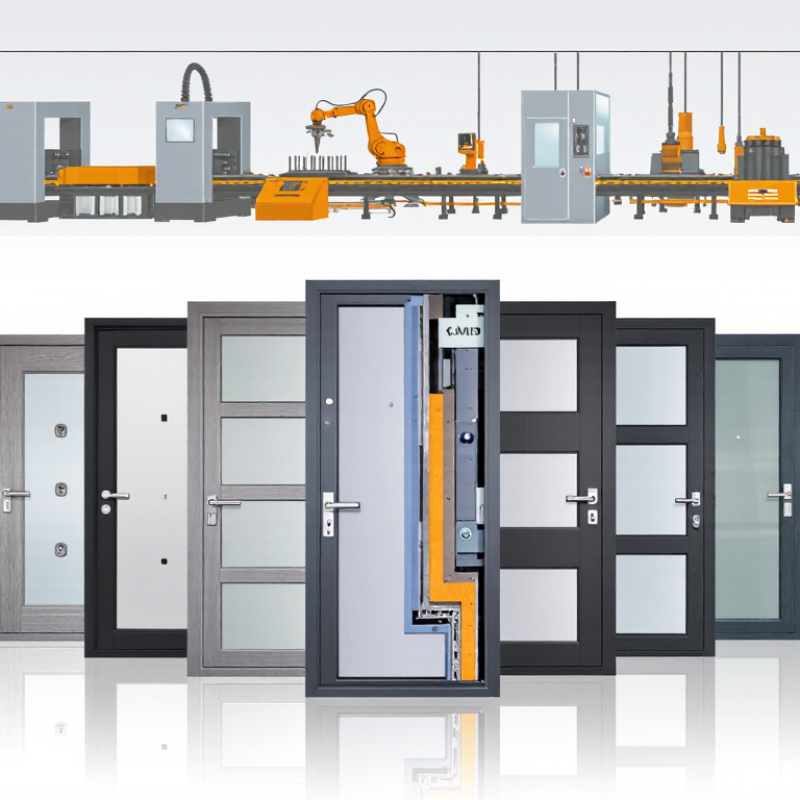
China Top 10 Aluminum Door Manufacturers?

How China’s Top Aluminum Door Manufacturers Are Ranked

China’s Top 10 aluminum door manufacturers should be ranked by evidence, not advertising claims. A reliable evaluation starts with verified project experience, factory capacity, and engineering depth. Check whether the manufacturer has completed similar buildings, climates, and door sizes. A supplier experienced with coastal hotels may understand corrosion better than a general workshop.

Material quality matters. Review alloy grades, profile thickness, surface treatment, glass options, seals, and hardware sources. Testing records should cover air leakage, water resistance, wind pressure, operation cycles, and thermal performance. Certifications can support credibility, but they must match the actual product and production site. Factory visits are useful. Observe extrusion storage, powder coating controls, assembly accuracy, and final inspections. Small details often reveal process discipline.

Tips: Request a complete quotation, drawings, test reports, warranty terms, and reference projects. Compare identical specifications, not only unit prices. Ask how defects are recorded and corrected. A responsive technical team is valuable during installation. Also check lead times against real production schedules. Some suppliers promise quickly, then revise dates later. That is not always dishonest, but it deserves written clarification. Rank manufacturers with a scoring sheet covering quality, engineering support, customization, delivery reliability, after-sales service, and transparent communication. Leave room for judgment. No ranking is perfect without independent inspections and current project feedback.

Key Criteria for Evaluating Aluminum Door Manufacturers

When comparing the top aluminum door manufacturers in China, evaluate more than catalog photos. Product quality begins with the aluminum alloy, wall thickness, and surface treatment. Ask for material certificates and inspect a cut section of the frame. A reliable manufacturer should explain thermal breaks, drainage paths, hardware compatibility, and glass options in clear technical language. Vague answers deserve caution.

Production experience matters. Visit the factory, if possible, and observe extrusion storage, powder coating, assembly, and final inspection. Look for calibrated measuring tools and documented quality checks. Request test reports for air leakage, water resistance, wind pressure, and sound insulation. These reports should match the proposed door system, not a different model. Small details matter. Check corner joints, gasket alignment, locking points, and the smoothness of sliding panels.

Communication is another practical test. Send drawings with unusual dimensions and assess the response. A professional team should identify risks before quoting, including installation tolerances and packaging needs. Ask about replacement parts, lead times, warranty coverage, and technical support after delivery. Contact recent customers, but remember that references can be selective. One impressive showroom does not prove consistent production.

Price deserves careful interpretation. The cheapest quotation may omit reinforcement, testing, or protective packaging. However, a higher price is not automatic evidence of better quality. I have seen attractive samples hide inconsistent finishing in later batches. This is where factory audits and pre-shipment inspections become valuable. No evaluation is perfect, so record assumptions and review them before signing a contract.

This chart presents a practical weighting model for evaluating aluminum door manufacturers. Product quality and compliance receive the highest priority, followed by customization capability, delivery reliability, after-sales service, and commercial competitiveness.

Profiles of China’s Top 10 Aluminum Door Manufacturers

China’s Top 10 Aluminum Door Manufacturers: Industry Profiles

Profiles of China’s top ten aluminum door manufacturers should begin with factory evidence, not online rankings. The International Aluminium Institute reported that China produced over 40 million tonnes of primary aluminum in 2023. This large supply base supports extensive door manufacturing, but raw material access does not guarantee consistent quality. Strong manufacturers usually control extrusion, thermal-break assembly, powder coating, glass fitting, and final inspection under one system.

The leading profiles typically include large export factories, regional architectural suppliers, and specialists in energy-efficient doors. Their differences appear in practical details: profile-wall thickness, corner-joint strength, drainage design, hardware testing, and coating adhesion. The China Building Metal Association highlights energy efficiency and standardized installation as important directions for building products. Manufacturers serving cold regions often offer insulated frames, while coastal suppliers need stronger corrosion protection. Ask for test records.

Evidence matters.

A reliable comparison should examine production capacity, certification coverage, defect handling, and delivery records. ISO 9001 certification can indicate process control, but it does not replace factory audits or sample testing. Public rankings remain imperfect because manufacturers report capacity differently, and some data is several years old. Therefore, these ten profiles should be treated as a practical market shortlist, not a permanent league table. Site visits may reveal the uncomfortable gaps.

Product Categories and Manufacturing Capabilities Compared

China Top 10 Aluminum Door Manufacturers: Product Categories and Manufacturing Capabilities Compared

The top ten aluminum door manufacturers should be compared by product range, not ranking alone. Common categories include sliding doors, hinged doors, folding doors, thermal-break systems, fire-rated assemblies, and heavy-duty entrance doors. Each category requires different profiles, hardware, glass, and testing methods. Sliding doors suit balconies and compact interiors. Hinged systems often provide stronger sealing. Thermal-break doors perform better in demanding climates. However, product labels can hide major differences.

Manufacturing capability matters just as much. A reliable factory usually controls extrusion, powder coating, CNC cutting, welding, assembly, and quality inspection. Some suppliers offer custom profiles and small trial orders. Others depend heavily on outside processors. That can affect color consistency, dimensional accuracy, and delivery reliability. During project reviews, I check profile wall thickness, corner strength, drainage design, gasket quality, and hardware cycles. Samples may look excellent, yet production tolerances can change. This is an uncomfortable point, but it deserves attention.

Tips: Request technical drawings, test reports, finish samples, and a documented inspection plan. Compare the same door specification across all suppliers. Ask how they manage rejected components and replacement parts. Verify packaging with real shipment photos. A factory with modern equipment is not automatically the best choice; process discipline matters more. Also, allow time for sample revisions. My own evaluations have sometimes focused too much on appearance, while installation details caused the real problems.

How to Choose the Right Chinese Aluminum Door Manufacturer

How to Choose the Right Chinese Aluminum Door Manufacturer

Choosing among China’s top aluminum door manufacturers requires more than comparing catalogue prices. Confirm factory experience, extrusion capacity, testing facilities, and export records. Ask for project photos, batch numbers, and references from similar climates. A supplier producing doors for humid coastal buildings may understand corrosion better than a general trader.

Material control matters. Request alloy grades, wall-thickness reports, coating specifications, and hardware test results. The International Aluminium Institute reports that recycled aluminum requires about 5% of the energy used for primary aluminum. This supports lower-impact sourcing, but recycling claims still need traceable documentation. Check whether the manufacturer separates recycled content from certified primary material. Small details matter.

Performance should be measured, not promised. Ask for air-leakage, water-tightness, wind-load, thermal, and acoustic test reports from recognized laboratories. Compare the test configuration with your actual door size and glass type. A laboratory result for a small sample may not represent a six-meter entrance. That is easy to miss. The National Fenestration Rating Council also emphasizes product-specific ratings, showing why generic energy claims are weak evidence.

Review quality-control records during a video audit or factory visit. Watch corner crimping, seal installation, powder coating, and final inspection. Confirm tolerances before signing drawings. Delivery reliability deserves equal attention; request production schedules, packaging photos, and a remedy process for damaged units. No factory is perfect. I would rather choose a transparent manufacturer that documents defects than a supplier promising zero problems.

China Top 10 Aluminum Door Manufacturers? - How to Choose the Right Chinese Aluminum Door Manufacturer
No. Selection Dimension Recommended Benchmark Suggested Weight
1 Aluminum Alloy and Profile Quality Common door profiles use 6063 aluminum alloy, often in T5 or T6 temper. The exact alloy, temper, wall thickness, and profile geometry should match the project’s structural and climatic requirements. Mill certificates, alloy and temper records, profile drawings, wall-thickness inspection reports, and samples from the proposed production batch. 15%
2 Surface Finish and Corrosion Resistance Specify the finish type and performance level clearly. Powder coating, anodizing, and PVDF coatings require different testing methods and maintenance expectations. AAMA 2603, AAMA 2604, and AAMA 2605 represent progressively higher architectural coating performance levels. Coating certificates, color and gloss records, film-thickness reports, adhesion results, and salt-spray or weathering test reports where applicable. 13%
3 Air, Water, and Wind Performance The door system should be tested as a complete assembly for air permeability, watertightness, and wind-load resistance. The required performance depends on building height, exposure, local wind conditions, and installation method. Accredited laboratory reports, test specimen drawings, test pressure values, failure observations, and confirmation that the tested configuration matches the quoted door. 13%
4 Thermal Insulation For thermally broken doors, verify the polyamide thermal barrier, frame construction, glazing configuration, and whole-door U-value. The complete assembly normally performs differently from the aluminum frame alone. Thermal calculations or laboratory reports, thermal-break material specifications, cross-section drawings, and declared U-value calculation assumptions. 10%
5 Hardware and Operating Durability Hinges, locks, rollers, handles, closers, and multipoint systems should be selected according to door weight, opening frequency, security needs, and exposure. Hardware compatibility must be verified with the actual profile system. Hardware datasheets, load ratings, cycle-test results, corrosion classifications where relevant, spare-parts policy, and hardware warranty terms. 10%
6 Glass and Glazing Safety Glazing should be selected according to impact risk, wind load, thermal requirements, noise control, and local building regulations. Tempered or laminated safety glass may be required in doors and adjacent hazardous locations. Glass specifications, safety-glass certificates, thickness calculations, spacer and sealant details, edge-clearance requirements, and glazing installation instructions. 10%
7 Manufacturing Quality Control A documented quality system should control incoming materials, cutting, machining, assembly, sealing, glazing, finishing, and final inspection. ISO 9001 certification can support process control but does not replace product testing. Quality manual, inspection and test plans, nonconformance procedures, calibration records, factory audit access, and pre-shipment inspection checklists. 10%
8 Customization and Engineering Capability The manufacturer should be able to produce project-specific shop drawings, fabrication details, opening schedules, hardware layouts, drainage solutions, and installation interfaces without relying only on standard catalog sizes. Redacted shop drawings, sample calculations, technical submittals, BIM or CAD capability, prototype procedures, and an approved drawing workflow. 8%
9 Export Compliance and Documentation The supplier should provide accurate commercial, packing, technical, and origin documentation and understand the destination market’s applicable standards, labeling, packaging, and import requirements. Sample invoices and packing lists, installation manuals, certificates of origin when required, export packaging specifications, HS-code information, and destination-market compliance records. 6%
10 Lead Time, Warranty, and After-Sales Support The contract should define sample approval, production lead time, inspection points, delivery tolerances, warranty coverage, exclusions, replacement-part availability, and the process for handling defects or transit damage. Written quotation, production schedule, warranty document, service-level commitments, packaging and damage-claim procedure, reference project feedback, and spare-parts list. 5%

Evaluation note: Use the same technical specification, drawings, testing requirements, and commercial terms when comparing suppliers. Product performance should be verified for the complete door assembly rather than inferred from the aluminum profile alone.

FAQS

How should aluminum door manufacturers be ranked?

Rank them using verified projects, factory capacity, engineering skill, delivery records, and service quality. Advertising is not enough. Independent inspections can still reveal gaps.

What project experience should buyers verify?

Check similar building types, climates, door sizes, and installation conditions. A coastal hotel project may show stronger corrosion knowledge than a general workshop.

Which material details deserve attention?

Review alloy grades, profile-wall thickness, surface treatment, glass options, seals, and hardware sources. Small differences matter. They affect durability, comfort, and maintenance.

What testing records should a manufacturer provide?

Request records for air leakage, water resistance, wind pressure, operation cycles, and thermal performance. Testing should match the actual door design. Old reports may not prove current quality.

Do certifications guarantee reliable products?

No. Certifications can support credibility, but they must match the product and production site. Factory audits and sample testing remain necessary. Paperwork alone feels reassuring, perhaps too reassuring.

What can buyers observe during a factory visit?

Inspect extrusion storage, coating controls, assembly accuracy, and final inspections. Look for organized materials and clearly recorded defects. Messy details may signal weak process discipline.

How should quotations from different suppliers be compared?

Compare identical specifications, including profiles, glass, hardware, finishes, testing, warranty, and delivery. The lowest unit price may omit important components. Ask for complete drawings.

How can delivery reliability be evaluated?

Compare promised lead times with real production schedules and previous delivery records. Ask how delays are reported and corrected. Written clarification helps, though it cannot remove every risk.

What should a practical ranking score include?

Use scores for quality, engineering support, customization, delivery, after-sales service, and communication. Include reference projects and defect handling. Leave room for judgment. No ranking stays perfect forever.

Conclusion

This article provides a practical guide to China’s top 10 aluminum door manufacturers, explaining how they are evaluated and compared. It examines key factors such as production capacity, product quality, material selection, design flexibility, technical expertise, certifications, delivery reliability, customization services, and after-sales support. The ranking approach focuses on measurable manufacturing strengths and the ability to meet the needs of residential, commercial, and industrial projects.

It also compares major product categories, including entrance doors, sliding doors, folding doors, fire-rated options, and energy-efficient systems, while highlighting differences in equipment, surface finishing, testing, and quality control. Finally, the article explains how buyers can choose the right Chinese Aluminum Door manufacturer by considering project requirements, order volume, budget, lead time, customization expectations, communication efficiency, and long-term cooperation potential.

Evelyn

Evelyn

Evelyn is a dedicated marketing professional with a strong understanding of product strategy, customer needs, and market trends. With extensive experience in content planning, brand communication, and digital marketing, she plays an important role in presenting the company’s expertise and solutions......