Choosing the right Aluminium Washroom Door involves more than comparing finishes and prices. The door must handle moisture, frequent cleaning, daily impact, and changing indoor temperatures. A reliable choice begins with accurate measurements, including wall thickness, opening width, floor level, and available swing space. Small details matter. A door that looks suitable online may bind against a tiled floor or leave an uncomfortable gap beneath the frame.
Experienced installers usually examine aluminium grade, frame strength, hinge performance, surface coating, privacy hardware, and maintenance access. Powder-coated aluminium can provide a clean appearance, but dark finishes may reveal water spots more clearly. Stainless steel hinges may support frequent use, while poorly fitted locks can loosen within months. No door is perfect. A highly durable model may cost more, and a lightweight option may feel less substantial during busy use.
This guide explains how to compare these practical factors with greater confidence. It considers hygiene, user comfort, ventilation, privacy, installation accuracy, and long-term value. Product claims should be checked against technical documents, test reports, warranty terms, and the supplier’s installation experience. Local building, accessibility, fire, and sanitation requirements should also be confirmed before ordering. The best Aluminium Washroom Door is not simply the cheapest or most attractive option. It is the one that performs consistently in the actual washroom environment, even when cleaning is rushed and traffic is heavy.
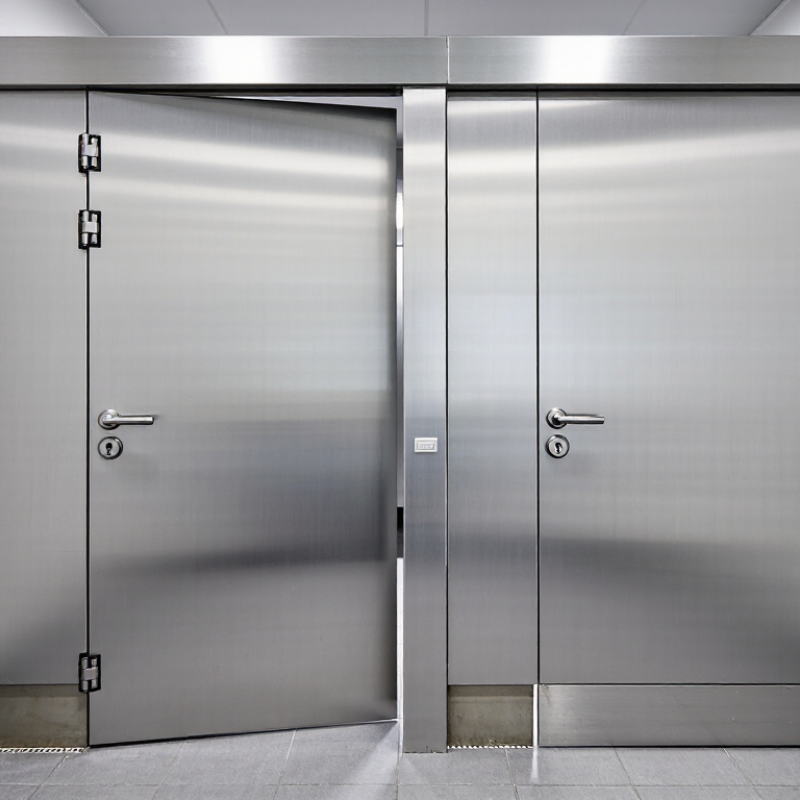
Define Washroom Needs: Traffic, Moisture, Privacy, and ADA Access
How to Choose the Best Aluminium Washroom Door?
A washroom door should match daily traffic, not just the room’s appearance. In a busy school or shopping centre, users may open it hundreds of times each day. Choose a reinforced aluminium frame, durable hinges, and replaceable hardware. Lightweight operation matters. Heavy doors quickly frustrate children, older users, and staff carrying supplies.
Moisture changes the selection. Look for corrosion-resistant aluminium, sealed joints, and finishes designed for humid interiors. Water often collects near the bottom edge, especially after cleaning. A raised threshold may limit water movement, but it can create an access problem. Good drainage and careful floor detailing usually work better than relying on the door alone. Do not ignore ventilation. Condensation can damage nearby walls and hardware.
Privacy requires more than an opaque panel. Check the door gap, latch quality, and sightlines from corridors. Full-height panels may improve privacy, but they can increase weight and cleaning demands. Accessibility also needs practical testing. Confirm clear opening width, handle shape, opening force, and maneuvering space against applicable local standards. A pull handle that looks elegant may be difficult for someone with limited grip strength.
Test a sample on site.
A common mistake is choosing by price alone. I have seen attractive doors fail because the closer was too strong or the bottom seal trapped moisture. Recheck traffic, cleaning methods, and user needs before approving the final specification.
How to Choose the Best Aluminium Washroom Door? — Define Washroom Needs: Traffic, Moisture, Privacy, and ADA Access
| Washroom Need | Typical Conditions | Key Door Performance Criteria | Recommended Aluminium Door Specification | Practical Selection Guidance |
|---|---|---|---|---|
| Low Traffic | Small offices, staff washrooms, low daily usage, limited impact from carts or equipment. | Basic durability, stable operation, easy cleaning, and low maintenance. | Powder-coated or anodized aluminium frame; standard-duty hinges; replaceable seals; solid or moisture-resistant infill panel. | Prioritize corrosion resistance and simple maintenance over heavy-duty hardware. A standard latch and closer are generally suitable where use is moderate. |
| Medium Traffic | Restaurants, retail areas, schools, clinics, and shared workplace washrooms with regular daily use. | Higher cycle life, reliable alignment, impact resistance, and quick cleaning. | Reinforced aluminium frame; heavy-duty hinges; durable compact laminate or high-pressure laminate infill; adjustable door closer. | Select hardware rated for frequent operation and use a robust edge or kick protection system in areas exposed to bags, carts, or accidental impacts. |
| High Traffic | Transport hubs, shopping centres, stadiums, hospitals, airports, and other continuously busy facilities. | High cycle durability, impact resistance, fast recovery after use, and minimal downtime. | Heavy-duty aluminium framing; high-cycle hinges or pivots; impact-resistant solid-grade or compact laminate panels; tamper-resistant fasteners; commercial-grade closer. | Verify the complete door-set cycle rating, not only the panel material. Choose components that can be replaced individually without removing the entire frame. |
| Dry or Occasionally Damp | Washrooms with limited splash exposure and effective ventilation. | Resistance to occasional condensation and routine cleaning chemicals. | Anodized or powder-coated aluminium surfaces; sealed panel edges; corrosion-resistant screws and fasteners. | Avoid unsealed cut edges and dissimilar-metal contact that may contribute to galvanic corrosion. Use neutral, non-abrasive cleaning products. |
| Wet and High-Humidity | Shower rooms, pool facilities, gyms, coastal buildings, and washrooms subject to frequent water spray. | Moisture resistance, corrosion protection, hygienic surfaces, and resistance to swelling or delamination. | Anodized or high-quality powder-coated aluminium; non-absorbent compact laminate or suitable waterproof panel; sealed joints; stainless or corrosion-resistant hardware. | Keep the bottom edge clear of standing water where possible. Provide adequate drainage and ventilation, and inspect sealants regularly for gaps or deterioration. |
| High Privacy | Healthcare, education, hospitality, workplace, and public washrooms where visual and acoustic privacy are important. | Reduced sightlines, secure latching, limited gaps, and sufficient resistance to forced entry. | Full-height or near-full-height partition system; privacy latch indicator; anti-finger-pinch design; reduced door-to-frame and floor gaps within code limits. | Confirm the required privacy level with the building operator. Door height, partition layout, latch visibility, and gap dimensions all affect perceived privacy. |
| Standard Privacy | General public or commercial washrooms where visual screening is required but enhanced acoustic control is not essential. | Reliable latch engagement, practical sightline control, and easy emergency access. | Aluminium frame with moisture-resistant infill; privacy lock or indicator bolt; durable pull or lever hardware. | Balance privacy with safety. Emergency-release hardware should allow authorized staff to access the cubicle from outside when necessary. |
| Accessible / ADA-Oriented Use | Accessible toilet rooms and facilities designed for users with mobility, reach, or strength limitations. | Adequate clear opening, low operating force, accessible hardware, maneuvering clearance, and safe closing speed. | Out-swinging door where required by the layout; lever or pull hardware; accessible threshold; compliant clear width and maneuvering space; door closer adjusted for safe operation. | Common ADA guidance uses a minimum 32-inch clear opening for a doorway, measured with the door open 90 degrees. Confirm the adopted local code, approach clearances, hardware height, and maximum opening force with the project professional. |
| High Hygiene Requirement | Hospitals, laboratories, food-service areas, schools, and facilities with strict cleaning routines. | Smooth, non-porous, cleanable surfaces; minimal dirt traps; chemical resistance; and sealed connections. | Flush-faced door design; non-absorbent panel; rounded or protected edges where appropriate; concealed or low-profile hardware; sealed perimeter joints. | Request cleaning and disinfectant compatibility information for the finish and panel. Avoid textured surfaces that retain moisture or contaminants. |
| Security and Vandal Resistance | Unsupervised public facilities or locations exposed to misuse, tampering, and repeated impact. | Strong fixings, anti-tamper hardware, impact resistance, stable hinges, and maintainable components. | Reinforced aluminium profiles; tamper-resistant fasteners; heavy-duty hinges; impact-resistant infill; anti-ligature or safety hardware where the risk assessment requires it. | Select security features according to the site risk assessment. Do not use anti-ligature hardware without considering emergency release, supervision, and applicable safety requirements. |
Note: Door dimensions, opening force, clearances, hardware height, fire performance, and accessibility requirements must be verified against the building codes and standards applicable at the project location.
FAQS
Choose 6063-T5 aluminium profiles for balanced strength, easy forming, and corrosion resistance. They suit rounded edges and clean frame layouts. Good fit.
Use 0.8 mm panels for light, low-traffic doors with internal support. Choose 1.0–1.2 mm for busy washrooms or larger door leaves. Thicker is not always stronger.
Press the panel gently near the lock side. Excessive movement may indicate weak internal reinforcement. Check again around the hinges.
Check flatness, folded edges, hinge reinforcement, corner joints, and protective finishing. Also inspect drainage gaps. Shine alone proves very little.
Provide at least 813 mm of clear width for an accessible route. Measure with the door open at 90 degrees. Do not measure the door leaf alone.
Hinges, stops, seals, thresholds, and projecting hardware can reduce clearance. Thick seals caused problems in one project. I might overlook them too.
Lever-style hardware is usually easier than small knobs. It should work with one hand without tight pinching or twisting. Test the final hardware.
Mark the 813 mm opening on the floor first. Use a temporary mock-up with the final hardware installed. Check swing space, fixtures, latch operation, and closer force. Small details matter.
Conclusion
Choosing the best Aluminium Washroom Door starts with clearly defining the facility’s needs. Consider expected traffic, moisture levels, privacy requirements, cleaning routines, and accessibility for users with disabilities. For a reliable balance of strength and weight, 6063-T5 aluminium profiles are a practical option, while door panels between 0.8 and 1.2 mm can provide suitable durability for many washroom environments. The design should also provide an ADA-compliant minimum clear opening of 813 mm to support convenient wheelchair access.
Finish and hardware selection are equally important. Powder coating offers a wide range of colors and added surface protection, while anodized finishes provide a durable, refined appearance and improved resistance to wear. Where powder coating is selected, a coating thickness of approximately 25 μm should be verified. Finally, assess hinges, locks, handles, and other fittings for durability and corrosion resistance, especially in humid conditions. Hardware and automatic door systems should also be checked against EN 16005 safety requirements to promote dependable and safe daily operation.