0%

Choosing an Aluminum Door With Window in 2026 means balancing daylight, security, durability, and energy performance. A slim aluminum frame can make a hallway feel brighter and connect an entryway with the garden. But a large glass panel also changes heat flow, privacy, and maintenance needs. Looks are not enough.

The U.S. Department of Energy estimates that heat gain and heat loss through windows account for about 25%–30% of residential heating and cooling energy use. This is a window benchmark, not a direct estimate for every glazed door. Still, it shows why glass selection matters. Check the National Fenestration Rating Council label for measures such as U-factor and solar heat gain coefficient. Also ask about thermal breaks, weather seals, glazing options, and installation details. A strong frame cannot fix a poor fit.

Building-science expert Joseph Lstiburek, founder of Building Science Corporation, emphasizes evaluating how building components work together. A practical takeaway for this choice: assess the door, glass, seals, and installation as one assembly, not as separate features. That distinction can be easy to miss in a showroom. A polished finish may catch the eye, while a draft around the edge goes unnoticed. This guide will help you compare specifications with the conditions at your home, including exposure to sun, rain, and street noise. Some trade-offs remain. More glass may invite more daylight, but it can also reduce privacy. The best choice is the one that fits the opening and the way you live.
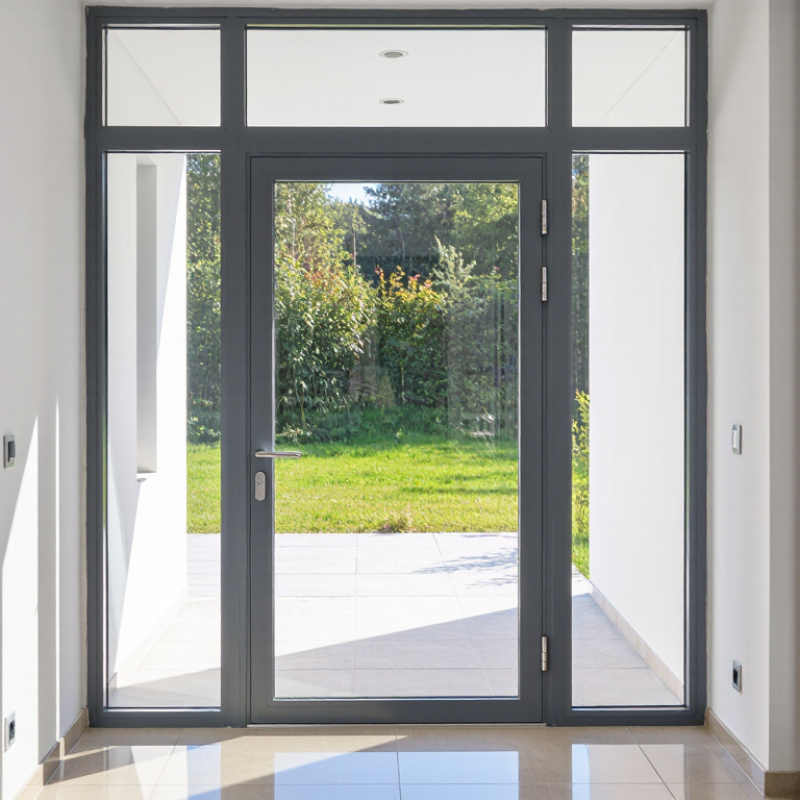
How to Choose an Aluminum Door With Window in 2026?

Define Your Needs, Door Location, and Budget

Before choosing an aluminum door with a window, decide what the opening needs to do. A front entrance may need privacy and a clear view of visitors; a patio door may benefit more from daylight and a wider glass area. Measure the frame, wall depth, and threshold, then note whether rain or strong afternoon sun hits the door. Small details matter. The U.S. Department of Energy’s Energy Saver guidance estimates that windows account for 25–30% of household heating and cooling energy use. That figure is not specific to glazed doors, but it shows why glass area and insulation deserve attention. Check the product’s U-factor and solar heat gain coefficient on its NFRC label.

Set a realistic budget for the complete job, not just the door slab. Include glazing, frame, hardware, removal, weather sealing, and installation. A low quote can leave out important work. For a drafty or exposed entrance, prioritize tight seals and insulated glass; for a sheltered interior-facing opening, appearance may carry more weight. Ask installers how they will handle flashing and water drainage, and request itemized estimates. I would not choose a large glass panel just for brightness without considering privacy, glare, and heat. That trade-off is easy to overlook. Check lead times too, especially if the opening cannot stay uncovered during installation.

Compare Aluminum Frame Styles and Window Configurations

Choosing an aluminum door with a window means comparing frame styles as well as the glass layout. Slim profiles create a broad, modern view, while wider frames can feel more substantial and may suit traditional façades. Check the frame depth, corner joints, and finish in person; a small sample can look different beside a large glass panel. Small details matter. For exterior doors, ask how the frame manages heat transfer and weather sealing. These features vary by construction, so compare specifications rather than judging by appearance alone.

Window configurations shape privacy, daylight, and the view from inside. A full-height glass panel brings in more light, but it may expose a hallway or living area. A half-glazed design leaves more solid door surface, while narrow vertical glass can brighten an entry without opening up the whole room. Sidelights add daylight beside the door, though they need space and careful alignment. Consider where afternoon sun lands and what passersby can see. Not always obvious. Glass type, opening direction, threshold height, and local safety requirements also deserve a check before ordering. It is easy to focus on the frame color and overlook daily use; even careful planning can miss a detail, so confirm measurements and installation conditions with a qualified installer.

Evaluate Glazing, Energy Efficiency, and Security Features

How to Choose an Aluminum Door With Window in 2026?

Glazing affects comfort, daylight, and privacy. Start with the door’s NFRC label: compare U-factor, which indicates insulation, and solar heat gain coefficient, which measures admitted solar heat. The U.S. Department of Energy estimates that windows account for about 25–30% of residential heating and cooling energy use. That figure covers windows, not doors specifically, but it shows why glass choice matters. In a sunny room, lower solar heat gain may reduce afternoon glare; in a cold climate, prioritize a low U-factor. There is no perfect glass package. Climate and orientation change the trade-offs.

Security needs more than a strong-looking frame. Check for laminated or tempered glazing, a secure multi-point lock, reinforced hinges, and a frame anchored firmly to the wall. Ask how the glass is retained if struck; details vary by product. A narrow glass panel can preserve daylight while limiting the exposed area. Still, glass type alone cannot guarantee resistance to forced entry.

Tips: Compare whole-door performance, not glass alone. Request NFRC-rated figures and written security specifications. Stand inside near the door at the hottest time of day; notice glare and heat. I would not choose by appearance alone—it is an easy mistake.

Check Dimensions, Hardware, Finishes, and Installation Needs

Choose dimensions from the finished opening, not the old door slab. Measure width and height at three points, then compare the diagonals; uneven readings can reveal a frame that is out of square. Measure twice. Include frame depth, threshold height, door swing, and space for handles or nearby furniture. Small gaps matter. For glazing, check privacy, daylight, and the view from standing eye level. The U.S. Department of Energy’s Energy Saver guidance says heat gain and loss through windows account for about 25–30% of residential heating and cooling energy use. That figure concerns windows, not a complete door assembly, but it is a useful reminder to compare glazing carefully. Review the National Fenestration Rating Council label for U-factor and solar heat gain coefficient, and compare products suited to your climate.

Match hardware to the door’s weight and daily use. A heavy glazed panel may need appropriately rated hinges; test the lock and handle movement before ordering. Not glamorous. Choose a finish with the site in mind: a sheltered entry and a sun- or rain-exposed doorway may age differently. Ask how the coating should be cleaned, and whether the frame includes a thermal break. Installation deserves equal attention. Confirm the opening is plumb and square, the sill can drain, and flashing and sealant suit the wall materials. I would not assume a neat-looking bead of sealant fixes poor sill preparation. Ask the installer to explain how water is directed outward, and confirm who checks the final fit and operation.

How to Choose an Aluminum Door With Window in 2026

Compare common U.S. nominal door-slab widths before selecting a model. These are typical dimensions, not a guarantee of fit.

Before ordering: Measure the rough opening, jamb depth, and existing door slab. Confirm that the window configuration, hinges, lockset, and handle suit your opening. Choose a finish appropriate for the exposure, and check installation requirements and local building rules. Verify all dimensions with the door supplier.

Review Standards, Warranties, and Maintenance Requirements

How to Choose an Aluminum Door With Window in 2026?
Review Standards, Warranties, and Maintenance Requirements

A glazed aluminum door should be judged by its tested assembly, not frame material alone. The U.S. Department of Energy’s Energy Saver guidance estimates that windows account for 25–30% of household heating and cooling energy use. A door with glass can also transfer heat, though that figure is not door-specific. Check the NFRC label for whole-product U-factor and solar heat gain coefficient (SHGC). A lower U-factor generally means less heat flow; suitable SHGC depends on climate and orientation.

Look for testing under NAFS (AAMA/WDMA/CSA 101/I.S.2/A440), including air leakage, water penetration, and structural pressure. Match the performance grade to local wind exposure and driving rain. Ask whether the rating applies to the exact glass, size, and configuration you are buying. A rating for a similar model is not enough. A thermal break can limit heat transfer, but installation gaps may still undermine performance.

Read warranty terms before comparing prices. Confirm coverage for the frame finish, insulated-glass seal, hardware, and labor. Note exclusions for coastal salt, standing water, or missed maintenance. Keep drainage slots clear, clean tracks, and inspect weather seals twice a year. Small details matter. I would still ask the installer to show how water exits the sill; brochures rarely make that path obvious.

How to Choose an Aluminum Door With Window in 2026? — Review Standards, Warranties, and Maintenance Requirements

Review Area What to Check Useful Standard or Evidence Practical Selection Benchmark Warranty and Maintenance Questions
Product identification Confirm the exact door configuration, frame dimensions, glazing type, opening style, and intended installation location. Request the product data sheet, installation instructions, and performance documentation for the specific size and configuration. Compare like-for-like units. Ratings for a different size, glass package, or configuration may not represent the door being quoted. Check whether coverage applies to the complete unit, installed components, and the original purchaser or later owners.
Air, water, and structural performance Review tested air leakage, water penetration resistance, and structural-load performance for the complete door assembly. In North America, look for applicable NAFS certification or test documentation. ASTM E283 addresses air leakage, ASTM E331 water penetration, and ASTM E330 structural performance. Match the tested performance class and ratings to local code, exposure, building height, and site conditions. Do not compare test results without checking the test pressure and rating method. Ask whether installation-related water intrusion is covered and which maintenance or drainage practices are required to preserve coverage.
Energy performance Check the whole-door U-factor, solar heat gain coefficient (SHGC), and any applicable air-leakage rating. For the United States, NFRC-certified ratings can provide a standardized basis for comparing fenestration products. Local energy codes may set separate requirements. Choose ratings that meet the applicable local code and suit the climate, orientation, and heating or cooling needs. Lower U-factor generally means less heat transfer; the preferred SHGC depends on climate and design. Confirm whether insulating-glass seal failure is covered, how it is defined, and whether labor or replacement costs are included.
Glazing safety Identify whether the glass is tempered, laminated, or another safety-glazing type, and verify where safety glazing is required. In the United States, applicable safety-glazing rules may reference CPSC 16 CFR Part 1201 and ANSI Z97.1. Building-code requirements depend on location and glazing position. Request documentation for the supplied glass, especially for glazing near doors, in hazardous locations, or in areas subject to impact requirements. Check coverage for glass breakage, edge damage, and insulating-glass seal failure separately; these may have different terms or exclusions.
Frame and finish Review frame construction, thermal-break design where relevant, finish type, drainage paths, and compatibility with the project environment. Ask for written finish-care instructions and technical details for the exact frame and coating. Coastal or industrial exposure may require a suitable finish and more frequent care. Look for a finish that matches the exposure conditions and a design that allows water to drain. A thermal break can reduce heat transfer through the frame but does not replace whole-door energy ratings. Read the finish warranty for exclusions such as salt exposure, harsh cleaners, abrasion, or failure to follow cleaning instructions.
Warranty terms Compare coverage periods and remedies for the frame, finish, hardware, glazing, and insulating-glass seals. Use the written warranty for the exact product. There is no single universal warranty duration or coverage standard for these components. Prefer clear, component-specific terms that define the start date, claim process, repair or replacement remedy, and any transferability. Check exclusions, proof-of-purchase requirements, shipping or labor charges, and whether installation must follow specified instructions.
Installation and adjustment Verify that the opening is suitable, the frame is properly supported and sealed, and the door is plumb, square, and adjusted to operate correctly. Follow the manufacturer’s installation instructions and applicable local building codes. Keep installation records and photographs where useful. Choose an installer familiar with the door system and the project’s weatherproofing details. Poor installation can affect operation and water or air performance. Ask whether installation workmanship has separate coverage and whether adjustments are included after installation.
Routine maintenance Inspect the finish, weatherstripping, glass, hardware, fasteners, tracks, and drainage openings. Follow the product-specific care manual. As a general practice, clean with mild soap and water and avoid abrasive pads or unapproved chemical cleaners. Keep drainage paths clear, operate locks and hinges periodically, and address loose hardware or damaged seals promptly. Increase inspection frequency in harsh environments. Record maintenance and retain receipts if required by the warranty. Do not lubricate components unless the manufacturer specifies the product and method.

Note: Standards, code requirements, warranty coverage, and maintenance instructions vary by jurisdiction and product. Confirm current local requirements and obtain written documentation for the exact door being considered.

FAQS

How should I compare glazing options?

Check the door’s U-factor and solar heat gain rating. Lower U-factors can help in cold climates. Sunny rooms may benefit from lower solar heat gain. Climate and orientation matter.

Does glass affect comfort and privacy?

Yes. Glass changes daylight, glare, heat, and visibility. Check the view from standing eye level. I might underestimate glare on paper.

What security features should I look for?

Consider laminated or tempered glass, a multi-point lock, reinforced hinges, and a firmly anchored frame. Ask how the glass is held in place if struck.

Does a strong frame guarantee a secure door?

No. Security depends on several parts and their installation. Glass type alone cannot guarantee resistance to forced entry. Details matter.

How should I measure for a replacement door?

Measure the finished opening at three points for width and height. Compare diagonal measurements to spot an out-of-square frame. Measure twice.

What details are easy to overlook?

Check frame depth, threshold height, door swing, and room for handles or nearby furniture. Small gaps matter.

How do I choose hardware and finishes?

Match hinges to the glazed door’s weight, and test the lock and handle before ordering. Sun and rain can affect finishes differently. Not glamorous.

What should I confirm before installation?

Check that the opening is plumb and square, and that the sill can drain. Ask how flashing directs water outward. Sealant alone may not fix poor preparation.

Conclusion

Choosing an Aluminum Door With Window in 2026 starts with matching the door to its purpose, location, and budget. Consider whether it will serve an entryway, patio, or interior space, then compare frame styles and window configurations for the right balance of appearance, privacy, and natural light. Think about how the door will fit the surrounding architecture and how often it will be used.

Next, review glazing options for insulation, comfort, and security, and confirm that the frame, glass, and locking hardware suit your needs. Measure the opening carefully and check the required door swing, handle placement, finish, and installation conditions. Before making a decision, examine relevant product standards, warranty coverage, and maintenance requirements. A well-chosen door should fit correctly, perform reliably, and remain easy to care for over time.

Evelyn

Evelyn

Evelyn is a dedicated marketing professional with a strong understanding of product strategy, customer needs, and market trends. With extensive experience in content planning, brand communication, and digital marketing, she plays an important role in presenting the company’s expertise and solutions......