0%

Aluminium Sliding Doors are glazed entrance systems designed to move sideways along a fixed track. They create wide openings without requiring a door swing area. This makes them useful for patios, balconies, gardens, and modern interior spaces. Open space.

Their aluminium frames support glass panels, rollers, tracks, seals, handles, and locking hardware. When you turn the handle, the locking points release. You then push the panel gently, allowing its rollers to travel along the track. The moving panel usually passes behind, or in front of, a fixed panel. High-quality rollers should distribute the glass weight evenly and reduce friction during daily use.

The frame’s thermal performance depends on its design. Thermal breaks can reduce heat transfer through the aluminium. Double or triple glazing may improve insulation, comfort, and outside-noise control. Weather seals help limit drafts and water entry, while drainage channels guide moisture away from the frame. These details matter more than appearance alone.

Practical performance depends heavily on accurate installation. A small alignment error can cause stiff movement, uneven gaps, or premature roller wear. Tracks also need regular cleaning because grit and leaves can obstruct the wheels. The best choice varies with opening size, exposure, glass weight, security needs, and local construction requirements. No single system suits every property.

This guide explains how Aluminium Sliding Doors work, what their main parts do, and which design details deserve careful attention. It also recognises a common weakness: product brochures may sound precise, but real performance depends on installation quality and maintenance. Always check current manufacturer specifications and seek qualified advice for complex projects.
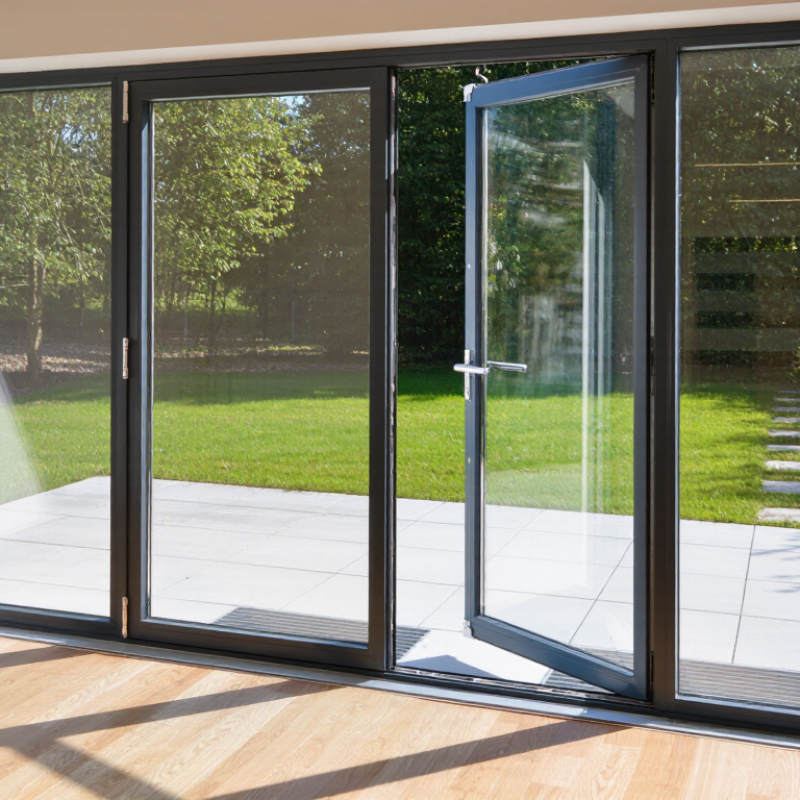
What Are Aluminium Sliding Doors and How Do They Work?

What Aluminium Sliding Doors Are: Frames, Panels, Glass, and Thermal Breaks

Aluminium sliding doors use lightweight frames, moving panels, glass, rollers, and tracks. The frame forms the door’s structure and keeps the panels aligned. Aluminium is strong, slim, and resistant to everyday moisture. It also transfers heat quickly, which can reduce indoor comfort without thermal protection.

A thermal break separates the outer and inner aluminium sections with an insulating material, often reinforced polyamide. This interrupts the direct heat path through the frame. In winter, less indoor heat escapes through the metal. In summer, less outdoor heat moves inside. The improvement depends on the complete door system, not the thermal break alone.

The panels slide horizontally on rollers fixed inside the bottom track. Good rollers should carry the panel smoothly without scraping or excessive noise. Glass fills most of each panel, so its specification affects daylight, sound, safety, and energy performance. Double glazing usually performs better than single glazing, but glass spacing and coatings also matter. Seals around the panel help limit drafts and water entry.

Installation is easy to underestimate. A level opening, accurate drainage, and carefully adjusted rollers are essential. Even a high-quality frame can perform poorly when the track is uneven. I have found that small alignment errors become obvious after repeated use. Thermal breaks are valuable, but they cannot correct every design or installation weakness.

Typical Glazing U-Values in Aluminium Sliding Doors

U-value measures heat transfer in watts per square metre per kelvin (W/m²K); lower values indicate better insulation. Aluminium frames support the panels and glass, while thermal breaks reduce heat flow through the metal frame. The figures shown are typical centre-of-glazing values, so the complete door U-value will also depend on the frame, seals, spacer, and installation.

How Tracks, Rollers, Locks, and Seals Move and Secure the Door

Aluminium Sliding Door Operation Aluminium sliding doors move on a simple but carefully balanced system. The door panel hangs on rollers fitted near its bottom edge. These rollers run inside a fixed track, allowing the panel to glide sideways instead of swinging outward. A top guide controls movement and reduces side-to-side shaking. Clean alignment matters. Even a small obstruction can create grinding noise or uneven movement.

Locks usually engage with a keep mounted in the frame. When turned, the handle moves a hook, latch, or multipoint mechanism into position. This pressure pulls the panel tightly against the seals. Weather seals sit around the meeting stile, frame, and sometimes the interlocking panels. They help limit drafts, dust, and rainwater. However, seals are not magic. A compressed or damaged gasket can reduce performance quickly.

The U.S. Department of Energy estimates that windows can represent 25–30% of residential heating and cooling energy use, making frame and sealing quality important in glazed openings. NFRC rating methods also assess U-factor and solar heat gain, helping compare thermal performance more consistently. In practical inspections, rollers deserve attention first. A dirty track can imitate a failed lock. A weak seal can feel like poor insulation. Door systems are often blamed too quickly. Small maintenance details still matter.

How Double and Triple Glazing Affect U-Values from 1.1 to 0.6 W/m²K

Aluminium sliding doors use horizontal rollers to move large glazed panels along tracks. Their slim aluminium frames provide strength, while thermal breaks reduce heat transfer through the metal. The glazing remains the main performance factor. A double-glazed unit commonly reaches about 1.1 W/m²K, when it uses low-emissivity coatings, argon gas, and warm-edge spacers. These figures usually describe the glass centre, not the complete door.

Triple glazing adds another glass pane and sealed cavity. It can reduce centre-pane U-values towards 0.6 W/m²K, according to performance data assessed under EN 673 and guidance from the Glass and Glazing Federation. However, the final door value depends on frame size, seals, spacers, and installation. A large aluminium slider may perform worse than its glass specification suggests. That detail is often missed.

Lower U-values mean less heat escapes through the door. The improvement feels tangible beside a cold winter track. Yet triple glazing also adds weight, cost, and reduced solar gain in some orientations. Industry guidance from the Passive House Institute indicates that frame and edge performance can strongly influence whole-window results. Therefore, compare the declared Uw value, not only the centre-glass Ug value. Ask for certified test evidence. Numbers can still mislead. Poor adjustment or drainage can weaken real-world performance, even when the laboratory result looks impressive.

How Air, Water, and Wind Ratings Follow EN 12207, EN 12208, and EN 12210

What Are Aluminium Sliding Doors and How Do They Work?

Aluminium sliding doors use horizontal rollers, tracks, and glazed panels to create wide openings with limited swing space. The frame carries the glass, while the rollers guide each panel past the fixed section. In real installations, smooth movement depends on accurate leveling, clean tracks, and correctly adjusted hardware.

Their performance is often assessed through three European standards. EN 12207 measures air permeability by testing how much air passes through closed joints under pressure. Lower leakage generally means a better classification, commonly from Class 1 to Class 4. Small gaps matter.

EN 12208 evaluates watertightness. Testers spray water against the closed door while increasing pressure in stages. The resulting class, often shown from 1A to 9A, indicates resistance under specific laboratory conditions. Drainage channels and threshold design remain important. Water finds weaknesses quickly.

EN 12210 addresses resistance to wind load. It considers frame deflection, operational damage, and safety under pressure. Class numbers should be read with the stated test pressure, because a rating is not a promise for every building exposure. Installation quality can change the result. That detail matters.

A reliable specification should identify the tested door size, glass arrangement, threshold, and installation method. These details are easy to overlook. A door tested in a laboratory may perform differently beside an exposed coastal opening or on an uneven site. Careful site assessment still matters.

How Installation, Drainage, and Maintenance Determine Long-Term Performance

What Are Aluminium Sliding Doors and How Do They Work?

Aluminium sliding doors use lightweight frames and smooth rollers to move large glass panels sideways. Their slim profiles allow more daylight while supporting wide openings. The frame carries the glass, seals, rollers, and drainage channels. Small errors matter. A level opening helps the panels move without scraping or sticking.

Installation strongly affects long-term performance. Experienced installers check the opening, sill height, frame alignment, and fixing points before sealing the door. They also leave suitable movement space around the frame because aluminium expands and contracts with temperature. Drainage is not optional. Water needs somewhere to go. Sill channels should slope toward clean weep holes, allowing rain to exit outside. Blocked outlets or badly placed paving can push water back into the room. This detail is often overlooked.

Maintenance begins with simple, regular care. Vacuum dust from the tracks, then wipe them with a soft, damp cloth. Avoid harsh chemicals and abrasive tools, which may damage finishes or seals. Check rollers, handles, gaskets, and drainage holes every few months. If the panel feels heavy, do not force it. The track may be dirty, or the rollers may need adjustment. In practice, maintenance is often postponed until movement becomes difficult. That is a mistake. A small alignment issue can develop into worn rollers, damaged seals, or water leakage. Even good installation needs occasional attention.

FAQS

What are aluminium sliding doors made of?

They use aluminium frames, glass panels, rollers, tracks, seals, and drainage channels. The frame keeps everything aligned.

How does a thermal break improve comfort?

It separates inner and outer aluminium sections with insulating material. This slows heat transfer through the frame.

Does a thermal break solve every energy problem?

No. Glass type, spacing, seals, installation, and ventilation also affect performance. The thermal break is helpful, not magical.

Why is glass specification important?

Glass covers most of each panel. Its specification affects daylight, sound control, safety, and energy performance.

How should sliding panels move?

Rollers should carry panels smoothly along the bottom track. Scraping, sticking, or loud movement may indicate dirt or misalignment.Smooth movement matters.

Why is accurate installation necessary?

Installers should check opening levels, sill height, fixing points, and frame alignment. Small errors can cause scraping or sticking later.

How does drainage prevent water problems?

Sill channels should slope toward clean external weep holes. Blocked outlets or raised paving can push rainwater indoors.Water needs an exit.

How should these doors be maintained?

Vacuum track dust, then wipe with a soft, damp cloth. Check rollers, handles, seals, and drainage holes every few months.Do not force heavy panels.

What common mistake affects long-term performance?

Maintenance is often delayed until movement becomes difficult. I used to focus on the frame alone; that was too narrow. Tracks, rollers, seals, and drainage also need attention.

Conclusion

Aluminium Sliding Doors combine lightweight, durable frames with large glass panels to create wide, unobstructed openings. Their aluminium profiles may include thermal breaks, which reduce heat transfer between the interior and exterior. Double or triple glazing further improves insulation, with typical U-values ranging from approximately 1.1 to 0.6 W/m²K, depending on the glass and frame design.

The door operates on horizontal tracks using rollers that support smooth movement, while locks and seals help provide security, weather resistance, and a tighter closure. Performance is commonly evaluated through air permeability, water tightness, and wind resistance under EN 12207, EN 12208, and EN 12210. Correct installation is essential, including accurate alignment, effective drainage, and properly sealed joints. Regular cleaning of tracks, inspection of rollers and seals, and timely maintenance can help preserve smooth operation and long-term performance.

Evelyn

Evelyn

Evelyn is a dedicated marketing professional with a strong understanding of product strategy, customer needs, and market trends. With extensive experience in content planning, brand communication, and digital marketing, she plays an important role in presenting the company’s expertise and solutions......